If you’ve ever been handed a card reader and felt your stomach drop because a big, bright “Tip?” screen popped up—this guide is for you.
Tipping used to be simple. You tipped your server at a restaurant, your barber, your delivery driver. Now the tip screen shows up at self-checkout, at a bakery counter, and sometimes even in places that feel more like retail than service.
Here’s the good news: a tip screen is not a rule. It’s a question. And you’re allowed to answer calmly.
This article will give you clear “Yes / No / Depends” rules, easy scripts, and situation-by-situation guidance so you can tip fairly without feeling pressured.
The 20-Second Answer: Yes / No / Depends
If you only read one part, read this.
YES — Tip (these are the “real tipping jobs”)
These are the places where tipping is still a normal part of the pay structure and service culture:
- Sit-down restaurants with table service
- Someone takes your order, refills drinks, checks on you, and clears plates.
- Delivery drivers
- Food delivery, grocery delivery, pharmacy delivery.
- Personal services
- Haircuts, barber, nails, massage, spa services.
- Hotel staff who directly help you
- Housekeeping, bellhop/porter, valet, room service delivery.
- Bartenders
- Especially when you’re ordering drinks at the bar.
Simple rule: If someone is personally taking care of you, and their job has historically relied on tips, tipping is usually part of the deal.
NO — You can usually skip (screens that are “asking just because they can”)
These are places where the tip prompt often feels random:
- Self-checkout kiosks
- Retail checkout (clothing, gift shops, convenience stores)
- Grab-and-go food where you served yourself and walked to the register
- Automated kiosks (airport snack kiosks, vending-style stands)
Simple rule: If you mostly served yourself, it’s okay to press “No tip.”
DEPENDS — Tip only if something extra happened
This is the gray area where the tip screen is common, but tipping isn’t always expected:
- Counter service / fast-casual
- You order at the counter, pick up your food, bus your table.
- Coffee shops and bakeries
- Takeout pickup
- Buffets
- Tours and shuttles
Simple rule: Tip when the person truly helped you, handled something special, or went above and beyond.
Why Tipping Screens Feel So Awkward (and Why It’s Not Your Fault)
A tipping moment used to happen after you experienced the service. Now it happens at the beginning, in front of someone, on a bright screen, while a line forms behind you.
That’s not your imagination. It’s a real shift.
1) The screen is designed to move fast
The checkout screen is built to keep the line moving. That time pressure makes any decision feel bigger than it is.
2) Suggested tip buttons create “instant guilt”
When you see 20%, 25%, 30% as the first options, your brain thinks:
- “Is 20% the minimum?”
- “Will they judge me if I press no?”
- “Is everyone tipping this much now?”
Sometimes those suggestions are simply aggressive defaults. They are not a moral rule.
3) Tipping spread beyond traditional tipping jobs
During the past few years, more businesses added tip prompts. Many kept them. Some did it because customers asked. Others did it because the software made it easy. Either way, your screen now asks more often than etiquette does.
4) Seniors are often targeted by “polite pressure”
If you were raised to be polite, generous, and not make a fuss, tip screens can feel like a trap. The system uses the same instinct that makes you say “sure” to avoid an awkward moment.
This guide is your permission slip to stay kind and stay calm.
The Senior-Friendly 3-Question Rule (Works Anywhere)
When a tip screen appears, ask yourself these three questions. If you can answer them, you’ll never feel stuck.
Question 1: Did a person provide meaningful service (not just ring you up)?
- Meaningful service: They did something for you that required attention, effort, time, or skill.
- Not meaningful service: They scanned items, handed you a bag, and that was it.
If the answer is “not really,” tipping is usually optional.
Question 2: Is this a traditionally tipped role?
Even today, certain roles still commonly rely on tips:
- Restaurant servers
- Bartenders
- Delivery drivers
- Hair and beauty workers
- Hotel support staff
If the answer is “yes,” tipping is usually expected.
Question 3: Did they do something extra that helped you?
This is where “Depends” turns into clarity. Examples of “extra”:
- They handled a special request or dietary need
- They packed carefully or carried heavy items
- They were unusually patient and helpful
- They fixed a mistake quickly and kindly
- They made a stressful moment easier
If the answer is “yes,” a small tip can be a nice thank-you.
Situation-by-Situation: What to Do When the Screen Spins Around
Let’s make this practical. Here’s what to do in the most common situations seniors face.
1) Sit-Down Restaurants (Table Service)
What’s happening: A server is taking care of you throughout the meal.
What to do: Tip as your default behavior unless something truly went wrong.
Simple tip approach:
- Pick one “comfortable range” and stick with it.
- If you’re on a fixed income, it’s okay to set a consistent default you can afford.
If the service is poor:
- If something was slow but the place was busy: tip normally.
- If there was a serious problem: reduce the tip, and consider calmly mentioning it to a manager instead of “punishing” the server for something they couldn’t control.
Senior-friendly reminder: Your goal is fairness, not perfection.
2) Counter Service and Fast-Casual (Order at Counter)
This is one of the biggest tip-screen stress points because it looks like a restaurant, but it doesn’t feel like table service.
Common examples:
- Sandwich shops
- Salad bowl places
- Burrito lines
- Food courts
- Many casual cafés
What to do: Treat it as “Depends.”
When it’s okay to press No tip:
- You ordered at the counter
- You picked up your own food
- You got your own drink
- You cleaned up your table
When a small tip makes sense:
- You had a lot of custom requests
- They brought the food to your table
- They helped with packaging, special needs, or a big order
- You asked many questions and they were patient and kind
Easy options without overthinking:
- Press No tip when it was basically self-service.
- Choose a small flat tip when they truly helped.
3) Coffee Shops and Bakeries
Coffee tip screens can feel awkward because the interaction is quick, but the prompt is big.
When “No tip” is completely fine:
- You got a drip coffee
- You grabbed a pastry from the case
- They handed you a pre-made item
When a small tip is nice:
- Complicated drinks (multiple modifications)
- Large order (several drinks)
- They were especially thoughtful or helpful
Senior shortcut: Tip for craft and care, not for the register itself.
4) Bars
Bars are one place where tipping is still very normal.
What to do:
- If you’re ordering drinks at a bar, tipping is expected.
- If you’re eating a full meal at the bar with table-style service, treat it like restaurant service.
Simple way to stay consistent:
- Decide on a “per drink” habit you can afford, or use a basic percentage for tabs.
Tip screens here are not a scam—they’re a modern version of a long-standing norm.
5) Takeout Pickup (You Pick Up Your Food)
This is another “Depends” area.
When it’s okay to tip $0:
- Standard pickup
- You walked in, grabbed your bag, left
When a tip makes sense:
- Large orders (family meals, big groups)
- Special packaging (soups, lots of containers)
- Curbside service (they carried it out)
- Extra requests handled carefully
A kind compromise: If you want to acknowledge effort but keep costs controlled, tip a small flat amount rather than a big percentage.
6) Delivery Drivers (Food and Grocery Delivery)
Delivery is usually a “Yes.”
Why? Because delivery involves:
- Time
- Driving costs
- Weather
- Stairs, gates, parking hassles
- Scheduling and speed
Senior travel note: If you’re in a hotel or apartment building, delivery can be harder. That often means tipping matters more.
If fees are already high: It’s still okay to tip based on the service. You don’t have to “double-pay,” but tips are often what the driver actually feels.
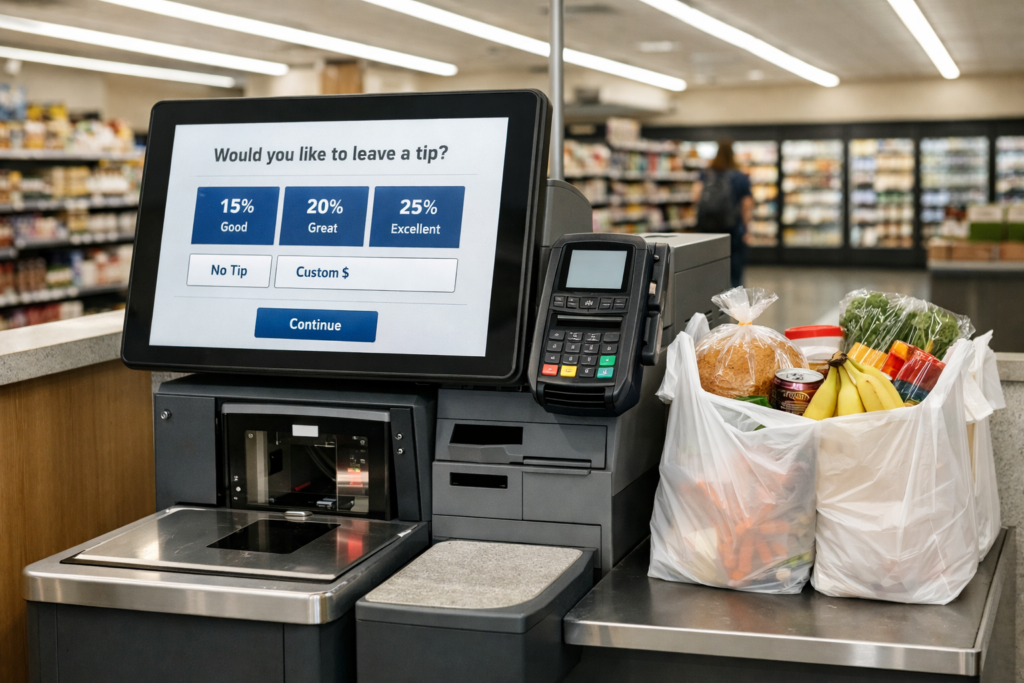
7) Self-Checkout and Self-Service Kiosks
This is where many people feel the most annoyed: “I did the work. Why am I being asked to tip?”
What to do: You can usually skip.
If you:
- Scanned your own items
- Bagged your own items
- Solved your own checkout problems
…then tipping doesn’t match the service.
One more reason it’s reasonable to skip: In some places, it’s unclear who receives that tip.
8) Retail Checkout (Stores That Are Not Food Service)
Gift shops, clothing stores, museum stores, convenience counters—some now show tip prompts.
What to do: Usually “No.”
When you might tip:
- A staff member did something truly helpful, like:
- Carrying heavy items
- Personal shopping help for a long time
- Special wrapping and careful handling
- Going far out of their way
Even then, a small amount is enough.
9) Personal Services (Hair, Nails, Massage, Spa)
This is typically “Yes.”
Why it feels different:
- It’s personal
- It’s time-based
- It’s skill-based
- You’re being cared for directly
Senior-friendly tip planning:
- Consider the tip part of the total cost.
- If you want to stay on budget, choose services and prices that already include room for tipping.
10) Hotels (Especially Important for Senior Travelers)
Hotels have their own tipping culture, and screens sometimes appear on receipts or tablets.
Housekeeping
- Housekeeping is a common “Yes” because it’s direct labor that affects your comfort.
- Many travelers prefer leaving a small amount daily rather than only at the end.
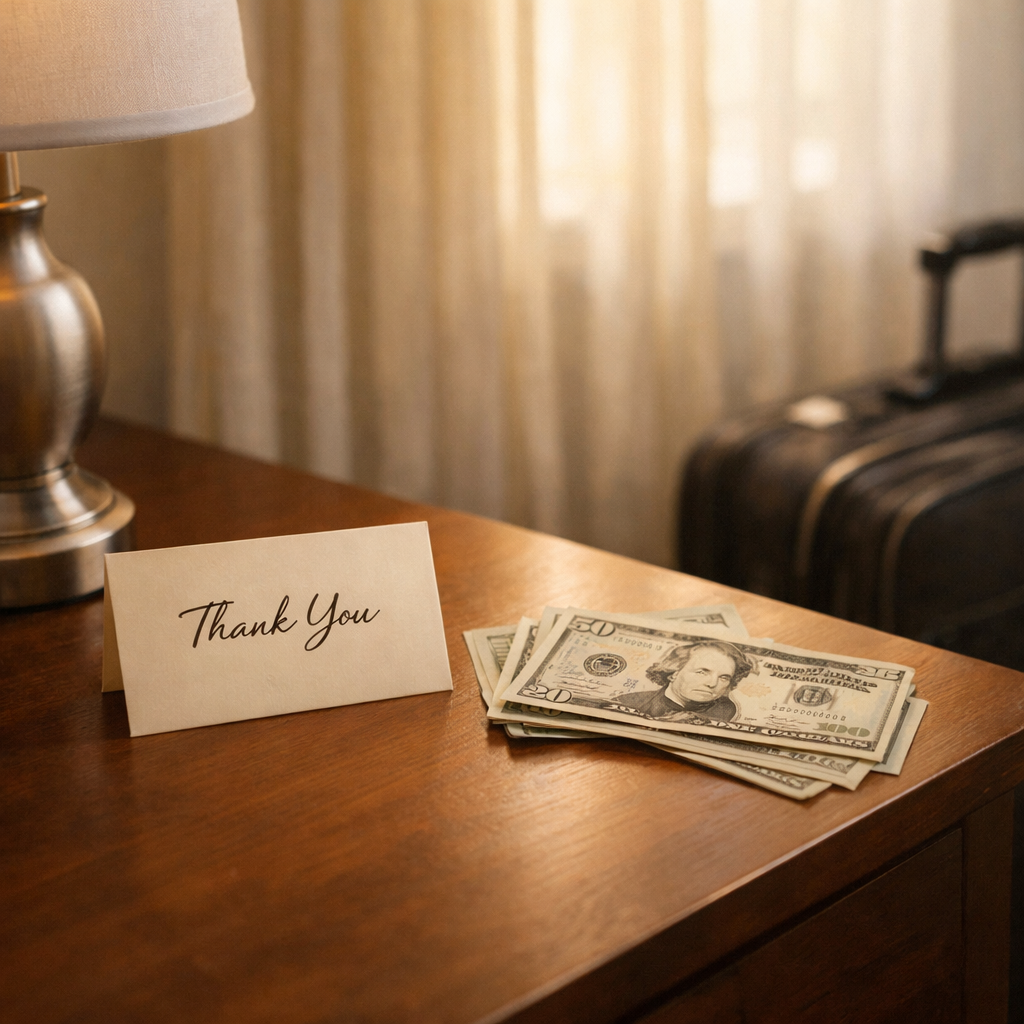
- Leaving a short note (“Thank you”) can make it clear it’s meant for housekeeping.
Bellhop/Porter
- If they carry your bags, a tip is normal.
Valet
- Tip when the car is brought to you.
Room service delivery
- Treat like delivery. If there’s already a charge, you can adjust, but don’t assume it’s a tip.
Front desk
- Usually not tipped, but exceptional help (like solving a major issue) can be acknowledged with a thank-you note or kind review if tipping isn’t appropriate.
11) Rideshare and Taxis
Tip screens are common after the ride.
What to do: Usually “Yes,” especially if:
- They helped with bags
- They were patient with mobility needs
- They drove safely and kindly
If the ride was truly bad (unsafe, rude, reckless), tipping can be reduced or skipped.
12) Tours, Shuttles, and Group Activities
This is often “Depends.”
Tip if:
- The guide was engaging and helpful
- They kept you safe and comfortable
- They handled a group kindly and smoothly
Skip or keep it small if:
- It was mostly transportation with minimal service
- It was fully self-guided with little human involvement

How to Press “No Tip” Without Feeling Rude
Let’s be honest: the hardest part is the social moment.
Here are simple scripts that work because they are polite, short, and final.
The “friendly close” (works everywhere)
- “Thanks—have a great day.”
- “Appreciate it.”
- “Thank you!”
Say it while you tap your choice. You don’t need to explain.
The “not today” version
- “Not today, thank you.”
- “I’m all set, thanks.”
Calm tone. Quick smile. Done.
The “I tip in cash” line (only if true)
- “I’ll take care of it in cash—thank you.”
If you use this line, make sure you actually do tip cash in situations where tipping is expected.
The truth you deserve to hear
Pressing “No tip” is not a character flaw. It’s a decision.
And a sincere thank-you is still a form of kindness.
Avoid the “Tip Traps”: Screens, Fees, and Confusing Charges
Sometimes the screen isn’t just awkward—it’s confusing.
Here’s how to protect yourself while staying fair.
1) Suggested tip buttons are not rules
If the screen offers:
- 20%
- 25%
- 30%
…that doesn’t mean those are the correct choices. It means the software is pushing high suggestions.
What to do:
- Use Custom if you want a different amount.
- Use No tip if tipping is not appropriate.
2) Watch for “service charges” and automatic gratuity
Sometimes a receipt includes:
- “Service fee”
- “Convenience fee”
- “Hospitality charge”
- “Gratuity included”
What to do:
- Look at the receipt before adding a tip.
- If you’re unsure, ask politely:
- “Is this service charge a tip for staff, or something else?”
You’re not being difficult. You’re being responsible.
3) Know the difference between a tip and a donation
Some screens ask you to “round up” or donate to a cause.
What to do:
- If you want to donate, donate.
- If you want to tip workers, tip workers.
- Don’t feel obligated to do both.
4) “Where do tips go?” is a fair question
In some businesses, tips are pooled or shared. In others, it’s unclear.
If you want to be sure, a simple question works:
- “Do the tips go to the staff working today?”
Ask kindly. Then decide.
5) Percentage tips can feel wrong in the “Depends” zone
Tipping 20% on a quick counter order can feel too high because the service wasn’t the same as table service.
What to do instead:
- Use small flat amounts when appropriate.
- Save larger percentage tips for full service.
A Simple Budget Plan for Seniors (So Tipping Doesn’t Sneak Up on You)
If you’re on a fixed income, tipping stress often comes from one fear:
“I want to be kind, but I can’t afford to say yes to every screen.”
Here’s a calm plan.
1) Pick your “always tip” categories
Choose the ones where tipping is part of the normal arrangement:
- Restaurant table service
- Delivery
- Personal services
- Hotel help
2) Decide your default
Pick a default that works for you most of the time. For example:
- A comfortable percentage for sit-down meals
- A standard delivery tip range you can afford
- A small daily housekeeping amount when traveling
You don’t have to chase perfect etiquette. Consistency reduces stress.
3) Make “screen tipping” your optional category
For coffee counters, fast-casual, and pickup orders:
- Give yourself permission to tip sometimes, not always.
4) Use “kindness without cash” when appropriate
When tipping is optional:
- A warm thank-you
- A compliment
- A positive review
- Remembering someone’s name
Those things matter. And they cost nothing.
Senior Travel Bonus: Tipping Screens on Trips (US and Abroad)
Travel adds pressure because you don’t want to offend anyone. Here’s how to stay calm.
In the U.S.
Use the same 3-question rule:
- Was there meaningful service?
- Is it a traditionally tipped role?
- Did they do something extra?
Hotels, drivers, servers, and tour guides are the biggest “tip-worthy” travel roles.
On cruises
Cruises often include automatic gratuities. That means:
- Check what’s already included
- Decide whether you want to add extra for exceptional staff
Abroad (general approach)
Tipping customs vary widely.
Your safest travel strategy:
- Look at the receipt for “service included”
- Observe what locals do
- When in doubt, tip small rather than large
In many places, tipping is smaller and more optional than in the U.S. A big American-style tip can even feel strange in some cultures.
If you’re unsure: Ask the hotel front desk or a trusted local, “What’s customary here?” One question can save you a lot of stress.
Final Reminder: Tip With Intention, Not Pressure
Tipping is meant to reward service, not punish you with guilt.
The screen can ask for anything.
You get to decide what matches the situation.
If you take nothing else from this guide, take this:
- Tip for real service.
- Skip for pure transactions.
- In the gray area, tip for extra effort—otherwise, don’t stress.
You can be generous and still have boundaries. That’s not rude. That’s wise.
FAQ
1) Is tipping optional on iPad screens?
Usually, yes. The screen is a prompt, not a law. In many places it’s truly optional, especially outside traditional tipped roles.
2) Do you tip at self-checkout?
In most cases, no. If you did the work yourself, tipping is not expected.
3) Should you tip at counter service?
It depends. If it was basic ordering and pickup, you can skip. If they handled something special or were unusually helpful, a small tip is kind.
4) Is it rude to press “No tip”?
No. If tipping isn’t appropriate for the situation, “No tip” is a normal choice. A polite thank-you is enough.
5) Do tips on screens always go to employees?
Not always, and it varies by business. If it matters to you, it’s okay to ask where tips go.
6) Is it better to tip cash or card?
Either can be fine. Cash can feel more direct, but card tips are common and convenient. Choose what’s easiest and most comfortable.
7) Should you tip for takeout pickup?
Often optional. Tip if it was a large order, curbside, or required extra effort.
8) What if there’s already a service charge?
Check the receipt. If it says gratuity included, you may not need to add more. If it’s unclear, ask politely what the charge covers.
9) What’s fair for delivery when fees are high?
Fees don’t always go to the driver. Tip based on the service and difficulty (distance, weather, stairs), in a way you can afford.
10) Should you tip hotel housekeeping daily or at the end?
Many travelers prefer daily because staff can change day to day. A short thank-you note can help ensure it’s understood.
11) What if the suggested tip starts at 25–30%?
That’s a suggestion, not a standard. Use “custom” or “no tip” depending on the situation.
12) What if I feel embarrassed in front of the cashier?
Use a short script (“Thanks!”) and tap your choice without explaining. The moment will pass faster than you think.