Travel should feel restful. You plan the route, book the hotel, pack the meds, and double-check the reservations. Then a small moment happens at the end of a meal or ride: the bill arrives, the card reader appears, someone smiles, and you’re expected to decide how much to tip—fast.
That is exactly why tipping scams work.
Most modern tourist scams don’t look like a mugging. They look like “help.” They look like “policy.” They look like a normal payment screen with a few buttons you didn’t have time to read. And they often target people who are polite, generous, and not looking for conflict—especially seniors traveling alone, seniors traveling as couples, and families traveling with kids or grandkids.
This guide is designed to give you calm confidence. You’ll learn the most common tourist tipping scams, how to spot a fake gratuity, how to recognize the tip screen trick, how to avoid a restaurant service charge scam, and what to do if you discover a tip you never approved.
You do not need to become suspicious of everyone. You just need a simple system.
Why tipping scams target seniors and families
Scammers pick situations where:
- The amounts are small enough that victims often don’t report them
- The setting is busy and fast
- The target doesn’t want to cause a scene
- The victim is uncertain about local rules
Seniors and families often fit those conditions for normal, understandable reasons.
Politeness and “I don’t want to offend”
Many older travelers were raised to be respectful to staff. That’s a good thing. But scammers use that kindness. They know you might tip even when something feels off, simply to avoid awkwardness.
Cultural uncertainty
Tipping rules change from place to place. Some countries expect small tips. Some include service in the bill. Some don’t tip at all. Scammers love that confusion. If you’re unsure, you’re easier to pressure.
Distraction while traveling
Families are juggling luggage, kids, time, and directions. Seniors may be managing fatigue, hearing challenges, or mobility issues. Anything that reduces your focus makes fast-payment tricks easier.
Low-risk, high-repeatability
A scammer doesn’t need to steal hundreds of dollars from one person. They can “earn” extra money by pulling a small trick many times per day. A hidden extra $10 here, a forced “round up” there, a surprise service fee elsewhere.
The mindset that prevents most tipping scams
You don’t need to argue. You don’t need to accuse anyone of wrongdoing. Your goal is simple:
- Slow the moment down
- Read what you are approving
- Keep a clear record
- Pay in a way that gives you control
A good rule is: If someone pressures you to decide quickly, that’s the moment to slow down.
The most common tipping scams while traveling
Fake automatic gratuity charges
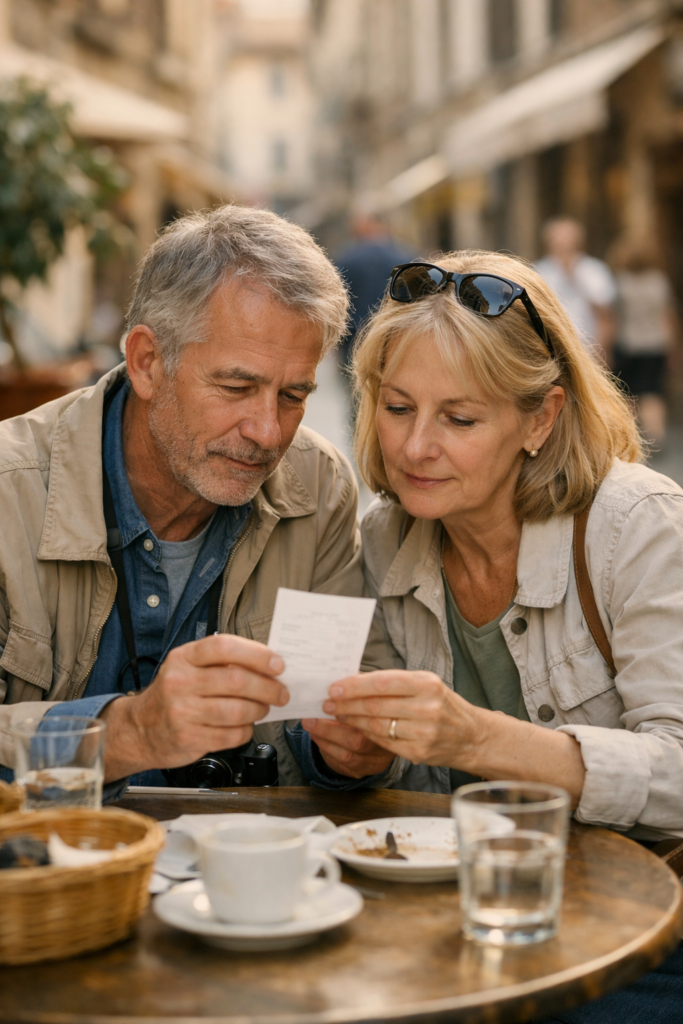
Automatic gratuity can be real. It often appears for large groups, special events, or tourist-heavy restaurants. The scam happens when “automatic gratuity” is claimed without clear proof, or when you’re nudged to tip on top of it without realizing.
How it happens
- A server verbally tells you: “Service isn’t included,” even though it is
- The bill includes a service line, but the staff calls it “tax” or “fee” so you tip anyway
- The receipt is folded or presented in a way that hides the extra line
- The card reader prompts you to add a tip while the printed bill already includes one
Red flags
- The staff says tipping is mandatory but cannot show it clearly on the bill
- The bill includes a service line with vague wording
- You are asked to tip quickly and the receipt is pulled away fast
How to protect yourself
- Look for lines that say: “Service,” “Service charge,” “Gratuity,” “Auto gratuity,” “Tip,” “Cover,” or “Coperto”
- Ask one calm question: “Is service included on this bill?”
- If you see a service line and you want to tip extra for great service, do it intentionally and smaller
A simple sentence that works almost everywhere:
“I see a service charge here. Does that replace the tip?”
You’re not accusing anyone. You’re confirming.
Restaurant service charge scams
This is one of the most common travel tipping traps because it uses confusing language. A service charge is not always a tip. Sometimes it goes to the restaurant. Sometimes it goes to staff. Sometimes it’s partially shared. Sometimes it’s just a fee.
A restaurant service charge scam usually looks like one of these:
- A service charge is added, and you are still pressured to tip as if nothing was added
- A service charge is described as “required gratuity” even when it’s not
- The receipt uses unfamiliar terms that make it hard to understand what you’re paying
What makes this especially tricky for seniors
Many seniors tip because they don’t want staff to suffer. That’s kind. But if the service charge doesn’t go to staff, you can be tricked into paying twice while still feeling like you did the right thing.
How to protect yourself
- If you see a service charge, ask: “Does this go to our server?”
- If they say “Yes,” you can decide whether to add extra
- If they say “No” or they dodge the question, tip only what you feel comfortable with, and consider tipping in cash directly to the server if appropriate
Best practice at restaurants
- Ask for an itemized bill
- Read the service lines before handing over your card
- If you are unsure, take a photo of the bill before paying
The tip screen trick (card payment scam)
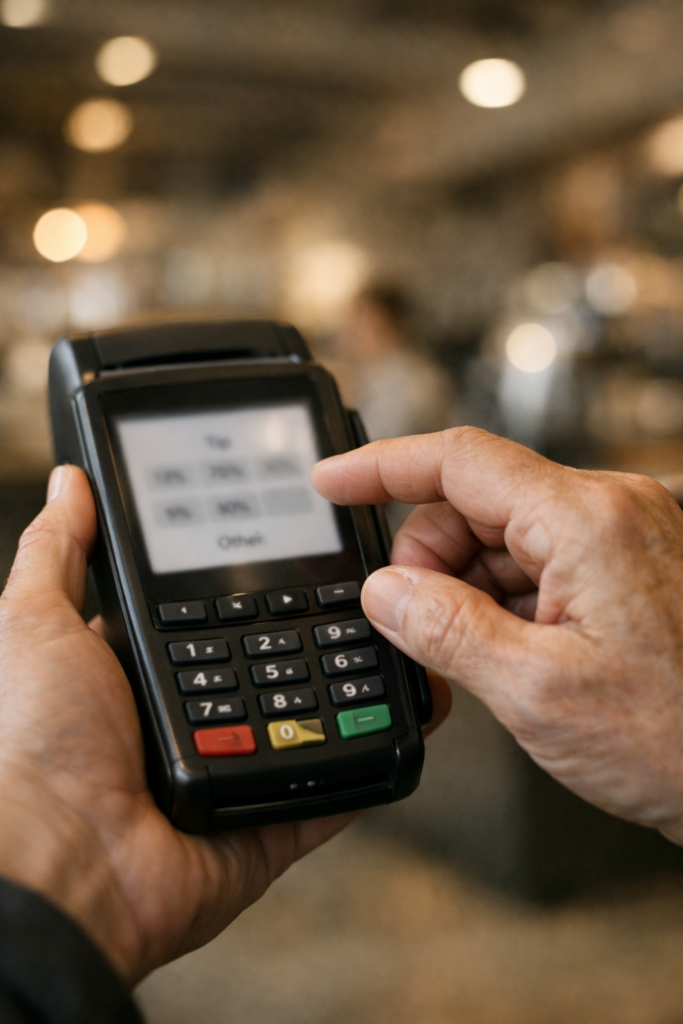
This is one of the fastest-growing modern tipping problems. The tip screen trick happens when you’re shown a payment terminal that pushes you toward tipping more than you intended—or tipping at all—without giving you time to review.
What it looks like
- The screen shows large buttons like 20%, 25%, 30%
- A “No Tip” option is hidden, small, or on a separate screen
- The employee holds the device and taps through quickly
- The terminal is angled away so you can’t read the total or tip line
- You think you’re approving the total, but you’re approving a tip amount too
Common places it happens
- Tourist cafés and quick-service counters
- Hotels and resort shops
- Airport food courts
- Taxis in some regions
- Tours and attractions with portable readers
How to protect yourself
- Hold the terminal yourself if possible
- Look for the total line before approving
- If the employee tries to tap for you, say: “I’ll do it, thank you.”
- If the screen is hard to read, ask them to tilt it or increase brightness
A calm phrase that works:
“Could you show me the total on the screen before I approve?”
A key warning for seniors
If your vision is not perfect, tip screens can be a trap. It is not a personal failure. They are designed to move fast. Take your time.
Cash change tricks and “rounding up” pressure
Some tourist scams are old-school. You pay with cash. You receive change. It’s short. Or you are pressured to “round up” far beyond what makes sense.
How it happens
- The person returns the wrong change and waits to see if you notice
- They claim they don’t have small bills or coins
- They keep part of the change and act like it’s normal
- They use confusing local currency and fast counting
How to protect yourself
- Use smaller bills when possible
- Count your change before walking away
- If currency is unfamiliar, keep a small conversion note on your phone
- If you’re uncomfortable, pay with a card and keep the receipt
Hotel tipping scams
Hotels can be wonderful. They can also create confusing “help moments” where tipping pressure appears.
Common hotel tipping traps
- A person helps with luggage but is not official staff
- Someone offers to “walk you” to your room and then asks for money
- You leave a tip for housekeeping, and it disappears early, then later you feel pressured to tip again
- A “concierge helper” directs you to an overpriced tour and asks for a gratuity
How to protect yourself
- Use the official bell desk if you want luggage help
- If someone offers help in the lobby, ask: “Do you work for the hotel?”
- Consider tipping housekeeping at the end of your stay, or use a labeled envelope with “Housekeeping”
- Ask the front desk about local tipping norms at check-in
A phrase that protects you without conflict:
“Thank you, we’re all set.”
Taxi, rideshare, and airport tipping scams
Transport is a common place for tipping confusion, especially when you’re tired, rushed, or carrying bags.
Common tricks
- The driver adds a tip on the terminal before handing it to you
- The driver asks you to sign without showing the tip line
- The driver claims a tip is “required”
- At airports, unofficial helpers demand payment after “assisting”
How to protect yourself
- Confirm the total before approving
- If you sign anything, review the amount first
- Avoid letting someone else tap the terminal for you
- In airports, stick to official staff and services
A useful sentence:
“Please show me the total first.”
Cruise and group tour gratuity scams
Cruises and tours often involve real, pre-set gratuity systems. The scam happens when you are charged automatically and then pressured for extra money in a way that implies you haven’t paid.
How it happens
- The cruise bill includes daily gratuities, but staff still asks for tips as if nothing was included
- A tour leader claims tipping is “mandatory” even when it’s described as optional
- Group pressure makes you tip more than you want, just to avoid being “that person”
How to protect yourself
- Review your cruise or tour paperwork for gratuity policies
- If asked, say: “We already have gratuities included, but thank you.”
- If you want to tip extra for exceptional help, do it by choice, not pressure
Tipping customs vs scams: how to tell the difference
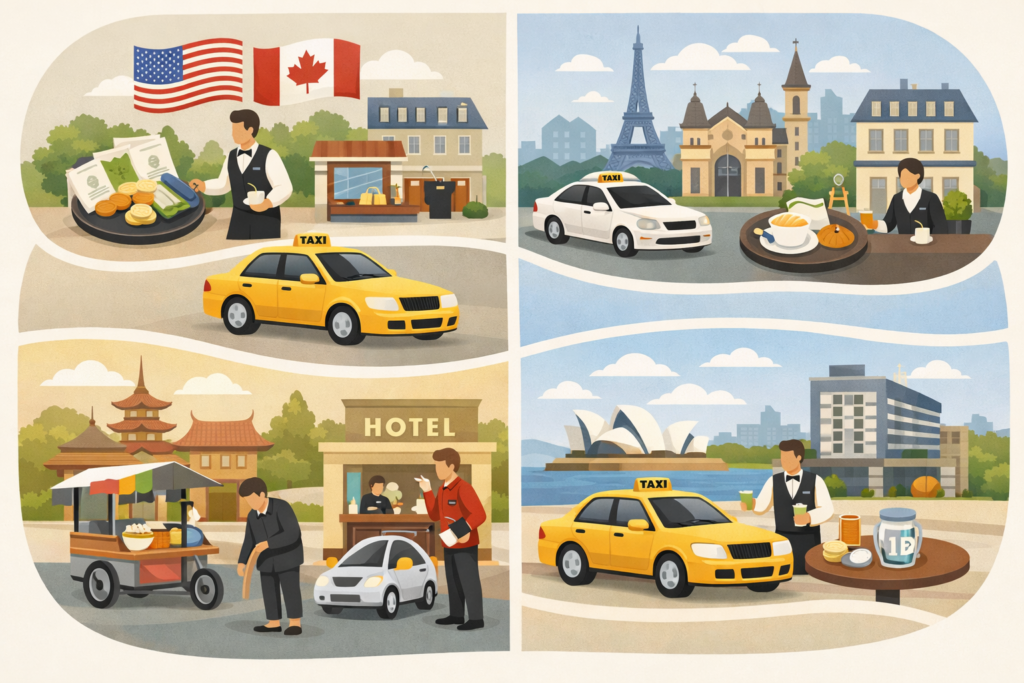
Not every confusing tip moment is a scam. Sometimes it’s just cultural difference. Here’s a simple way to separate normal from suspicious.
A practical checklist: “Clear, consistent, and visible”
A legitimate charge tends to be:
- Clearly written on the bill
- Consistent with what you were told at the start
- Visible before payment, not “after the fact”
A scammy situation tends to be:
- Only explained verbally
- Presented quickly at the very end
- Hard to see or hard to understand
- Paired with pressure or guilt
A quick test question
Ask one question and listen to the tone.
“Is this included, or is this extra?”
Honest staff usually answer plainly. Scammy situations often involve rushing, irritation, or vague statements.
Cash vs card tipping: which is safer for seniors?
Both can be safe. The best choice depends on the situation.
When cash is safer
- You want to control the exact amount
- You want to avoid tip screens
- You’re in a place where terminals feel rushed or unclear
- You want to tip a specific worker directly
Cash works best when you carry small bills and you can count change comfortably.
When card is safer
- You want a paper trail
- You worry about short-change tricks
- You want to avoid carrying large amounts of cash
- You want the ability to dispute incorrect charges later
Card works best when you can see the screen clearly and review receipts.
A smart hybrid strategy for senior travelers
- Use card for larger totals and places with clear receipts
- Use cash for small, direct tips where you want full control
- Carry a small “tip wallet” with low bills so tipping doesn’t require exposing your main cash
Real-world examples of tipping scams (and the simple response that stops them)
These short scenarios show what tipping scams look like in real life, and how to respond without confrontation.
The double tip at a restaurant
You dine at a tourist restaurant. The bill includes a line that says “Service 15%.” The server brings the card reader and says, “Service not included.”
A simple response:
“I see a service charge here. Is that the tip?”
If they admit it’s included, you can still tip extra if you want, but now it’s your choice.
The tip screen rush at a café
You buy two coffees. The terminal shows 25%, 30%, 35%. The employee holds it and says, “Just tap.”
A simple response:
“Could you hand it to me? I want to review the total.”
If you feel awkward, remember: you’re protecting your budget. That’s responsible, not rude.
The taxi terminal surprise
A driver hands you the terminal after tapping something. You notice the total looks higher than expected.
A simple response:
“Please show me the fare amount before tip.”
If it doesn’t match, ask them to cancel and re-enter it.
The hotel lobby helper
A person offers to carry bags, walks you to the elevator, then holds out a hand for money.
A simple response:
“No thank you. We’re all set.”
Then move to official staff if you want assistance.
How seniors can protect themselves from tipping scams
You don’t need a long list of complicated rules. You need a few strong habits that work in any country.
Before the trip: set yourself up for easy decisions
- Look up basic tipping norms for your destination and save a short note on your phone
- Decide a personal tipping range ahead of time so you don’t feel pressured in the moment
- Bring small bills in local currency if possible
- Tell your bank you’re traveling and set up mobile alerts for charges
If you’re traveling with family, agree on a plan:
- Who pays most meals
- Who checks receipts
- How you handle tipping in different situations
During the trip: slow down the payment moment
This is the heart of scam prevention.
- Read the bill before handing over your card
- Look for service charge lines and automatic gratuity lines
- Hold the terminal yourself when possible
- Never approve a screen you cannot read
- Ask for an itemized receipt if anything feels unclear
Helpful phrases that protect you without drama:
- “Could you show me the total first?”
- “Is service included?”
- “I’ll handle the screen, thank you.”
- “Could you print the receipt?”
After payment: quick checks stop small scams from becoming big ones
- Review receipts the same day
- Check card notifications
- If something looks wrong, contact the merchant quickly while details are fresh
Many people wait until they get home. That makes disputes harder. Quick action matters.
Traveling with family or grandkids: extra money-safety tips

Travel with kids or grandkids is joyful—and distracting. Here’s how to stay safe without turning the trip into a lecture.
Use the “one payer” method
Choose one person to pay most transactions. Fewer payments means fewer chances for confusion.
Build a quick family script
Agree on simple phrases so you don’t freeze in the moment:
- “We’ll check the bill first.”
- “We already have service included.”
- “We’ll do the payment ourselves.”
Use shared awareness, not blame
If a grandchild taps a tip screen too fast, treat it as learning. Shame makes people hide mistakes. Calm makes people share them.
Keep receipts simple
If you’re managing multiple family meals, take a photo of the receipt right after paying. It’s quick and it protects you later.
What to do if you’ve been hit by a tipping scam
If you discover a tip you didn’t approve, or a fake gratuity charge, don’t beat yourself up. These scams are designed to feel normal.
Stay calm and collect proof
- Save the receipt
- Take screenshots of the charge
- Write down what happened while you remember details
Contact the merchant quickly
A simple message:
“I believe I was charged an incorrect tip. Can you reverse the extra amount?”
Sometimes it’s an honest mistake. Sometimes it’s not. Either way, you want it documented.
Contact your card provider if needed
If the merchant won’t fix it, dispute the charge through your bank or credit card company. The sooner you do it, the easier it usually is.
Treat it as a travel skill you just gained
The goal is not perfection. The goal is fewer vulnerabilities next time.
Quick “spot it fast” guide for common tipping scams
Use this as a mental checklist when you’re tired or rushed.
Common red flags
- You are pressured to act quickly
- The payment screen is hidden or angled away
- The bill includes unclear service lines
- Someone touches the terminal for you
- You are told something is mandatory without written proof
- The receipt is not offered, or is taken away fast
Safer signs
- Charges are written clearly before payment
- You can hold and read the terminal
- Staff answers questions calmly
- You receive an itemized receipt without resistance
FAQ: Tipping scams while traveling
What are the most common tipping scams?
The most common ones are fake service charges, double tipping, tip screen tricks, forced rounding up, and unauthorized tip amounts added at the terminal.
Are seniors more likely to be targeted?
Seniors are often targeted because scammers assume they are polite, avoid confrontation, and may be less comfortable with fast payment screens.
Is automatic gratuity always legitimate?
No. It can be legitimate, but it should be clearly stated on the bill. If it’s only explained verbally, treat it with caution.
What is a fake gratuity?
A fake gratuity is a tip or service fee added or claimed in a way that is unclear, dishonest, or designed to make you pay twice.
What is the tip screen trick?
It’s a payment screen setup that pushes you toward higher tips, hides the “no tip” option, or relies on speed and pressure so you approve something you didn’t mean to.
How can I tell if a restaurant service charge goes to staff?
Ask directly: “Does this go to our server?” If they can’t answer clearly, assume it may not.
Is cash tipping safer than card tipping?
Cash gives you control over the amount and avoids tip screens. Card gives you a record and dispute options. A hybrid strategy is often best.
What should I do if I notice a tip I didn’t approve?
Save proof, contact the merchant quickly, and dispute through your card provider if the merchant won’t correct it.
Are cruise gratuities mandatory?
Many cruises add automatic gratuities daily, but policies differ. Check your cruise documents so you know what is included before you tip extra.
How much should I tip to avoid conflict?
You do not need to tip to avoid conflict. You can tip based on service and local norms. If pressured, use a calm line like, “Thank you, we’ve got it covered.”
Do tipping scams happen in the United States too?
Yes. Tip screen tricks and unclear service charges happen in many places, including the U.S., especially in tourist-heavy areas.
Should I tip if I see a service charge?
If service is included, tipping extra is optional. If you choose to tip extra, do it intentionally and smaller.
Conclusion: Travel with confidence, not fear
Tipping should be a simple “thank you,” not a moment of stress. The good news is that tipping scams rely on speed, confusion, and silence. When you slow down and ask one clear question, most of these tricks fall apart immediately.
You don’t need to become suspicious. You just need to protect your money the same way you protect your passport: with steady habits and a quick check when it matters.
Before your next trip, save one simple reminder on your phone:
“Read the bill. Hold the screen. Confirm service charges.”
Then enjoy the part of travel that actually matters—good meals, new places, and time with the people you love.