If tipping feels more confusing than it used to, you’re not imagining it. Tips show up on screens at coffee counters, gift shops, self-checkouts, and places where nobody actually served you. Receipts now include “service fees” and “wellness charges.” Some workers rely on tips. Some don’t. And families and seniors often feel caught in the middle: wanting to be fair, but not wanting to be pressured.
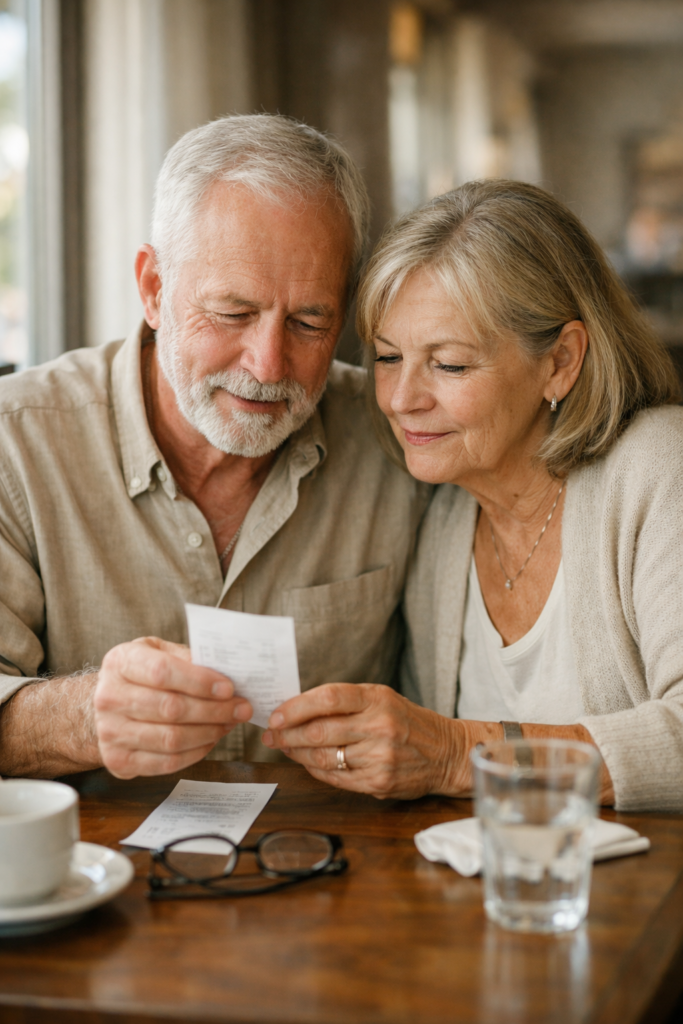
This guide is here to lower the temperature.
You’ll get clear tipping etiquette rules for common situations in 2026, plus travel-specific advice for hotels, cruises, tours, and family trips. You’ll also learn when you can confidently tip less, tip differently, or not tip at all—without guilt.
Why tipping feels harder now
Tipping didn’t just “change.” The way we’re asked to tip changed.
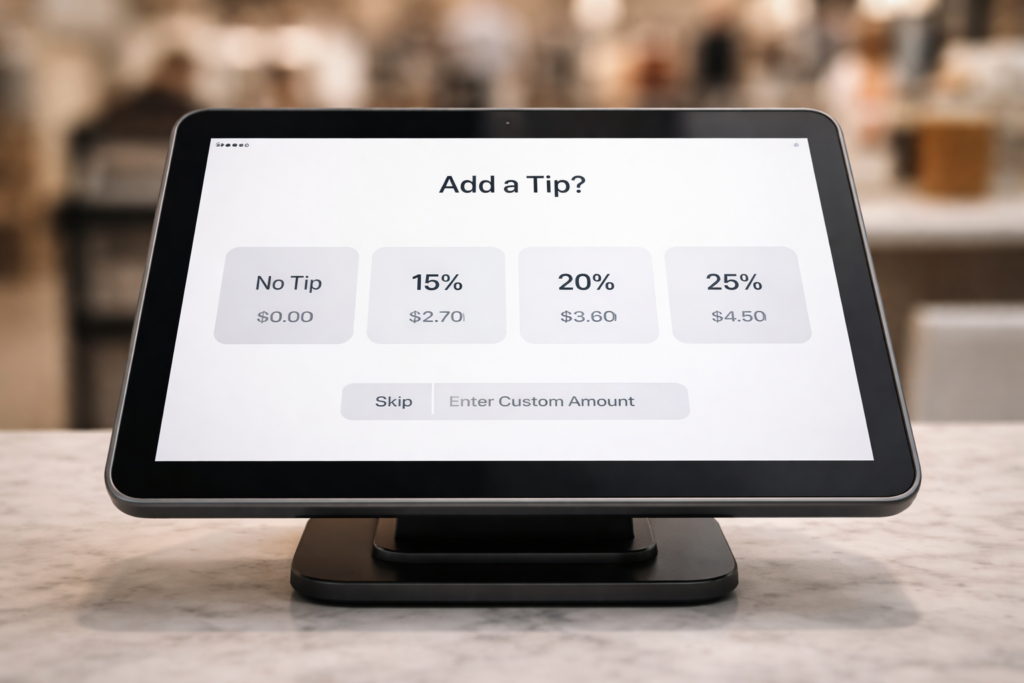
Tip screens are everywhere
Digital checkout systems often show tip options before you can finish paying. Some screens start with higher presets. Some show a dramatic “No tip” button. The result is emotional pressure, even when tipping is truly optional.
Service fees blurred the old rules
Restaurants, hotels, and event venues may add fees that sound like tips but aren’t always tips. A “service charge” can mean many things depending on the business and local rules. That creates uncertainty, and uncertainty creates anxiety.
People are tired of being guilted
Many customers feel the social pressure of tipping in front of staff or a line behind them. It can feel like you’re being asked to “prove” you’re a good person at the checkout screen. That’s not what tipping etiquette is supposed to be.
Here’s the calm truth: good tipping is about fair appreciation for real service. It is not about obeying a tablet.
What tipping is (and what it isn’t)
Tipping is traditionally a voluntary way to reward personal service. It is not meant to replace every business’s responsibility to pay workers. It is not meant to be a universal tax on every transaction.
A useful way to think about tipping is to sort situations into three buckets:
Expected tipping situations
These are jobs where tips are part of the standard U.S. culture and often part of how pay works. Sit-down restaurants are the classic example.
Optional tipping situations
These are places where tipping is appreciated but not required, and where the service level can vary widely. Coffee shops and counter service often fall here.
Unnecessary tipping situations
These are transactions where you’re mostly paying for the product, not personal service, or where you served yourself. Retail checkout screens often fall here.
Once you see the bucket, the guilt fades fast.
The calm tipping rules that still work in 2026
When you’re unsure, use these simple rules. They work almost everywhere.
The personal service rule
Ask yourself: did a real person provide personal service to me, beyond simply ringing something up?
If yes, tipping is often appropriate.
The effort rule
Ask: did they carry, deliver, clean, guide, customize, or spend meaningful time helping?
More effort generally supports a higher tip.
The problem-solving rule
Ask: did they fix an issue, accommodate a need, or make the experience noticeably smoother?
That’s the kind of service tipping is meant to recognize.
The fairness rule
Ask: am I tipping because of service—or because I’m being pressured by a screen?
If it’s pressure, pause. You’re allowed to choose calmly.
Restaurant tipping etiquette rules (the most important category)
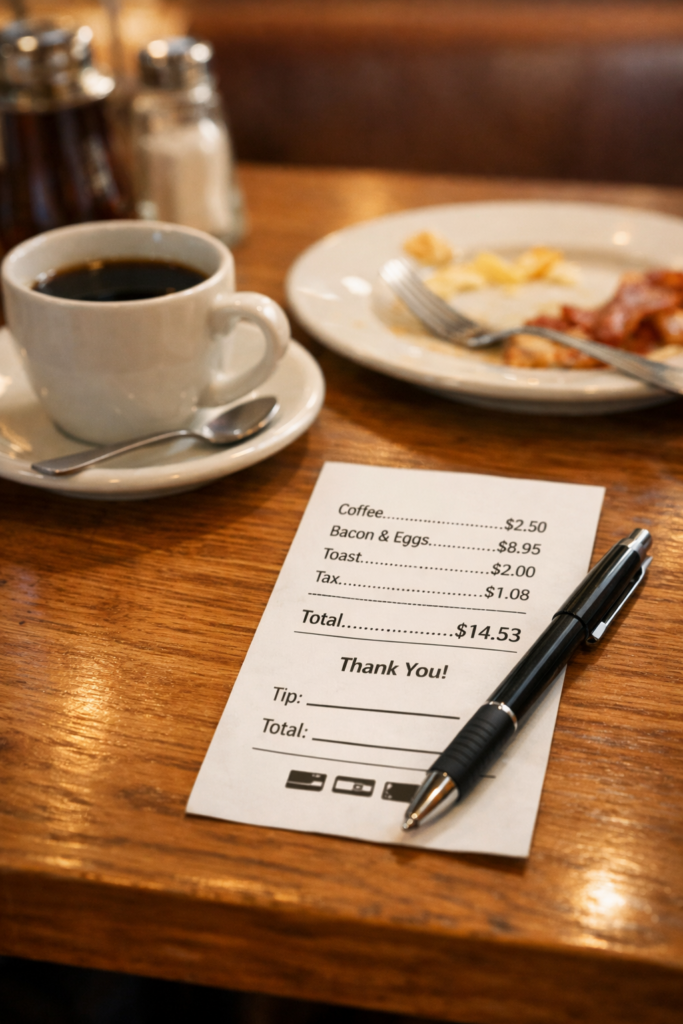
Restaurants are still where tipping etiquette matters most. The good news is that the rules here are clearer than almost anywhere else.
Sit-down restaurants
In most U.S. sit-down restaurants, a tip is still standard when a server takes your order, checks on you, refills drinks, and handles the table.
A practical range many diners use:
- Around 15% for basic, fine service
- Around 18% for good service
- Around 20% for great service, special care, or a complicated meal
If you’re on a fixed income, it’s okay to choose the lower end of a reasonable range. A calm 15% is not rude. It’s normal.
When to tip more
- Large groups with lots of requests
- A server who handles dietary needs kindly
- Exceptional patience with kids or mobility needs
- A busy night where they keep you comfortable anyway
When to tip less
- Truly poor service that the server controls (not the kitchen’s mistake)
- Long waits with no communication
- Repeated missing items after reminders
A helpful approach is to speak up early. If something is wrong, politely say so while there’s time to fix it. That often solves the problem and keeps tipping simple.
Buffets
Buffets are tricky because you serve yourself, but staff still clear plates and refill drinks.
If the staff actively serves drinks, clears plates quickly, and helps your group, a smaller tip often makes sense. If you mostly served yourself and had minimal interaction, tipping can be modest.
Takeout from a sit-down restaurant
For takeout, the old standard is different. You’re not paying for table service. Someone may still package your order, check accuracy, add utensils, and handle timing.
Many people tip a small amount for careful packaging, large orders, or special requests. If your takeout is straightforward, tipping is optional and can be small.
Automatic gratuity
Some places add gratuity automatically for large parties. Always check the receipt before tipping on top.
If the gratuity is included, you don’t need to add more unless you want to. If you do add more, you can treat it as a “bonus tip” for truly excellent service.
Service charges and “fees”
This is where people get burned.
If you see a “service charge,” “kitchen fee,” “wellness fee,” or similar line item:
- Read the receipt language carefully if it explains the fee
- Ask politely, “Does this go to staff as a tip?”
- If it does not, you can tip normally on top if you choose
- If it does, you can reduce or skip the additional tip
A business should be able to explain fees clearly. If they can’t, that’s not your fault.
Bar tipping etiquette (simple rules that prevent awkwardness)
Bars can feel stressful because tipping happens in small moments. But you can keep it easy.
Ordering at the bar
If you pay per drink, tipping per drink is common. Many people tip a small amount per drink, more for complicated cocktails.
Running a tab
If you run a tab and close out at the end, tipping a percentage similar to restaurant tipping is common. Use the same calm range and adjust for service.
Special situations
- Complicated cocktails, lots of modifications, or a packed bar can justify tipping more
- If you’re getting water refills, attention, and help for a long time, tipping as a percentage at the end makes sense
Coffee shops and counter service: where tip creep lives
This category causes the most guilt because it’s where tablets ask for tips even when service is minimal.
Here’s the calm approach:
When tipping makes sense
- The staff makes a customized drink
- You asked for multiple changes
- They provide table service, bring food to you, or help with special needs
- You’re a regular and want to show appreciation
When tipping is optional
- You’re ordering a standard coffee or pastry at the counter
- You’re picking up a pre-made item
- You had minimal interaction beyond the transaction
If a screen pushes you toward a tip you don’t want to give, remember: tipping is not a personality test. It’s a choice.
Fast casual, food courts, and “order at the counter” restaurants
These places often involve you ordering at the counter and picking up your own tray, but staff may still bus tables and help.
A calm rule:
- If you’re mostly self-serving, tipping is optional
- If staff brings food to the table, checks in, refills drinks, or provides real service, tipping becomes more appropriate
If you’re traveling with family and the staff is truly helping—high chairs, spills, extra napkins, patience—tipping can be a kind and fair choice. If not, don’t let a screen force it.
Delivery tipping rules: the service is the delivery
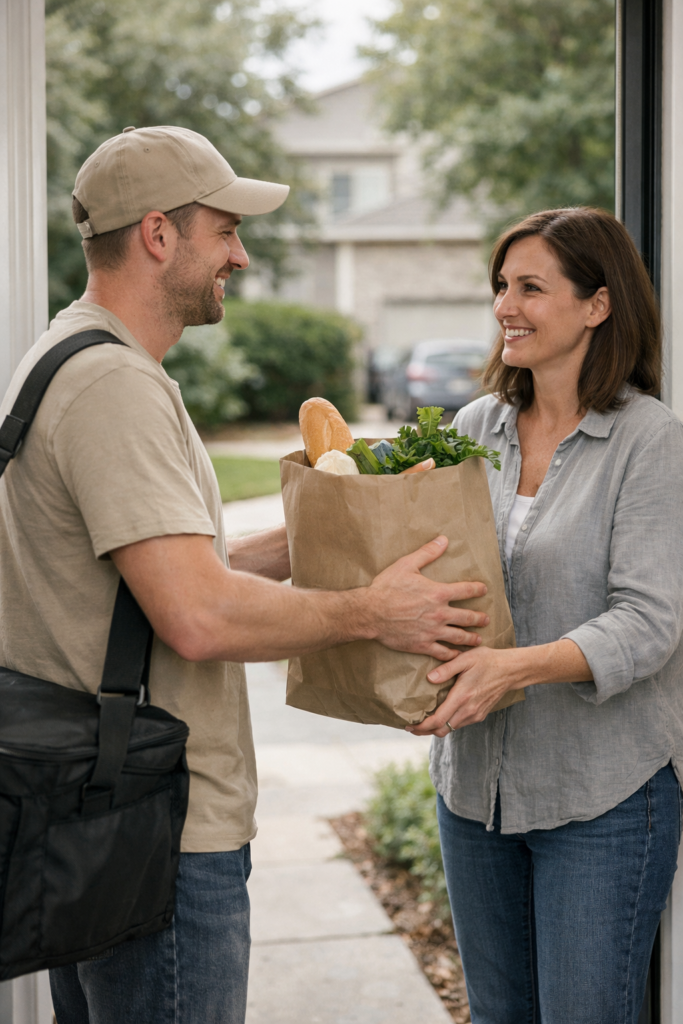
Delivery is one of the clearest cases where tipping is directly tied to effort.
Food delivery
Consider the realities of delivery:
- Distance
- Weather
- Parking difficulty
- Apartment stairs
- Time of day
- Order size and weight
A delivery that requires more effort often deserves more appreciation. If your driver is climbing stairs, navigating a hotel lobby, or delivering in bad weather, tipping more is reasonable.
Grocery delivery
Grocery delivery can involve heavy lifting, careful selection, substitutions, and multiple bags. It’s often more labor than people realize.
If you’re a senior or traveling with family, grocery delivery can be a huge quality-of-life support. A fair tip can keep that service reliable.
Package and furniture delivery
For big, heavy items, delivery can be physically demanding. If a crew carries items inside, navigates stairs, and places things carefully, tipping is often appropriate.
If they only drop something at the curb with minimal effort, tipping can be smaller or optional depending on the situation and company policy.
Rideshare, taxis, and shuttles
Rideshare drivers
A rideshare driver is providing time, attention, navigation, and safety. Tipping is common, especially if:
- The ride is long
- The driver helps with luggage
- The driver waits while you load kids or mobility equipment
- The ride involves tricky pickup locations like airports or crowded event areas
Taxis
Taxi tipping norms are similar to rideshare in many places. Tip based on service, help with bags, and overall experience.
Hotel and airport shuttles
Shuttle drivers often help with luggage and manage multiple passengers. If they handle bags, assist seniors, or go out of their way, tipping is common.
If you’re traveling with family, shuttles can involve strollers and multiple bags. That’s real effort on the driver’s part.
Hotel tipping etiquette: the travel category everyone worries about
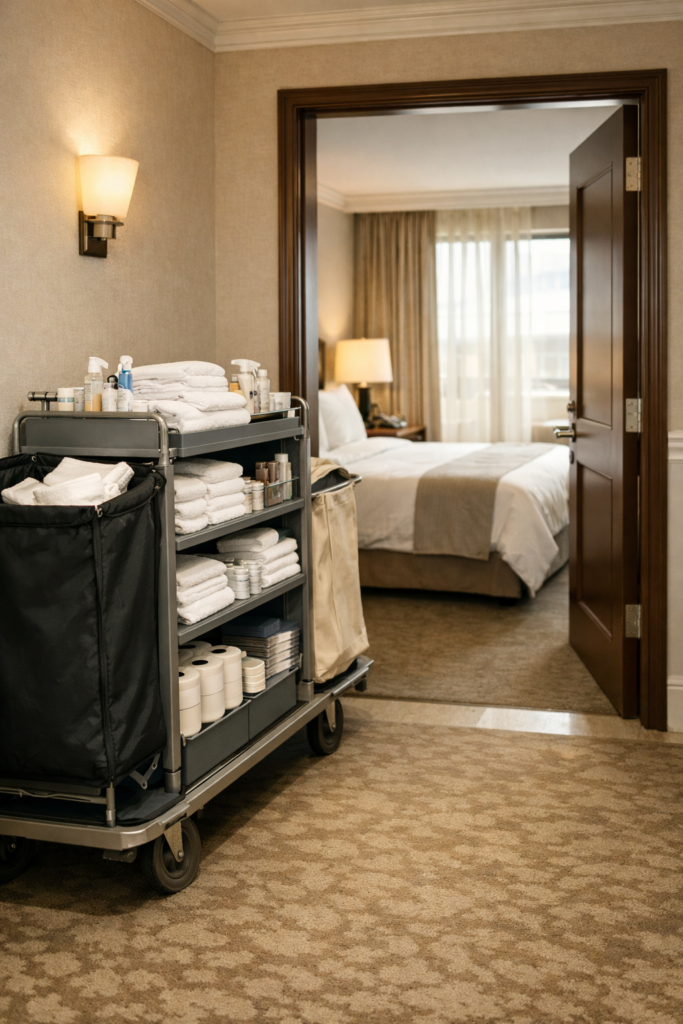
Hotel tipping is one of the most stressful areas for travelers because there are many staff roles. You don’t need to tip everyone. Focus on the people who provide direct personal help.
Housekeeping
Housekeeping is one of the most meaningful tipping opportunities in a hotel. The work is physical and often invisible. If you can tip, it’s a kind gesture.
Practical approach for travel:
- Tip in a way that makes it clear it’s for housekeeping
- If you’re staying multiple nights, consider leaving tips during the stay rather than only at the end, because the staff may rotate
For seniors and families, housekeeping may do extra work: more towels, extra cleaning, dealing with spills, and helping you feel comfortable. If you received that support, tipping is a fair way to recognize it.
Bellhops and luggage assistance
If someone carries luggage, helps you navigate the hotel, or handles heavy bags, tipping is common. This is especially relevant for seniors who may not want to lift heavy luggage.
Valet parking
If you use valet service, tipping is common because the staff are actively handling your car and time.
Concierge help
If a concierge does meaningful work—getting hard reservations, arranging transportation, solving a problem—tipping can be appropriate. If they just answer a basic question, tipping may be unnecessary.
Room service
Room service often includes service charges. Check the bill carefully to avoid tipping twice. If a service charge is included as a gratuity, you may not need to add more. If it’s not a tip, you can tip based on service.
Cruises and all-inclusive resorts
This category can feel confusing because tips may be bundled in, but staff still provide personal service.
Prepaid gratuities
Many cruises add gratuities automatically. If gratuities are included, you may not need to tip additional amounts unless someone provides extra help.
Room stewards and dining staff
If a staff member makes your trip easier—especially with accessibility needs, mobility assistance, or family care—many travelers give an extra tip as a thank-you.
All-inclusive resorts
Some resorts advertise that tips are included. Even then, there may be staff who go beyond the basics. If tipping is truly included, extra tips are optional. If the resort culture still leans toward tipping for special help, small additional tips can make service smoother.
A calm strategy is to decide your approach before you arrive. If you plan to tip extra for standout help, set aside a small budget for it. If you don’t, you can still be polite and grateful.
Tours, guides, and excursions
Guides are a classic tipping category because you’re paying for knowledge, care, and time.
Tipping is often appropriate when:
- The guide is engaging and informative
- They handle logistics well
- They keep the group comfortable and safe
- They help seniors or families navigate walking, breaks, and timing
If a guide rushes, is unprepared, or doesn’t deliver what was promised, you can tip less.
For family travel, a great guide can transform a trip from stressful to joyful. If your kids are engaged and you feel cared for, tipping is a fair way to recognize that value.
Personal services: hair, spa, and wellness
Hair salons and barbers
This category has long-standing tipping expectations in the U.S. If you receive a haircut, styling, coloring, or similar personal service, tipping is common.
Spa services
For massages and spa treatments, tipping is common in many settings. But there’s an important exception.
If the service is medically oriented, or performed in a medical setting, tipping may be unusual or not allowed. If you’re unsure, ask at the front desk politely.
Nail salons
Nail services are also commonly tipped, especially when the work is careful and time-intensive.
For seniors, these services can feel like self-care and dignity care, not just “luxury.” If the service improves comfort or confidence, tipping can be a meaningful thank-you.
Home services: movers, cleaners, repair workers, and helpers
This category depends heavily on what the workers actually do.
Movers
Moving is physically demanding. If movers handle heavy items carefully, protect your home, and communicate well, tipping is common.
House cleaners
If a cleaner does regular work in your home, many people tip occasionally, tip around holidays, or tip more for special deep-clean jobs. If you’re a senior using home help to stay independent, a fair tip can strengthen a respectful relationship.
Repair workers and contractors
Tipping is not always expected here, especially for professional trades where pricing is already high. However, if a worker goes beyond the job—helps with an extra small fix, stays late, solves a tricky problem—some people offer a tip or a small thank-you. It’s optional.
Yard work and snow removal
If someone does physically hard outdoor work, tipping can be a kind gesture—especially in difficult weather.
Healthcare, caregiving, and sensitive situations
This is one of the most misunderstood areas.
Doctors, nurses, and medical staff
Tipping is generally not expected and may not be allowed. A better way to show appreciation is a written thank-you note, a positive review where appropriate, or a small gesture that follows the facility’s rules.
Home caregivers
Caregiving can be personal and emotionally meaningful. Some families give holiday bonuses or occasional extra appreciation. But rules vary, especially if caregivers work through an agency.
If you’re unsure, ask the agency about policy. If tipping isn’t allowed, a heartfelt note and consistent kindness go a long way.
Physical therapy and similar services
These may be medical services where tipping is not expected. Again, rules vary by setting.
When you do not need to tip (even if a screen asks)
This section is your permission slip.
You generally do not need to tip when:
- You served yourself
- You paid primarily for a product, not personal service
- The business is essentially retail
- The “service” was just handing you something you purchased
Common examples:
- Retail stores and checkout counters
- Self-checkout kiosks
- Fast food where you pick up at the counter with no extra service
- Ticket booths
- Vending situations
- Many professional services such as legal, accounting, and medical care
A tip screen does not create an etiquette obligation. It creates an opportunity. You decide whether it’s appropriate.
Handling service charges, automatic gratuities, and confusing receipts
If you want to avoid tipping mistakes, adopt one habit: always scan the receipt before choosing a tip.
Look for:
- Service charge
- Gratuity
- Included tip
- Resort fee
- Wellness fee
- Kitchen fee
Then decide calmly.
If you’re unsure, ask a simple question:
- “Is this service charge a tip for staff, or something else?”
This question is polite and normal. You’re not accusing anyone. You’re clarifying.
If the answer is vague, you are allowed to tip in a conservative way. The business created the confusion. You’re trying to be fair.
Cash vs card tipping: what’s best in 2026?
Both are acceptable, but each has advantages.
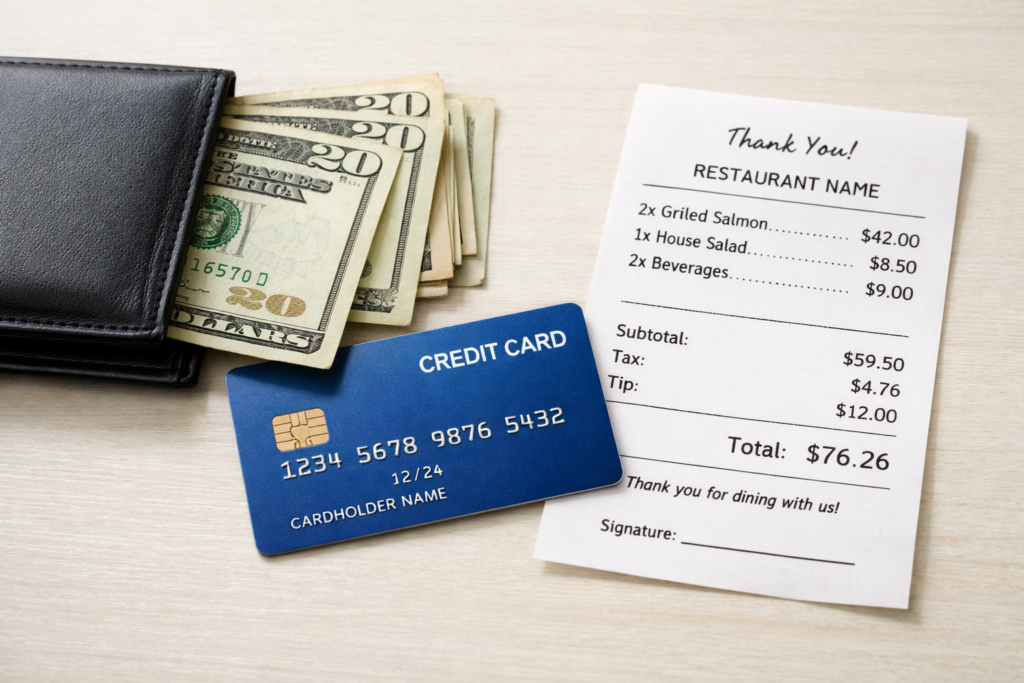
Cash tips
Cash can be appreciated because it’s immediate and flexible. It can also be useful for travel tipping situations like housekeeping, bellhops, and shuttles.
Card tips
Card tipping is convenient and common, especially in restaurants and rideshare apps. If you don’t carry cash, you can still tip fairly by card.
A calm travel strategy is to carry some small bills for the situations where cash is simplest, and use card for everything else.
Tipping outside the U.S.: a quick travel sanity check
If you travel internationally, tipping norms change dramatically.
In many countries, service charges may be included. In some places, tipping can be modest or even considered odd. In others, rounding up is common. The key point is this: don’t assume U.S. tipping rules apply everywhere.
For family travel, a good approach is to:
- Look up the tipping norm for the country you’re visiting
- Ask the hotel concierge what’s typical locally
- Observe what locals do
The goal is not to “tip like an expert.” The goal is to avoid obvious mistakes, and be respectful.
Seniors and family travel: smart tipping strategies that reduce stress
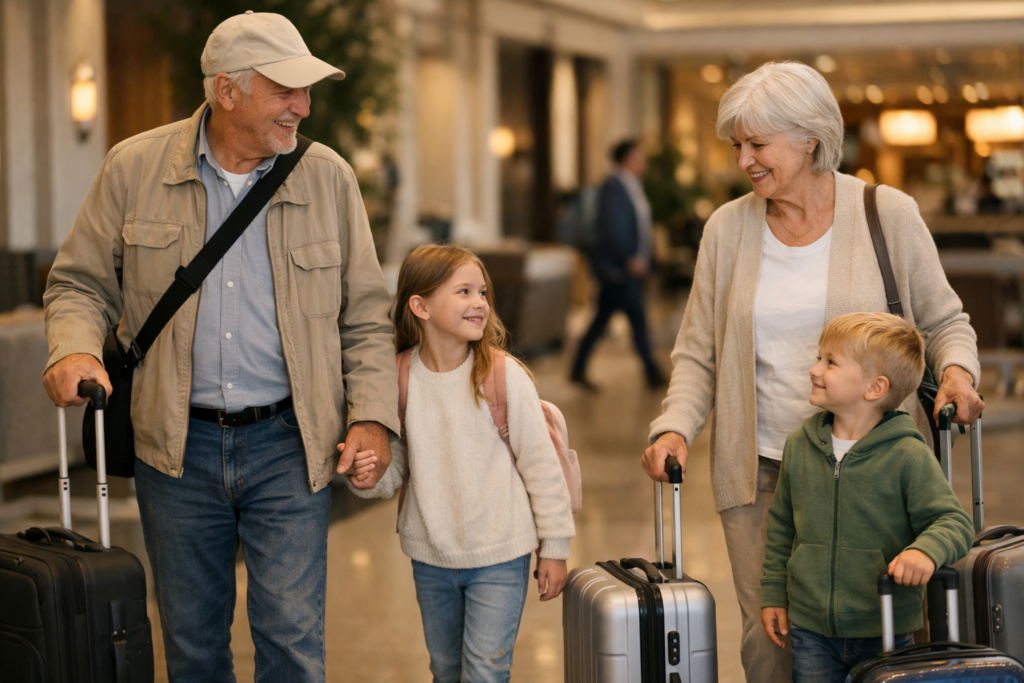
This is where tipping becomes easier with planning.
Set a tipping budget before the trip
If you’re traveling on a fixed income, decide your tipping comfort zone in advance. A plan reduces guilt because you’re not deciding under pressure every time.
Use an envelope system for travel tips
Many travelers keep a small envelope with small bills for:
- Housekeeping
- Bellhops
- Shuttle drivers
- Tour guides
This removes last-minute scrambling.
Tip for accessibility help without feeling awkward
If staff help with mobility issues, luggage, wheelchair access, special seating, or timing breaks, tipping can be a meaningful thank-you. You’re not “paying for kindness.” You’re recognizing real extra effort.
Teach kids the right lesson
If you travel with children or grandkids, tipping is also teaching. The lesson isn’t “always tip big.” The lesson is:
- Appreciate effort
- Treat people with dignity
- Don’t let pressure control you
Let kids see you say thank you, leave a fair tip when appropriate, and decline calmly when it’s not.
Remember: your finances matter
Etiquette never outranks your ability to pay. If tipping is squeezing your budget, reduce it calmly. Being respectful does not require financial strain.
A calm tipping cheat sheet you can bookmark
Use this as a quick check when your brain is tired.
Restaurants
- Sit-down service usually means tipping is standard
- Takeout is usually optional and smaller
- Always check for included gratuity
Bars
- Tips are common for drinks and service
- If you run a tab, tipping like restaurant service is typical
Coffee and counter service
- Tips are optional
- Tip more when service is customized or especially helpful
- Don’t let a screen force your decision
Delivery
- Tips are common because delivery is the service
- Consider distance, weather, stairs, and effort
Rideshare and taxis
- Tips are common, especially with luggage help or long rides
Hotels
- Housekeeping tips are meaningful if you can afford them
- Luggage help and valet usually involve tipping
- Watch for service charges on room service
Tours
- Tips are common when the guide adds real value
Personal services
- Hair, nail, and spa services are commonly tipped
- Medical settings often don’t involve tipping
Retail and self-service
- Tips are usually unnecessary
How to tip without guilt (even when you tip less or not at all)
Guilt usually shows up when the situation is unclear. Clarity fixes that.
Replace guilt with a fair rule
If someone provided real service, tip fairly within your budget. If they didn’t, tipping is optional.
That’s not selfish. That’s logical.
Simple “no-drama” moves that reduce awkwardness
If you don’t want to tip at a counter screen:
- Pay confidently
- Smile
- Say “Thank you”
- Leave
No speech is required.
If you feel pressured, remind yourself: you’re not refusing kindness. You’re declining an optional request.
When service was genuinely poor
You can tip less without being cruel. If you want to be thoughtful:
- Tip something small if you believe the problem wasn’t the worker’s fault
- Speak to a manager if there was a serious issue
- Keep it calm and factual
Anger rarely fixes service. Clarity does.
The bottom line: your goal is fairness, not perfection
Tipping etiquette rules are meant to help people navigate social life with grace. They are not meant to be traps. In 2026, the loudest voices often come from tip screens and confusing receipts, but you can opt out of that noise.
Tip when real service happens. Tip a fair amount that fits your budget. Tip more when someone truly helps you, your family, or your travel day. And when you don’t tip, do it calmly and respectfully.
If you found this guide helpful, bookmark it for your next trip or dinner out. Share it with family members who feel stressed about tipping. The goal is a better experience for everyone—without guilt.
FAQ: Tipping Etiquette Rules in 2026
Is tipping mandatory in the U.S.?
Tipping is usually voluntary, but it is culturally expected in certain service situations, especially sit-down restaurants. Some businesses add automatic gratuity, which is effectively required because it’s on the bill.
Why do tip screens ask for tips in places that never used to?
Many modern payment systems include tipping by default. Businesses can turn it on easily, even when tipping isn’t traditional for that service.
What if I can’t afford to tip 20%?
You can tip a fair amount within your budget. A calm, consistent tip that you can afford is better than financial stress.
Should I tip on takeout orders?
Takeout tipping is usually optional. If the order is large, complicated, or carefully handled, a small tip can be a nice gesture.
Do I tip if there’s already a service charge?
Not automatically. First, find out whether the service charge is a tip for staff. If it is, you may not need to tip more.
Is it rude to leave a zero tip?
In sit-down restaurants, leaving zero can be seen as a strong statement. If service was truly poor, tipping less is a clearer message than tipping nothing, unless there was a serious issue.
Should I tip hotel housekeeping daily or at the end?
Many travelers tip during the stay because housekeeping staff can rotate. If that’s not practical, leaving a clear tip at the end is still appreciated.
Do I tip rideshare drivers?
Tipping is common, especially for long rides, luggage help, or difficult pickups like airports.
Should seniors tip differently than anyone else?
The etiquette rules are the same, but budgeting realities matter. Seniors on fixed incomes can tip fairly without feeling pressured into higher amounts.
How do I handle tipping when traveling internationally?
Don’t assume U.S. norms apply. Many countries include service charges or tip differently. A quick check of local customs can prevent awkwardness.
What’s the best way to avoid tipping mistakes?
Scan receipts for included gratuities or service charges, and decide based on real service rather than tip screens.
Is tipping culture actually changing?
Yes. The pressure is increasing in some places, and many people are pushing back. The best approach is calm consistency: tip fairly for real service, and decline optional tips without guilt.