Published 2026 — consumer culture, etiquette & modern tipping expectations
[author]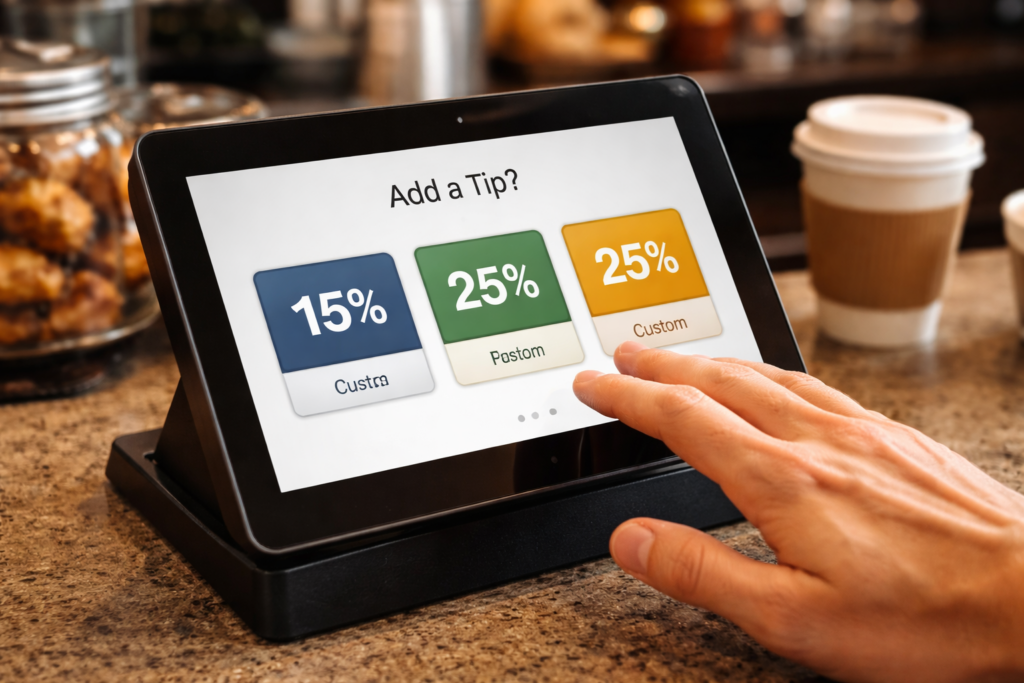
You grab a quick coffee on your way to work — nothing fancy, just a medium latte, no syrup, no coconut foam, no gold flakes sprinkled on top. You pay at the counter, the barista hands you your cup, and suddenly the payment tablet flips toward you with three gigantic buttons: 18%, 20%, 25%. Somewhere, in tiny grey text, “No Tip” hides in the lower corner like it’s ashamed to exist. The barista is looking at you. The line behind you grows. Your brain enters negotiation mode: Is pressing “No Tip” rude? Will they spit in my coffee next time? Am I a monster for not tipping on a $5 drink?
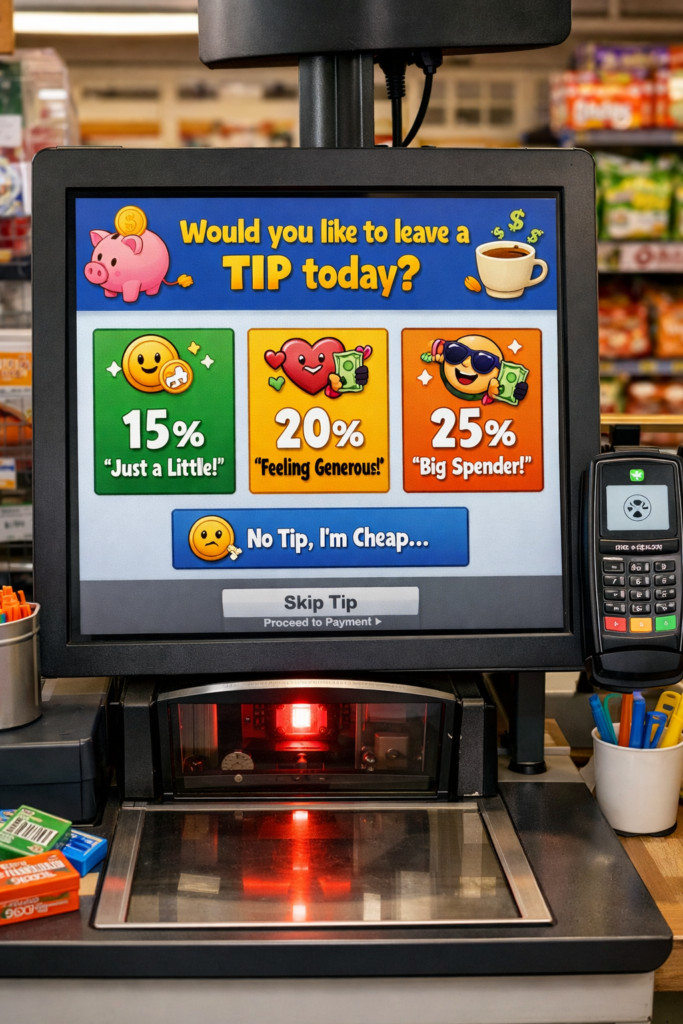
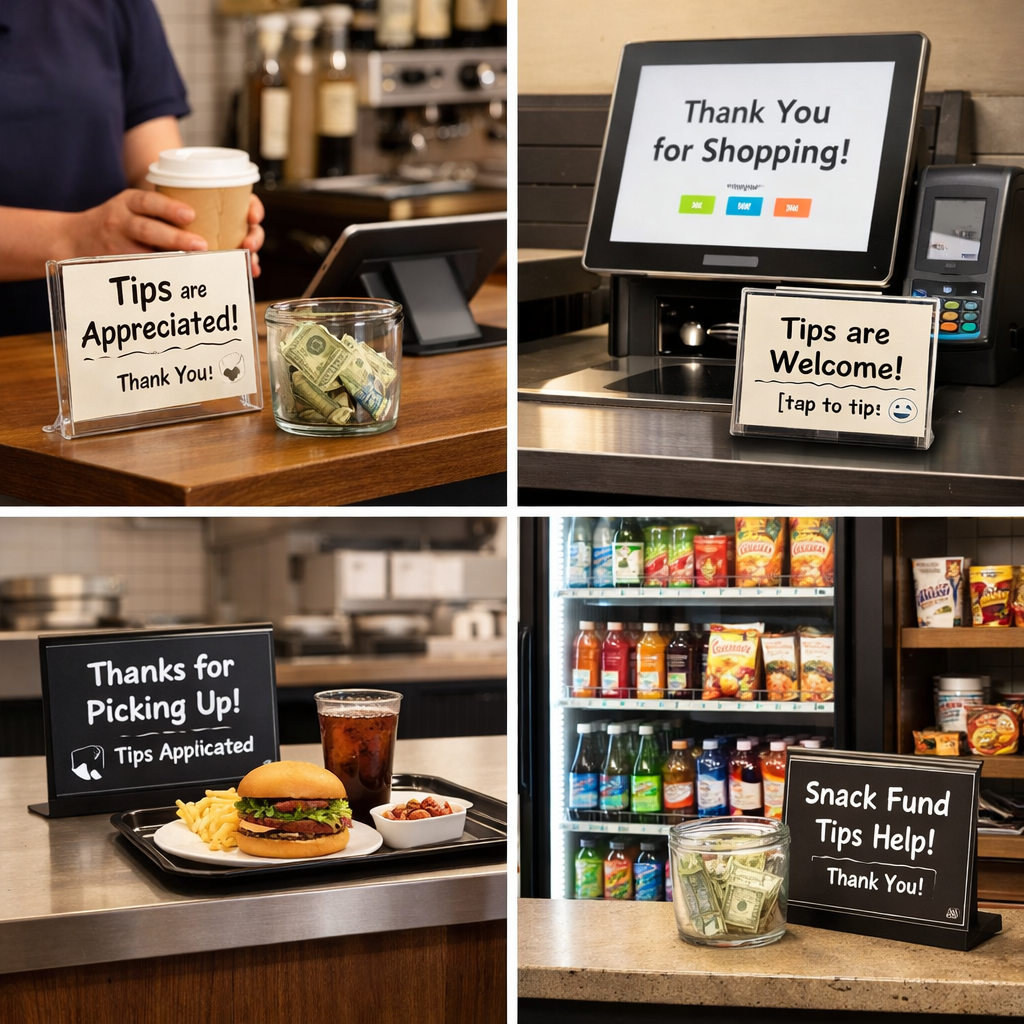
Welcome to Tipflation 2026, the era where tip prompts appear everywhere — even when no service was provided. We’re being asked to tip at self-checkouts, hotel lobby snack fridges, airport kiosks, juice bars, and convenience stores where we literally serve ourselves. What was once reserved for waitstaff who relied on gratuity now appears in places where tipping historically didn’t exist. And consumers are confused, guilty, frustrated, or just numbed to it entirely.
This guide is here to remove the confusion. You’ll learn exactly:
✔ Why tip prompts exploded after the pandemic
✔ Where tipping is still absolutely expected
✔ Which situations are optional (and when you can say no)
✔ Scripts for declining without guilt
✔ Real-world examples to navigate everyday tipping moments
You’re not cheap — you’re adapting to a shifting culture. Let’s break it all down.
Why Tip Prompts Suddenly Appear Everywhere
Only a decade ago, tipping was mostly limited to restaurants with table service, bars, salons, taxis, hotels, and delivery. Today? Self-checkout screens ask you for 20% before you even touch your own bag. Coffee shops flip iPads at you like you’re being sworn into court. Counter-service burrito bowls come with three suggested tip tiers — none lower than 18%.
So what changed?
1. The pandemic reshaped labor economics.
Businesses struggled to retain workers, wages rose fast, and many companies leaned on tipping as a way to share payroll cost with customers. Encouraging tipping became a survival strategy, especially in hospitality.
2. Digital POS systems normalized tipping everywhere.
Thanks to companies like Square, Toast, Clover, and modern terminals, enabling tipping is now a toggle switch — one businesses rarely turn off. The moment the tablet flips toward you, social pressure kicks in. Designers know it, businesses know it, and consumers feel it.
3. The gig economy blurred tipping boundaries.
Apps like Uber, Wolt, Bolt, Instacart, and DoorDash conditioned us to tip gig workers. Once that psychological habit formed, POS systems piggybacked on it.
4. Behavioral design encourages tipping by default.
- Large colorful percentages take center stage
- “No Tip” is small, grey, or hidden
- Some screens require extra taps to decline
- Suggested percentages creep upward (20% is now “standard”)
This isn’t accidental. It’s nudging. In UX terms, it’s a frictionless path to tipping — and a friction-filled path to opting out.
Combine all this and it’s no surprise consumers ask:
“If nobody served me, why am I tipping?”
You’re not imagining it — the rules changed quickly, faster than etiquette could keep up.
Where Tipping Is Still Truly Expected in 2026
With tipping culture shifting, it’s important to acknowledge the areas where tipping remains fair, respectful, and often necessary. These workers spend time, skill, and labor providing personal service — and tipping directly supports them.
Still-tip situations (no debate):
1. Sit-down Restaurants
Waitstaff rely heavily on tips — often the majority of their income. The standard has moved from 15% to 18–20% or more for good service. Large groups may incur automatic gratuity. If your server is attentive, kind, and takes care of your table, tipping is a way of respecting their effort.
2. Bars & Cocktail Lounges
A $1–$2 per drink minimum or 15–20% for tab totals remains customary. Craft cocktails take time, technique, sometimes art. Bartenders juggle multiple orders while chatting like therapists — they earn it.
3. Hairdressers, Barbers, Nail & Spa Services
These are personal, high-skill services involving time and hands-on work. 15–25% is typical depending on quality, detail, and relationship.
4. Delivery Drivers
Food delivery workers face traffic, weather, stairs, long waits, and low base pay. Tipping fairly — often $3–$8 or 15–20% — directly supports them.
5. Hotel Staff
Valet, bellhop, housekeeping — all provide service requiring time and effort. $2–$5 per bag for bellhop, daily housekeeping tips, and something for valet retrieval.
6. Service With Personal Interaction
Massage therapists, pet groomers, private tour guides — personalized attention warrants gratuity.
These are areas where tipping isn’t just expected — it’s appreciated, often essential.
Tipping here isn’t controversial. The confusion starts elsewhere.
The Gray Areas — Where People Feel Guilty Saying No
Now we enter the zone where screens appear, but obligation is unclear. These are everyday examples causing tip-fatigue.
1. Coffee Shops
You order at the counter, barista hands your drink, tablet flips. Should you tip?
Reasonable rule:
- Custom drinks during rush hour? A small tip is kind.
- Regular order? Occasional tipping builds goodwill.
- Quick drip coffee? Optional.
A tip is a thank-you, not a tax.
2. Fast-Casual Counter Service (Chipotle style)
Staff prepare food efficiently but you pick up, seat yourself, bus your own table.
Optional area — many tip small occasionally, not always.
3. Takeout Orders
You’re not receiving table service. Kitchen still works hard — tipping 5–10% is a nice gesture, but not a requirement.
4. Self-Checkout Stations
No human involvement = no obligation. You scanned, bagged, paid yourself. It’s okay to leave guilt-free.
5. Hotel Lobby Snacks / Mini Market
Grabbing a granola bar shouldn’t demand 20% gratitude.
No personal service → no tip necessary.
6. Retail Stores Adding Tip Prompts
Even clothing stores have experimented with tip screens. This isn’t traditional tipping. Declining is normal.
Pressure does not equal obligation. Context matters.
When It’s Perfectly Okay to Tap “No Tip” (Without Guilt)
Here’s your clarity moment.
You can confidently decline tipping when:
- You’re using self-checkout
- You received no service beyond handing an item
- There was zero personal interaction
- A service fee or automatic gratuity is already included
- You didn’t sit, weren’t served, weren’t waited on
- The tip exists purely due to digital prompt pressure
- Service was rude, slow, or poor
- You’re purchasing retail goods, not services
Read that again. Memorize it. Screenshot it. Send it to a friend.
You do not owe a tip just because technology placed a pop-up in front of you.
Scripts you can borrow (silent or spoken)
If someone is watching:
- “Not today, thank you.”
- “Just paying for this one.”
- “No tip this time, but thank you.”
If nobody is watching:
- Tap No Tip.
- Move on with your life.
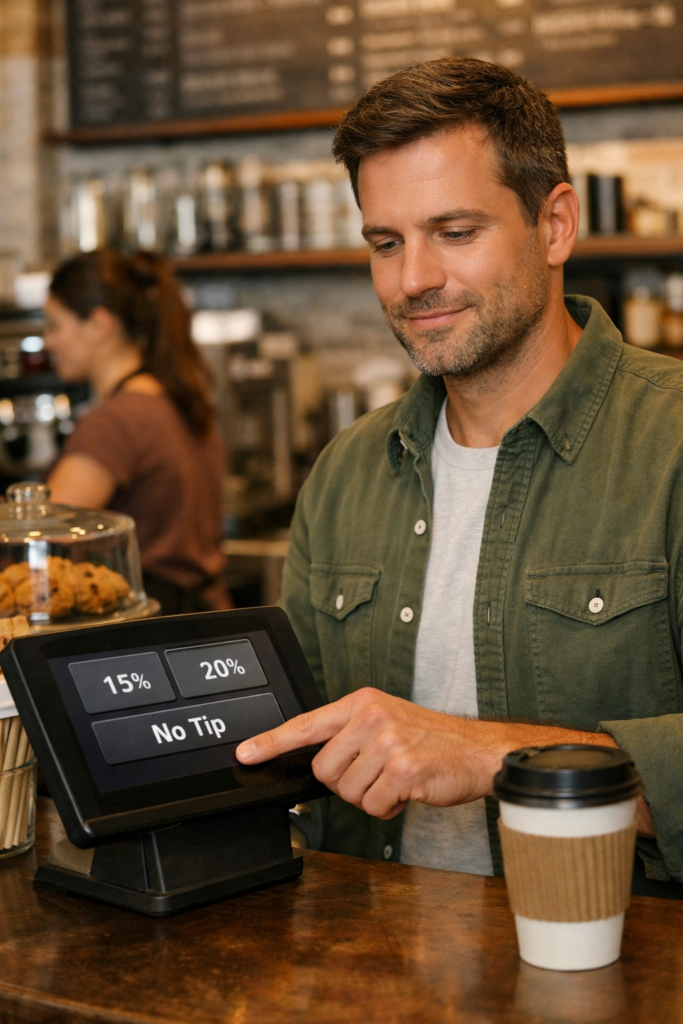
The tablet won’t cry. The barista won’t chase you with a broom. You’re not rude — you’re choosing appropriately.
And here’s a comforting truth: regular occasional tipping is more meaningful than tipping everywhere out of pressure.
Why Saying “No” Feels Hard
Even when logic says “no,” guilt whispers “maybe yes?”
There’s psychology behind it.
- The iPad rotates toward you like a spotlight
- The worker stands beside you, eye contact active
- People in line feel like an audience
- “Social pressure design” makes declining harder
- Humans fear being judged negatively
- We are wired for reciprocity — service triggers generosity reflex
Designers understand this. That’s why “No Tip” is often hidden or smaller. But guilt isn’t a reason to pay extra money you didn’t intend to. You’re allowed to protect your wallet and tip intentionally, not automatically.
Funny enough, most employees don’t judge you for pressing no. They see hundreds of transactions daily. What feels like a spotlight to you is just one tap in a long shift.
The 2026 Tip Etiquette Guide — Your Quick Cheat Sheet
A clean overview you can save or screenshot:
| Scenario | Tip or No Tip? | Why |
|---|---|---|
| Sit-down restaurants | Yes — 18-20%+ | Staff relies on tips |
| Bars & cocktails | Yes | Service + prep effort |
| Haircuts, salons, spa | Yes | Personal service |
| Delivery drivers | Yes | Labor + time |
| Coffee counter pickup | Optional | Basic service only |
| Takeout from restaurants | Optional | No table service |
| Fast-casual restaurants | Optional | Minimal interaction |
| Self-checkout | No tip required | You do the work |
| Hotel lobby snacks | No | Retail transaction |
| Airport kiosk purchases | No | Retail + self-service |
Simple principle
The more effort, personalization, and time given → the more a tip makes sense.
The more self-service → the less obligation exists.
Etiquette evolves, but fairness stays the base.
Real-World Scenarios You’ll Recognize
Morning Coffee Example
You order a latte at 7:30 AM. Barista is friendly, remembers your name.
Tipping a dollar feels great — it supports someone working early to fuel you.
But you grab a bottled soda from a hotel fridge later?
No tip needed. That’s a retail purchase.
Fast-Casual Lunch
You customize a bowl at a counter spot. Staff assembles it fast.
Tip if you feel generous — but the system exists to influence, not obligate.
Self-Checkout at Airport
The machine asks if you’d like to tip 22% on your own scanning labor.
You laugh. You press “No Tip.” You walk away. No guilt.
Grocery Delivery
Driver carries heavy bags to your door in the rain.
This is a moment where tipping directly helps a worker. Good practice.
These stories make rules easier to follow in real life.
If You Still Want to Support Workers Without Always Tipping
You don’t have to throw money everywhere to show appreciation. There are alternative ways to be a good human:
- Leave a positive Google review
- Smile and say thank you
- Be polite during busy rushes
- Visit regularly — loyalty means a lot
- Tip occasionally instead of always
- Compliment good service verbally
- Share the business with friends
When tipping becomes intentional instead of expected, it feels better for both sides.
Conclusion — You Deserve to Pay Fairly, Not Fearfully
Tipflation was born from technology, pandemic economics, and shifting expectations. It isn’t your imagination — tipping prompts have multiplied faster than etiquette guides could rewrite themselves. But you are not obligated to tip everywhere, every time, on everything.
Tipping should represent appreciation — not pressure.
Good service earns gratitude — self-checkout doesn’t.
You are allowed to press “No Tip” without guilt.
Next time the screen flips at you with bold 25% buttons, remember:
You are not rude for choosing based on context.
You are not a bad person for saving your money.
You are not required to tip just because a tablet asked.
Tipping is about kindness — not coercion.