
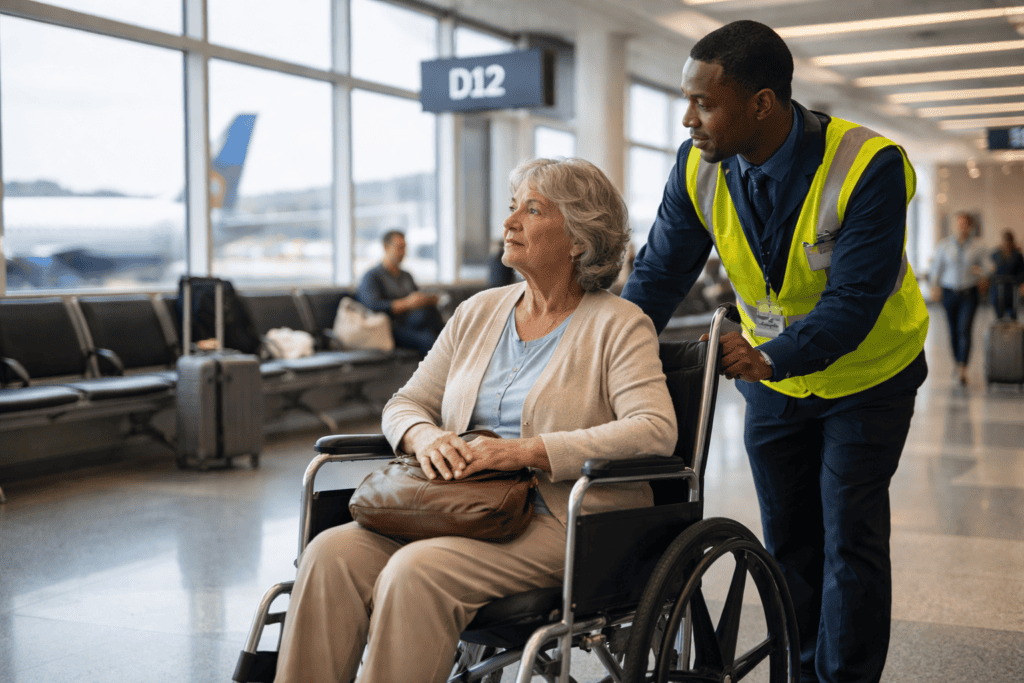
Airport wheelchair assistance can feel like a blessing when a trip would otherwise be exhausting.
For many older travelers, it offers relief at exactly the right moment. Long walks, crowded terminals, moving walkways, gate changes, and security lines can turn an ordinary travel day into something draining and stressful. Knowing help is available can make flying feel possible again.
But there is another side to it that many people do not talk about.
Wheelchair assistance is helpful, but it can also bring quiet worries, awkward moments, and small frustrations that catch travelers off guard. These are not always major problems. Still, they matter, especially when you are already tired, in a hurry, or trying to stay calm in a busy airport.
The good news is that most of these challenges can be handled well with a little preparation and the right expectations.
Once you understand the unspoken side of airport wheelchair assistance, the whole experience becomes easier to manage. Instead of feeling uncertain, you can move through the airport with more confidence, more comfort, and much less stress.
Why Asking for Help Can Feel Harder Than It Should
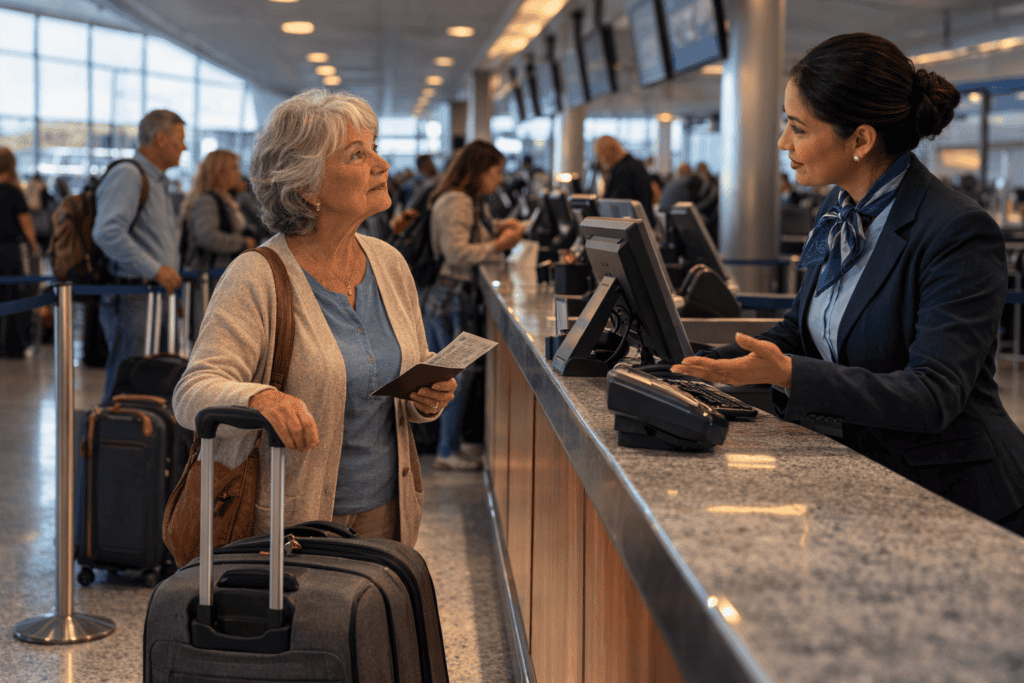
For many older travelers, the first challenge begins before the trip even starts.
It is not always easy to admit that airport walking has become harder. At home, a person may still feel independent and capable. But airports are not like daily life. They are loud, fast, crowded, and built around long distances. A traveler who manages fine in normal situations may still struggle in an airport.
That can create an uncomfortable feeling.
Some people worry that asking for wheelchair help means they are “giving in” to aging. Others feel embarrassed because they do not use a wheelchair in everyday life. They wonder whether they are truly entitled to ask for assistance if they can still walk short distances.
This inner conflict is very common.
Many older travelers do not need help because they cannot walk at all. They need help because airports demand much more walking, standing, and rushing than most people expect. That is reason enough.
There is nothing weak or dramatic about wanting to conserve your energy for the trip itself.
In fact, one of the smartest things an older traveler can do is be honest about what the airport takes out of them. Saving energy at the beginning of the journey often makes the entire day better, from check-in to baggage claim.
The Worry of Not Knowing Exactly How It Works
Another quiet challenge is simple uncertainty.
Many travelers book wheelchair assistance without really knowing what will happen next. Will someone meet them at the curb? At the check-in desk? At security? At the gate? Will the help continue after landing, or only before departure?
Not knowing the process makes people nervous.
This uncertainty can feel surprisingly heavy, especially for older travelers who like to know the plan before leaving home. When details feel vague, the mind starts filling in the blanks. What if no one is there? What if the request was not recorded correctly? What if staff members pass responsibility back and forth?
Even when everything works out, this uncertainty can create stress long before the trip begins.
Airports are full of small unknowns already. Adding one more unknown can make the day feel less manageable.
That is why many older travelers feel calmer when they confirm the request in advance, ask questions early, and plan to arrive with extra time. The more clarity you create before the day of travel, the less mental energy you spend worrying once you get there.
Waiting Can Feel More Stressful Than Walking
People often imagine that the hardest part of airport wheelchair assistance is the ride itself.
In reality, one of the hardest parts can be the waiting.
Waiting for the attendant to arrive can feel much longer than it really is. A few minutes can stretch when the terminal is busy, other travelers are moving around you, and you are wondering whether something has gone wrong.
This kind of waiting feels different from ordinary waiting.
It is not like sitting comfortably at a gate with a coffee. It is active waiting. You are alert. You are watching. You are thinking ahead. You may worry about the check-in line, the security line, or boarding time. You may feel exposed or unsure where to stand.
For some older travelers, this becomes the moment when anxiety rises.
They start wondering whether they should have just tried to walk. They feel self-conscious. They do not want to be in the way. They do not want to bother staff by asking again. So they stand there, trying to stay patient while also feeling increasingly tense.
This is one of the most unspoken challenges of airport wheelchair assistance.
The service is meant to reduce stress, but when there are delays or confusion, the waiting itself can become one of the most stressful parts of the journey.
That does not mean the service is not worth using. It usually is. But it helps to expect that waiting may be part of the experience. That way, if it happens, it feels less like a personal failure and more like something you planned for mentally.
The Physical Relief Is Real, but So Is the Loss of Control
There is no question that airport wheelchair help can make travel physically easier.
It reduces long walks. It can save your legs, your back, and your energy. It may help you arrive at the gate feeling calm rather than completely worn out.
At the same time, it can create an emotional tradeoff.
When someone else is pushing you through the airport, you lose some control over your pace, your direction, and your timing. You may want to pause for a moment, look at a sign, take a sip of water, or stop at a restroom. But now another person is involved.
That can feel strange, especially for people who are used to moving through life on their own terms.
Some attendants are warm, patient, and thoughtful. They notice when a traveler needs a slower pace or a short break. Others are more rushed. They may be trying to cover a large terminal or help multiple passengers in a short time.
That difference in style matters.
A traveler may feel grateful for the help and uncomfortable at the same time. Grateful for the ride. Uncomfortable with the speed. Relieved to avoid the walk. Uneasy about not being fully in charge.
These mixed feelings are normal.
Airport wheelchair assistance is not just a physical service. It is also a personal experience. That is one reason it can feel more emotional than many people expect.
Security and Crowds Can Still Feel Overwhelming
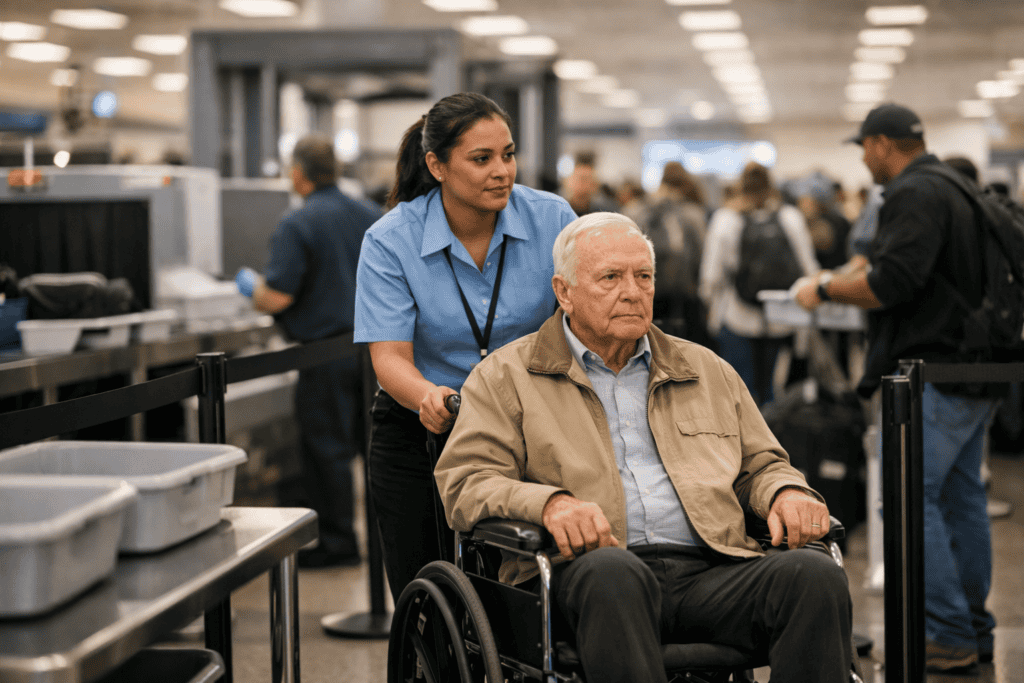
Some travelers assume that wheelchair assistance will make the airport feel calm from beginning to end.
Sometimes it does. But not always.
Even with help, airports can still feel overwhelming. Security remains security. It is still noisy. It is still full of instructions, lines, trays, bags, and pressure to keep moving. Busy terminals still have crowds, announcements, bright lights, and a constant feeling of motion.
The wheelchair can reduce the physical burden without removing the sensory burden.
For older travelers, that distinction matters.
A person may no longer be walking long distances, but they are still trying to follow directions, stay organized, watch their belongings, and understand what comes next. Mental fatigue can build quickly in this kind of environment.
This is especially true when there are changes to the plan.
Maybe the line at security moves differently than expected. Maybe the gate changes. Maybe a staff member says one thing and another says something else. Small changes feel bigger when you are already relying on assistance and trying to keep pace with a busy airport system.
This is why older travelers often benefit from building extra time into the day.
Time creates breathing room. It allows for confusion without panic. It makes it easier to ask a question, use the restroom, reorganize a bag, or simply pause without feeling like the whole trip is starting to unravel.
The Quiet Embarrassment of Being Seen
This is another part few people say out loud.
Being pushed through an airport in a wheelchair can make some travelers feel very visible.
Even if the service is helpful, they may feel self-conscious. They notice people looking. They wonder whether others assume they are more fragile than they really are. They may feel uncomfortable passing people in line or arriving at the gate in a way that feels different from everyone else.
For a proud and independent person, this can sting.
It is not really about vanity. It is about identity.
Many older adults still think of themselves as capable, active, and strong. They may be all of those things. But in an airport wheelchair, they suddenly feel reduced to a visible need. That emotional shift can be hard, even when the practical benefit is obvious.
This feeling is especially common the first time someone uses airport wheelchair assistance.
The first trip often carries the most emotion. It may feel like a turning point, even though it really is just a tool to make travel easier. Over time, many travelers get more comfortable with it. They begin to see it as a practical choice rather than a statement about who they are.
That change in mindset can be freeing.
Help is not the opposite of independence. Sometimes it is what protects independence by allowing a person to keep traveling in comfort and safety.
Tight Connections Can Turn Help Into Pressure
Wheelchair assistance can feel wonderfully calm on a trip with plenty of time.
It feels very different during a short connection.
This is when the service can shift from comfort to pressure. The attendant may move quickly. The traveler may feel rushed. There may be a long distance between gates, crowds to move through, elevators to find, and little time for anything extra.
Even a simple restroom stop can feel complicated during a tight connection.
For older travelers, this can create a strange kind of dependence. The service is helping them make the connection, but it is also shaping the pace of the whole experience. They may feel unable to pause, unable to ask questions, and unable to slow down, because everyone is focused on getting to the gate on time.
That can be exhausting in its own way.
This is one reason many seasoned travelers try to avoid very short connections whenever possible. A little extra time between flights may not seem exciting when booking the trip, but it can make the entire day much calmer.
When travel is already more tiring than it used to be, peace of mind matters more than saving a small amount of time on paper.
The Awkward Question of Tipping
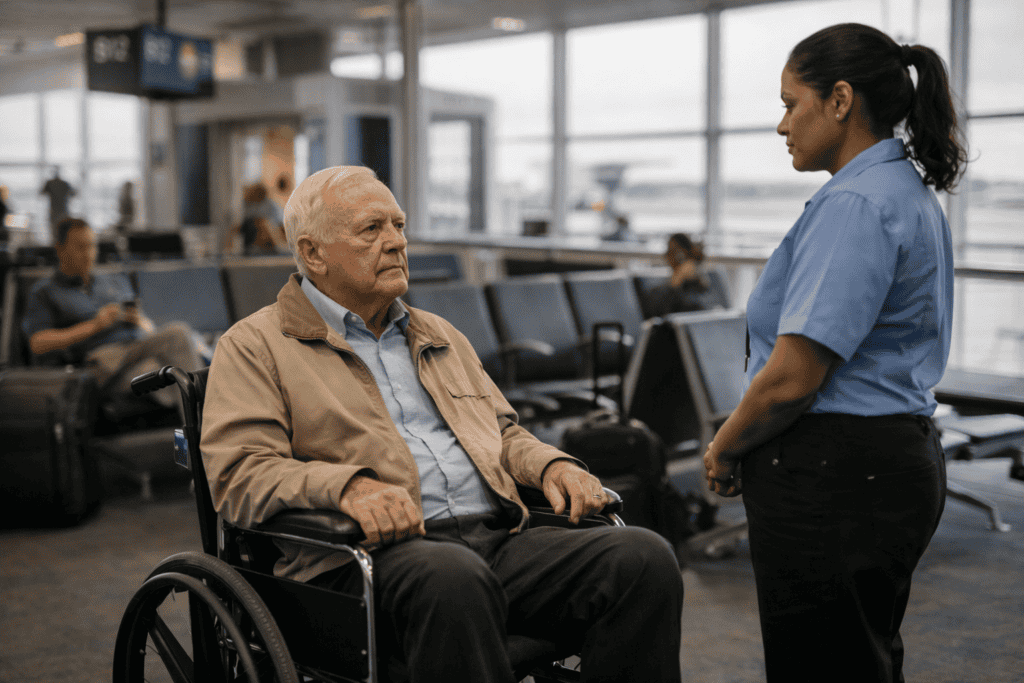
Of all the quiet challenges around airport wheelchair assistance, this is one of the most talked about privately and one of the least explained clearly.
After an attendant helps you through the airport, there is often a moment at the end that feels uncertain.
Do you tip?
Many older travelers feel caught off guard by this. They want to be polite. They do not want to seem ungrateful. But they also do not know what is expected. The service felt official, yet personal. It may have been arranged through the airline, but delivered by an individual who worked hard and treated them kindly.
That makes the moment feel unclear.
Some travelers hand over a small cash tip without hesitation. Others simply say thank you. Some feel awkward because they want to tip but do not have small bills with them. Others feel pressured even when they do not think a tip should be expected.
This uncertainty adds stress to the very end of an already demanding experience.
The emotional challenge here is not just money. It is the fear of doing the wrong thing.
Older travelers often care deeply about manners. They do not want to misread the situation. They do not want to offend someone who has helped them. But they also do not want to feel that a necessary service came with an unspoken social obligation attached to it.
That is why this moment stays on people’s minds.
It is brief, but it lingers.
Kindness Matters More Than Most People Realize
One thing that shapes the whole wheelchair assistance experience is the personality of the person helping you.
A kind attendant can transform the day.
A warm greeting, a calm pace, a little patience, and a few reassuring words can take a traveler from tense to relaxed in minutes. When an older passenger feels seen and respected, the airport stops feeling quite so harsh.
Unfortunately, not every experience feels that way.
Some attendants are rushed. Some seem distracted. Some are perfectly competent but not especially warm. None of this may be personal. Airports are demanding workplaces. Staff may be under pressure, covering long distances, or dealing with many travelers in a short time.
Still, the emotional effect on the traveler is real.
Older adults often remember not only whether the help arrived, but how they were treated. A short interaction can feel meaningful when a person is vulnerable, tired, or far from home.
That is why dignity matters so much in airport assistance.
People do not just want transportation through the terminal. They want to feel that they are being helped as a human being, not processed as a task.
When that happens, everything feels easier. When it does not, even efficient service can feel cold and stressful.
Luggage, Bathrooms, and Small Practical Needs Can Become Bigger Than Expected
Travel looks simple from a distance.
In reality, it is made of small needs that keep coming up all day.
A traveler may need a restroom at an inconvenient time. They may need to adjust a sweater, open a medication pouch, reposition a bag, throw something away, or stop for water. These are all tiny things in normal life. In an airport assistance setting, they can suddenly feel complicated.
That is because every small need now has to fit into a shared process.
Some attendants are happy to stop or wait. Others may seem eager to keep moving. The traveler may hesitate to ask because they do not want to be difficult. They may tell themselves they can wait, even when they would be more comfortable handling the need right away.
This creates silent discomfort.
The traveler is being helped, but also holding back.
That tension can make the whole experience more tiring than expected. Not because anything dramatic happened, but because the person spent the whole time trying to be easy, polite, and low-maintenance.
Older travelers often do this without realizing how much energy it takes.
One way to reduce this strain is to take care of small needs early whenever possible. Use the restroom before things become urgent. Keep important items easy to reach. Carry water if allowed. Keep medications, tissues, and documents where they can be accessed quickly.
Little acts of preparation can prevent bigger discomfort later.
Arriving Can Be More Emotional Than Departing
Many people focus on departure when they think about airport assistance.
Arrival deserves just as much attention.
By the time a flight lands, many older travelers are more tired than they expected. Even if the flight itself was smooth, there is still the walk or ride out of the airport, baggage claim, ground transportation, and the effort of orienting yourself in a new place.
This is often when patience is at its lowest.
A traveler who felt calm at departure may feel drained by arrival. They may just want to sit down, see familiar faces, or get to the hotel. If the post-flight assistance is delayed, confusing, or rushed, it can feel especially discouraging at that stage of the day.
That is why arrival plans matter.
Knowing whether help will continue all the way to baggage claim or pickup can make a big difference. So can telling a family member or driver where to meet you and allowing extra time on the other end.
The journey is not really over when the plane lands.
For older travelers, the final stretch is often the moment when energy is lowest and patience is thinnest. Planning for that can protect the day from ending on a stressful note.
Why Some Travelers Feel More Emotional About It Than They Expected
This may be the most hidden part of all.
Airport wheelchair assistance can stir feelings that seem bigger than the situation itself.
A traveler may feel relief, embarrassment, gratitude, sadness, comfort, frustration, and vulnerability all in the same day. That can be confusing. They may not even know why the experience feels so emotional.
Part of the reason is that travel touches identity.
It reminds people of who they used to be, how they move through the world now, and what kinds of support they need in this stage of life. For some, using wheelchair assistance feels like a practical step. For others, it carries a quiet sense of loss.
Both reactions are valid.
It can help to remember that needing help in an airport says very little about a person’s life outside the airport. Airports are unusual places. They require speed, endurance, and constant adjustment. Accepting help in that setting does not erase strength. It often shows wisdom.
There is no prize for making a travel day harder than it needs to be.
The goal is not to prove anything. The goal is to travel well, conserve energy, and enjoy the trip.
How to Make the Experience Easier and More Comfortable
The best way to handle the unspoken challenges of airport wheelchair assistance is not to fear them.
It is to expect them gently and plan around them.
Request the service early if you think you may need it. Confirm it before the trip if possible. Arrive with extra time so that small delays do not feel like a disaster. Keep important items easy to reach. Bring a few small bills if tipping would make you feel more comfortable at the end.
Most of all, give yourself permission to use the help without guilt.
That one mindset shift can change the entire experience.
When you stop viewing assistance as something shameful or dramatic, it becomes what it really is: a practical support that makes travel more manageable.
And when travel feels more manageable, it becomes more enjoyable too.
Final Thoughts
Airport wheelchair assistance can be a wonderful help.
It can reduce strain, preserve energy, and make flying possible for people who might otherwise dread it. But it also comes with unspoken challenges that deserve more honest attention.
There may be waiting. There may be awkwardness. There may be moments of uncertainty, vulnerability, or quiet frustration. None of that means you should avoid the service. It simply means the experience is more human and more layered than people often admit.
For older travelers, that honesty can be a relief.
The goal is not perfect travel. It is supported travel.
With the right expectations, a little preparation, and a little self-kindness, airport wheelchair assistance can become much less intimidating. Instead of feeling like a sign of limitation, it can feel like a smart way to protect your energy and enjoy the journey with more ease.
And that, in the end, is what most people want from travel anyway.
Not to prove they can do everything the hard way.
But to arrive feeling calm enough to enjoy where they are going.