
Traveling Through the United States While Learning the Language of Tipping
Traveling through the United States is not just a journey across distance. It is a journey across expectations. The landscapes change fast, but the social rules change even faster. One moment you are driving through a desert that feels endless. The next, you are standing inside a warm restaurant, holding a receipt, wondering what the correct thing to do is with the number printed at the bottom.
Tipping in the United States is not a side detail. It is part of the experience. It follows you from city cafés to mountain lodges, from late-night diners to luxury ski resorts. You cannot ignore it, and you cannot approach it casually if you want to understand the country you are traveling through.
This is a story about traveling in the U.S., about restaurants and ski resorts, about movement and stillness, and about the quiet mental math that happens at the end of almost every meal.
Arrival in a Country That Runs on Motion
The first thing you notice when traveling in the United States is scale. Everything feels slightly larger than expected. The roads stretch wider. The cars feel heavier. The distances between places demand planning. You do not casually wander from city to city. You commit.
Traveling here teaches patience and intention. You rent a car. You check fuel levels. You think in hours rather than minutes. And somewhere along the way, between highways and hotel check-ins, you begin to notice how often money quietly enters the conversation.
Not loudly. Not aggressively. Just consistently.
Tipping as an Unspoken Agreement
In many parts of the world, tipping is optional or symbolic. In the United States, it is structural. It is built into wages, expectations, and social contracts.
As a traveler, this can feel uncomfortable at first. You are not just paying for food or service. You are participating in a system. One that assumes you will do your part.
In restaurants, tips are not bonuses. They are income. This changes how you read the room. How you interpret friendliness. How you judge service.
The smile matters. The refill matters. The check-in matters.
And when the bill arrives, the decision is not whether to tip, but how much.
Restaurants as the First Classroom
American restaurants are often the first place travelers encounter tipping culture directly.
Servers introduce themselves by name. They check in frequently. They ask how everything tastes. They clear plates quickly. They move with purpose.
At first, this can feel performative. But over time, you realize it is professional. This is work done with awareness that the tip is part of the wage.
In most sit-down restaurants, tipping around twenty percent is considered standard. Less feels like a statement. More feels like gratitude.
As a traveler, you begin to build a reflex. You see the subtotal. You calculate mentally. You round. You pause. You sign.
This ritual repeats itself again and again.
Movement Between Meals
Traveling in the U.S. is often structured around meals. Long drives break for lunch stops. Evening plans end with dinner. Ski days revolve around lodge food and après-ski culture.
Food becomes the punctuation mark of movement.
And tipping follows every punctuation.
Coffee shops. Bars. Diners. Food trucks. Each has its own expectations. Screens turn toward you with suggested amounts. Jars sit by registers. Tablets ask questions without words.
You begin to notice how tipping has expanded beyond restaurants. It has become a presence.
The Shift When You Reach the Mountains
Everything changes when you arrive at a ski resort.
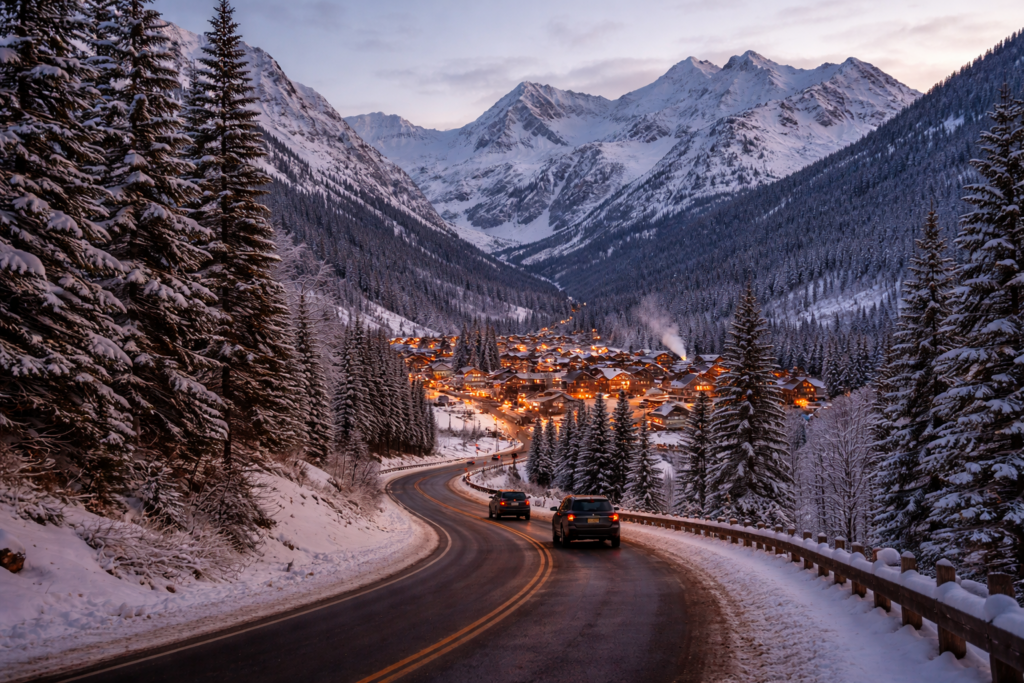
Places like Aspen or Vail are worlds unto themselves. Small towns built around snow, elevation, and seasonal rhythm. During winter, they pulse with life. During off-season, they breathe.
Ski resorts are where tipping culture becomes layered.
You are no longer just tipping servers. You are tipping drivers, instructors, boot fitters, valets, guides, bartenders, and sometimes people whose job titles you do not fully understand.
And yet, every tip feels personal.
The Ski Lodge as a Social Center
Ski lodges are not just places to eat. They are places to thaw. To rest. To compare runs. To laugh. To recover.
Inside, boots clomp against wooden floors. Jackets pile on chairs. Steam rises from drinks. Outside, snow falls quietly.
You order food that feels earned. Burgers taste better after hours on the slopes. Soup feels restorative. Hot chocolate feels necessary.
The bill comes. The temperature difference between outside and inside mirrors the cultural difference you are navigating.
Tipping here feels heavier, not in cost, but in meaning. These workers live in high-cost areas. Many are seasonal. Many depend deeply on tips.
You sense this even if no one explains it.
The Mental Math on the Mountain
Ski resorts are expensive. Lift tickets. Rentals. Lessons. Food. Everything adds up quickly.
When tipping enters the picture, it can feel overwhelming. You start tracking expenses mentally. You start making choices more deliberately.
You ask yourself questions you did not expect to ask.
How much should I tip for a lesson?
Is tipping expected for equipment help?
What about shuttle drivers?
What about lodge staff?
There are no signs. No instructions. Just norms, passed through experience.
Learning by Watching Others
As a traveler, you learn tipping culture in the U.S. by observing.
You watch locals. You notice how they interact. You see how money changes hands subtly.
You notice confidence. Americans rarely hesitate when tipping. They do it smoothly. Quickly. Without apology.
This confidence teaches you something important.
In the U.S., tipping is not meant to be dramatic. It is meant to be normal.
Restaurants at Ski Resorts Feel Different
Restaurants in ski towns have their own rhythm.
Lunch is rushed. People want to get back outside. Dinner slows down. Stories are exchanged. Glasses are refilled. The day is processed.
Service is often friendly, sometimes chaotic, always moving.
Tipping here feels less abstract. You can see the fatigue. You can feel the altitude. You sense the intensity of seasonal work.
Your tip becomes part of the ecosystem.
Traveling Without Judging the System
It is tempting to judge tipping culture if you are not used to it. To compare it to your home country. To question its fairness.
But travel teaches restraint.
You do not need to solve the system to respect it. You only need to participate honestly while you are inside it.
In the U.S., tipping is part of how things work. Ignoring it does not make a statement. It creates friction.
Understanding that difference is part of understanding the country.
The Emotional Side of Tipping While Traveling
Tipping while traveling can feel emotional in unexpected ways.
You are often relaxed, happy, tired, or exhilarated. You associate service with experience. You connect people with moments.
A great meal after a long drive feels generous. A warm drink after skiing feels earned. A friendly conversation feels human.
When you tip, you are not just paying. You are acknowledging shared time.
The Quiet Anxiety of Getting It Wrong
Even experienced travelers feel a quiet anxiety around tipping in the U.S.
Too little feels wrong. Too much feels unsustainable. You wonder if you are being judged, even when you are not.
This anxiety fades with repetition. After a few days, your body learns the rhythm. Your hand moves without hesitation. Your calculations become automatic.
The system stops feeling foreign.
Road Trips, Diners, and Small Towns
Some of the most memorable meals in the U.S. happen in places you did not plan to stop.
Roadside diners. Small-town cafés. Mountain bars with one menu item done perfectly.
In these places, tipping feels intimate. You often talk to the same person the entire meal. They ask where you are from. They share local advice.
You feel seen.
Your tip becomes a thank-you for more than food.
The Difference Between Urban and Resort Tipping
Cities and ski resorts share tipping culture, but the context shifts.
In cities, service is fast, professional, sometimes distant. In resorts, service is personal, seasonal, sometimes strained.
Both expect tips. But the reason feels different.
In ski towns, tipping often feels like support. In cities, it feels like protocol.
Understanding this difference changes how you experience both.
Traveling Teaches Adaptation
Traveling in the U.S. teaches adaptation through repetition.
You adapt to distances. You adapt to accents. You adapt to portion sizes. You adapt to tipping.
At some point, you stop translating everything back to your home country. You accept the environment on its own terms.
This is when travel stops being comparison and starts being experience.
Restaurants as Anchors in a Moving Journey
When you travel across the U.S., restaurants become anchors.
They mark progress. They create memory. They give shape to days that might otherwise blur together.
You remember cities by meals. You remember ski trips by lodge lunches. You remember long drives by late dinners.
And tipping quietly ties these moments together.
Ski Resorts and the Economics of Hospitality
Ski resorts operate on tight seasonal cycles. Winter is intense. Summer is quieter. Workers move in waves.
Tipping supports this cycle. It fills gaps. It stabilizes income. It reflects the reality of temporary communities built around snow.
As a traveler, recognizing this adds depth to the experience. You are not just consuming. You are participating.
The Strange Comfort of Predictability
Once you understand tipping norms, they become comforting.
You know what is expected. You know how to respond. You know how to move through interactions smoothly.
This predictability frees your attention for what matters more. The view. The food. The people. The experience.
When Tipping Becomes Invisible
The goal is not to think about tipping forever.
The goal is for it to fade into the background. To become automatic. To stop interrupting the moment.
When that happens, you know you have adapted.
Leaving the U.S. With a New Perspective
When you eventually leave the United States, tipping stays with you as a lesson.
Not because you will replicate it elsewhere, but because it teaches awareness. It teaches respect for local systems. It teaches participation without judgment.
You leave understanding that travel is not about comfort. It is about learning how things work where you are.
Final Thoughts on Movement, Meals, and Money
Traveling in the United States is an education in motion.
You move across vast distances. You stop often. You eat frequently. You tip constantly.
At ski resorts, this rhythm intensifies. Cold and warmth alternate. Effort and rest cycle. Service and gratitude exchange places.
Tipping becomes part of the landscape, just like mountains and highways.
It is not the focus of the journey, but it shapes it.
And when you look back on your travels, you may not remember the exact amounts you tipped.
But you will remember the feeling of learning how to belong, even briefly, in a place that does things its own way.