
You’ve booked the cruise. You’ve picked your shore excursions. You’ve probably even planned what shoes to wear and which documents to carry.
Then the night before port day, a very practical question shows up:
How much am I supposed to tip on shore excursions?
It’s one of the most searched cruise questions for a reason. Shore excursions sit in a weird middle space. They feel “official” because you booked them through a cruise line or a glossy tour company. But they’re often run by local operators who work on a very different pay structure than ship staff. Sometimes gratuities are included. Sometimes they aren’t. Sometimes they’re “included” in a way that doesn’t actually reach the guide you just spent six hours with.
The good news is you don’t need to guess or feel awkward. You can tip confidently, kindly, and consistently without overpaying or feeling pressured. This guide walks you through tipping norms for the most common cruise excursions—snorkeling trips, city tours, private drivers, and more—plus the simple rules that make everything easier.
If you’re traveling as a senior, with a fixed budget, or with a group that includes people who tip differently, this is designed to take the stress out of it.
Why Shore Excursion Tipping Is So Confusing
On the ship, tipping is often systemized. Many cruise lines charge daily gratuities. Some include service charges in drink packages and specialty dining. Even when you add extra for exceptional service, the baseline is handled.
On shore, there is no single system.
Shore excursions can be sold by the cruise line but operated by a local company. The cruise line may take a cut, the tour company may have its own policies, and the guide may be paid a modest base wage that assumes tips will make up a meaningful portion of income. In some destinations, the entire tourism economy runs on that assumption.
Another reason it’s confusing is language. You’ll see phrases like “gratuities included,” “gratuities not required,” or “tips appreciated.” Those phrases sound clear, but they often aren’t. “Included” might mean a service fee is built into the excursion price. It might mean a general gratuity pool exists. It might mean nothing at all beyond a polite attempt to reduce questions.
Then there’s the human factor. Guides are skilled at reading people. Some will never mention tipping. Others will casually say, “Tips are not included,” near the end. Some will place a tip jar out. Some will hand out envelopes. Some guests tip heavily. Some tip nothing. If you’re not prepared, it can feel like you’re doing a social test at the exact moment you just want to get back to the ship.
The goal is not to become an expert in every country’s customs on every port day. The goal is to have a simple framework that works in most cruise destinations, with a few adjustments for the type of tour you’re on.
General Tipping Rules for Cruise Shore Excursions
If you remember nothing else, remember this:
If the excursion involves personal service, safety responsibility, or a guide who actively adds value, tipping is usually expected.
Think of excursions in three broad categories:
Guided experiences
These include city tours, historical walks, snorkeling trips, wildlife tours, and cultural experiences. A guide is doing more than transportation. They’re managing a group, teaching, translating, keeping things on time, and often handling safety.
Service-driven experiences
These include private drivers, small-group tours, boat crews, and any excursion where staff are directly assisting you. The more personal the service, the more likely a tip is expected.
Mostly-ticket experiences
These include things like a shuttle to a beach club where you basically pay for entry, or a transport-only transfer. Tipping is usually smaller here, sometimes optional, unless the driver or staff provided meaningful help.
A second rule that keeps tipping fair:
Tip based on the experience you received, not just the price tag.
An expensive excursion might be expensive because of fuel costs, permits, or entrance fees. That doesn’t automatically mean the guide deserves a huge tip. On the other hand, a low-cost walking tour can involve a guide who is working hard and making your entire day memorable.
A third rule, especially helpful for seniors and budget travelers:
You can be kind without overspending.
A respectful tip is not about making a statement. It’s about acknowledging the work and care you received. If you tip consistently within a normal range, you’ll rarely be “wrong.”
Finally, a rule that avoids awkwardness:
Decide your tipping plan before you step off the ship.
When you decide ahead of time, you won’t be swayed by pressure, confusion, or what someone next to you is doing. You’ll simply do what you planned.
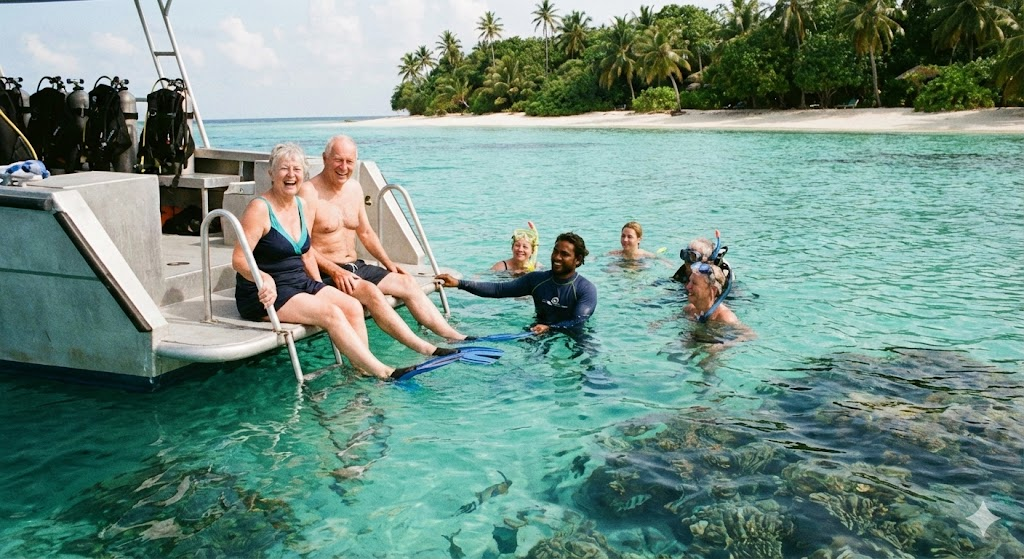
Tipping on Snorkeling and Water Excursions
Snorkeling excursions are one of the most common cruise add-ons, especially in the Caribbean, Mexico, Hawaii, parts of Europe, and many island ports. They also have some of the clearest tipping expectations because safety and hands-on help are part of the job.
Are tips expected on snorkeling excursions?
Most of the time, yes.
Even if you’re a confident swimmer, the crew is doing a lot behind the scenes. They’re fitting masks and fins. Managing gear. Explaining currents and safety rules. Watching the group in the water. Helping people get in and out of the boat. Handling emergencies. Keeping you comfortable. Often, they also take photos, provide snacks, and coordinate timing so you’re back to the ship safely.
If you received active assistance, a tip is generally expected.
How much to tip snorkeling guides and crews
For a standard group snorkeling excursion, a practical tipping range is:
About five to ten dollars per person for the guide or lead crew member
About two to five dollars per person for additional crew, if there are multiple staff members
If it’s a smaller group or the staff gave extra hands-on help, you can lean higher:
About ten to fifteen dollars per person for the guide or lead staff
For couples, it’s common to tip as a couple rather than strictly per person, but “per person” is a safer way to estimate so you don’t under-tip on tours where staff truly work with each individual.
For families, it’s okay to tip based on the number of adults receiving service if young kids were essentially along for the ride, but if the crew spent real time helping children with gear and safety, consider tipping on the full group size.
When tips may already be included
Sometimes higher-end snorkeling excursions include a service charge, especially those marketed as luxury catamaran trips or all-inclusive experiences. Even then, it’s common to offer a small additional tip if the crew was exceptional.
The key is not to guess. Look for wording in the excursion description. If it clearly states gratuities are included, you can tip extra only if you want to.
If it’s unclear, assume tips are not included and tip within normal ranges.
Senior-friendly tipping considerations for water excursions
Many seniors choose snorkeling or boat tours but appreciate extra support. If staff helped you with balance, stairs, ladders, gear adjustments, or took time to ensure you felt safe, that’s meaningful service.
You don’t have to tip dramatically more. You can simply tilt toward the upper end of the normal range. That’s enough to show appreciation without feeling like you’re paying a penalty for needing help.
What if you didn’t snorkel?
Sometimes people book a snorkeling excursion and then decide not to enter the water. Maybe the waves are rough. Maybe you don’t feel well. Maybe you realize it’s not comfortable.
If the crew still provided transportation, food, guidance, and general service, a modest tip is still appropriate. It doesn’t need to be the full amount you planned for a full experience, but a few dollars per person is considerate.

Tipping City Tours and Sightseeing Excursions
City tours are often where tipping anxiety spikes. You have a guide, a driver, maybe an assistant. The tour might involve walking, bus travel, museum entry, and timed stops. It can be hard to know who to tip and how much.
Here’s the simplest way to think about it:
If someone guided, taught, managed, or safely transported you, tipping is usually appropriate.
How much to tip a city tour guide
For a typical group city tour, common tipping ranges are:
About five to ten dollars per person for the main tour guide
If the tour is short, very simple, or mostly transport and ticket entry, five dollars per person is often fine.
If the tour is longer, more educational, or the guide is truly excellent, aim closer to ten dollars per person.
For small-group tours with more personal attention, you can lean slightly higher.
Should you tip the bus driver?
Many people forget the driver. Drivers are often separate from the guide and may not receive a share of guide tips. Drivers manage safety, timing, and complex traffic patterns in unfamiliar places. On longer tours, they often load mobility aids, help with entry and exit, and adjust stops.
A common range is:
About two to three dollars per person for the driver
If it’s a full-day tour, you can go a bit higher, especially if the driver was helpful or patient.
What about walking tours?
Walking tours can be very tip-dependent, especially in tourist ports. For a guided walking tour, typical tips are:
About five to ten dollars per person
If your guide was simply pointing directions and the tour felt basic, a lower amount is fine. If they were lively, knowledgeable, and made the city feel like a story rather than a checklist, tipping at the higher end makes sense.
Senior-specific considerations for city tours
Seniors often choose city tours for comfort and safety. A great guide makes a huge difference by:
Choosing easier walking routes
Finding shade and rest stops
Managing bathroom breaks
Helping people keep up without embarrassment
Offering clear instructions in busy areas
Adjusting pacing
Those things matter. If you noticed them, your tip can reflect that.
Again, you don’t need to go overboard. Staying in the upper end of the normal range is a perfect way to say, “That care mattered.”

Tipping Private Drivers and Private Tours
Private drivers and private tours are in their own category because the service is personal. This is where tipping can feel most like a gray area, especially if you’ve paid a premium price.
Here’s the truth:
Many private drivers and private guides expect tips.
They may not demand it, but tips are a normal part of the arrangement in many cruise destinations, particularly in the Caribbean, Mexico, Central America, parts of the Mediterranean, and anywhere with a strong tourism industry.
Why private drivers often expect tips
A private driver does more than drive. They often:
Customize the schedule
Wait while you tour or shop
Offer local recommendations
Help you avoid tourist traps
Adjust stops for comfort
Help with entry, exit, bags, and mobility needs
Manage time so you get back to the ship safely
That’s real value.
How much to tip a private driver
A practical approach is to tip per group rather than per person, since the service is shared.
Common ranges:
For a half-day private driver: about fifteen to twenty-five dollars per group
For a full-day private driver: about thirty to fifty dollars per group
If your group is large, the work increases. If your group is small and the driver was outstanding, you can tip toward the higher end.
Private driver vs private guide
Sometimes the driver is also the guide. They narrate, teach, translate, and lead. In that case, tipping toward the higher end makes sense because you’re tipping for two roles.
If you hired both a guide and a driver, split tips accordingly rather than tipping one person heavily and ignoring the other.
Seniors and private tours
Private tours are popular with seniors for a reason. They allow:
Comfortable pace
More restroom flexibility
Less crowd stress
Better seating and shade
More control over walking distance
More personalized attention
If your driver delivered that calm, safe experience, tipping is a nice way to acknowledge it.
Regional Tipping Differences on Shore Excursions
Tipping culture isn’t identical everywhere. The same tip that feels normal in one place can feel generous in another. Cruise travel adds another layer: ports cater to Americans, so even countries with lower tipping norms sometimes see higher tip expectations in cruise-heavy areas.
Instead of trying to memorize a “perfect” country chart, use regional awareness as a small adjustment to your standard approach.
Caribbean and Mexico
Tipping is commonly expected, and US-style tipping behavior is widespread in cruise ports. Many excursion workers rely on tips.
If you are cruising the Caribbean, it’s safe to assume:
Tips are expected for guides, drivers, and crews
Cash tips are common
Tip jars and envelopes are normal
Alaska
Alaska excursions can be pricey and often involve skilled guides—wildlife experts, nature guides, fishing crews, and adventure leaders. Tips are commonly expected, especially when guides are responsible for safety and specialized knowledge.
If your guide gave educational insight, handled safety well, or made wildlife viewing feel special, tipping is a normal part of the experience.
Europe
Europe is more varied. In many places, tipping exists but is smaller and less automatic. That said, cruise tourism can shift expectations. Guides who work primarily with cruise passengers may still anticipate tips.
In much of Europe:
Small tips are appreciated
Large tips are less common
A modest tip is usually enough if you choose to tip
If you’re unsure, a moderate tip in the lower end of normal ranges is generally safe.
Asia and Australia
In some parts of Asia, tipping has historically been less common, though tourist areas are changing. Australia is not traditionally tip-heavy, but tips can still be appreciated for exceptional service.
If your tour is clearly targeted to cruise passengers, a modest tip is usually fine.
The bigger rule here is respect: if the guide is professional and never hints about tipping, you can keep it modest.
Do Cruise Line Excursions Include Gratuities?
Sometimes yes, often no, and frequently it’s unclear.
Some cruise excursions include a service charge. Others don’t. Some include it but distribute it in a way that doesn’t feel satisfying to guests who want their guide directly rewarded.
If you want to avoid guessing, look for these patterns:
If the excursion is premium, luxury, or heavily all-inclusive, gratuities might be included.
If the excursion is a standard group tour, tips are usually not included.
If the description doesn’t clearly say tips are included, assume they are not.
Even when gratuities are included, many guests still tip a little extra for exceptional service, especially on private tours or water-based activities.
A practical mindset is this:
Included gratuities remove obligation. They don’t remove the option to show appreciation.
So if tips are included and the service was average, you can comfortably do nothing. If the service was truly great, a small extra tip is a kind gesture.
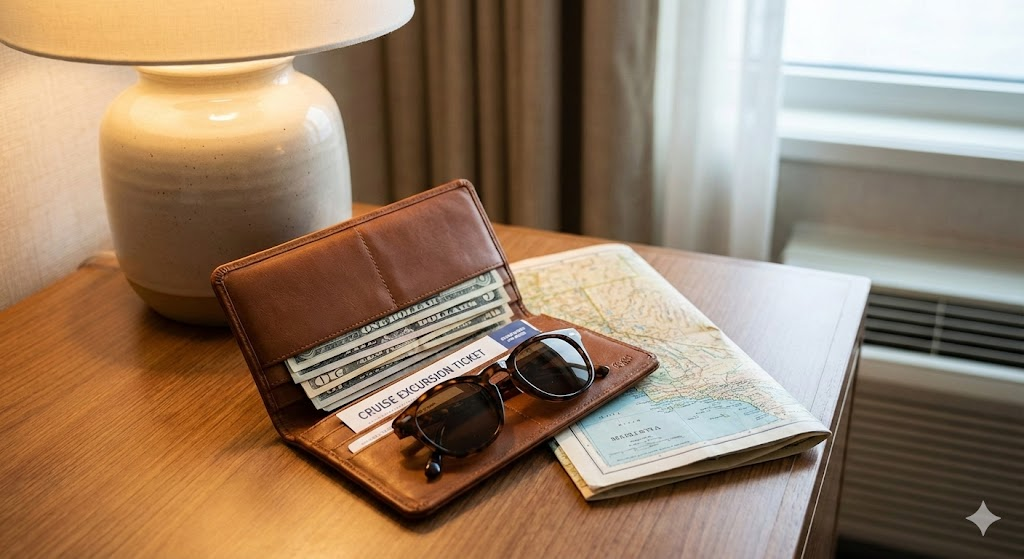
Cash vs Card for Shore Excursion Tips
Cash is king for shore excursions.
Many guides and drivers cannot easily accept cards for tips, or card tipping may be pooled or delayed. Cash is immediate and direct.
What currency should you use?
In many cruise ports, small US bills are widely accepted, especially in the Caribbean and Mexico. In Europe, local currency can be more appropriate, but US dollars are still often accepted in cruise tourist areas.
If you plan to use US dollars, bring:
One-dollar bills
Five-dollar bills
Ten-dollar bills
Avoid relying on a single large bill. Making change on the spot is awkward and sometimes impossible.
A simple system that prevents stress
Before port day, set up small tip “packs.” You can do this in envelopes or simply folded bills.
Examples:
Snorkeling: two five-dollar bills per person
City tour guide: one five and one one per person
Bus driver: a couple of ones per person
Private driver: one twenty and one ten per group, with flexibility
This is especially helpful for seniors who prefer not to fuss with wallets and counting money while stepping off a bus.
What if you don’t have cash?
If you truly can’t get cash, ask politely if card tips are possible. Some operators can accept it. Many can’t. If you end up unable to tip, a sincere thank-you still matters, and leaving a positive review when possible can help their business.
But if you can plan ahead, cash is the smoothest route.
Common Shore Excursion Tipping Mistakes
Most tipping mistakes aren’t about being cheap. They’re about being unprepared.
Here are the most common ones, and how to avoid them.
Assuming tips are included because the excursion is “official”
Booking through the ship can create a false sense of coverage. Many cruise-sold excursions are run by local companies. The cruise line’s involvement does not automatically mean the guide is fully compensated without tips.
If the description doesn’t clearly say gratuities are included, plan to tip.
Over-tipping because other guests are watching
Group tours can feel like social theater at the end. Someone starts handing out money, and suddenly you feel pressure to match. That pressure can lead to tipping far more than you intended.
This is why deciding your tip plan in advance is powerful. When you already know what you’ll do, you won’t feel pulled by other people’s choices.
Forgetting the driver
Guides are visible. Drivers are often quiet. But drivers carry the responsibility of safe transport and timing. If there’s a driver, consider a modest tip.
Tipping with one large bill and hoping for change
It’s awkward and sometimes impossible. It can also create a strange moment where the guide feels pressured to make change from personal money.
Bring small bills.
Feeling like you must tip even for poor service
You don’t.
If the service was truly poor—unsafe behavior, rude conduct, disorganization that hurt the experience—you can reduce your tip or skip it. If you skip it, do so calmly. You don’t owe a confrontation.
A simple “Thank you” and moving on is enough.
A Simple Shore Excursion Tipping Cheat Sheet
Use this as a practical starting point. Adjust slightly up for exceptional service, small groups, or extra help. Adjust slightly down for minimal service or extremely short tours.
Snorkeling and boat excursions
Tip the guide or lead crew about five to ten dollars per person
Tip additional crew about two to five dollars per person if they provided direct help
City tours and cultural tours
Tip the main guide about five to ten dollars per person
Tip the bus driver about two to three dollars per person on longer tours
Walking tours
Tip the guide about five to ten dollars per person
Private driver
Half-day: about fifteen to twenty-five dollars per group
Full-day: about thirty to fifty dollars per group
Private guide (if separate from driver)
About twenty to forty dollars per group depending on length and service level
If you’re traveling as a couple, think in “per person” terms when estimating, then hand the total as one tip. It avoids underestimating and keeps things simple.
How to Tip Without Feeling Awkward
Even people who tip regularly can feel awkward on excursions because the moment is public and unclear.
Here are ways to make it smooth.
Tip at the end, unless service is ongoing
For most tours, tipping at the end is standard. It reflects the full experience and avoids needing to tip multiple times.
The exception is a tour with multiple stages and multiple staff where you may not see someone again—like a boat crew member who helped you early on and then disappears. In those cases, tipping at the end is still fine, but be aware of who is present.
Hand the tip directly when possible
If you can hand the tip to the guide or driver directly with a simple “Thank you,” it feels personal and respectful.
You don’t need to announce the amount or make it a big moment.
If there’s a tip jar or envelope
Tip jars are common on boat excursions and group tours. It can feel impersonal, but it’s normal.
If you prefer direct tipping, you can still hand it to the guide. Either way is acceptable.
If you’re unsure whether to tip
When in doubt, tip modestly.
A moderate tip is rarely offensive. No tip can be fine in some cultures, but in cruise ports with heavy American tourism, modest tipping is usually appreciated.
What If Service Was Incredible?
Sometimes a guide doesn’t just “do the job.” They elevate your day.
They bring history to life. They protect your time. They help you feel safe. They handle problems calmly. They make you laugh. They notice mobility needs without making it awkward. They turn a port into a memory.
If that happens, you can tip above the typical range. You can also offer something equally valuable:
A clear, positive compliment
A review if you can leave one
A mention of their name to the company or excursion desk
Seniors in particular often value dignity and warmth in service. When a guide delivers that, appreciation lands deeply. A slightly higher tip plus a sincere compliment is a powerful combination.
What If You’re on a Tight Budget?
Cruises can already be expensive, and shore days often add up fast. It’s normal to want to be kind without turning every excursion into another big expense.
Here’s a gentle way to handle it:
Choose a tipping plan that’s consistent and realistic.
Stick to it.
Tip within normal ranges, not guilt-driven extremes.
If you’re worried about cost, focus tips on the people who directly served you:
Your guide
Your driver
Your boat crew
You don’t need to tip everyone you see. You don’t need to tip excessively. You just need to acknowledge the people responsible for your experience.
A small, consistent tip is better than a large tip once and nothing the next time because you ran out.
Frequently Asked Questions
Do you tip shore excursion guides on cruises?
In many cruise ports, yes. If you had a guide providing information, managing the group, or ensuring safety, tipping is usually expected and appreciated.
How much should seniors tip on shore excursions?
Seniors can follow the same normal tipping ranges as anyone else. If staff provided extra assistance or made the experience especially comfortable, tipping toward the upper end of normal ranges is a kind choice.
Are tips included in cruise-line shore excursions?
Sometimes, but often they are not. If the excursion description does not clearly state gratuities are included, it’s safest to assume they are not.
How much do you tip on a snorkeling excursion?
A common range is about five to ten dollars per person for the guide or lead crew. If multiple crew members provided direct help, consider two to five dollars per person for additional crew.
Should you tip the bus driver on a cruise tour?
On longer bus tours, yes. A typical amount is about two to three dollars per person, more if the driver provided extra help.
Is tipping expected on shore excursions in Europe?
Tipping culture is generally lower in many parts of Europe, but cruise tourism can increase tip expectations. A modest tip is usually appreciated, even if not strictly required.
What if the shore excursion service was poor?
You can reduce your tip or skip it. You are not obligated to tip for unsafe, rude, or highly disorganized service.
Can you tip shore excursion guides in US dollars?
In many cruise ports, yes. Small US bills are widely accepted in the Caribbean and Mexico and often accepted in other tourist-heavy ports as well.
Do you tip private drivers on cruise excursions?
In many destinations, yes. A common range is fifteen to twenty-five dollars per group for a half-day and thirty to fifty dollars per group for a full-day, adjusted for service quality and group size.
Should couples tip more than solo travelers?
Couples often tip more simply because there are two people receiving service. Estimating per person and then handing one combined tip is a simple method.
Do children count toward tipping?
If children received meaningful service—help with gear, attention, safety support—it can make sense to include them in your tipping estimate. If very young kids were mostly along for the ride, many families tip based on adults, then adjust a little if staff helped a lot.
Tip With Confidence, Not Stress
Shore excursion tipping doesn’t have to be a guessing game or an awkward moment on a hot sidewalk near the port.
When you understand the basic logic—personal service and safety responsibility usually mean tips are expected—you can handle almost any excursion smoothly. When you bring small bills and decide your tipping plan in advance, you remove the pressure, the uncertainty, and the “what are other people doing?” anxiety.
Tip within normal ranges. Tip a bit more for truly great care. Tip less when service is minimal. And remember: the goal is simple.
You’re showing appreciation for real work.
That’s it.
And once you’ve handled that small detail, you can focus on what shore days are actually for—stepping into a new place, enjoying the adventure, and coming back to the ship with a story you’ll be happy to tell.