Road trips have a special kind of freedom. You can chase blue skies, take the scenic route, stop when something looks interesting, and keep going when it doesn’t. But there’s one small thing that can make even the most relaxed traveler feel awkward: tipping.
It’s not that you don’t want to tip. It’s that road trips put you in so many different settings so quickly. One day you’re eating pancakes in a tiny diner where the waitress calls you “hon,” and the next day you’re pulling up to a city hotel where someone takes your keys and offers luggage help before you’ve even stood up straight.
If you’re a senior traveler, it can feel even more annoying. You’ve traveled enough to know what good service looks like. You want to be fair. You don’t want to be taken advantage of. And you definitely don’t want to stand at a counter trying to do math while a line forms behind you.
This guide is made to feel like a local friend riding shotgun. It’s regional-feeling, practical, and calm. You’ll get clear tipping ranges, real examples, and simple rules you can use whether you’re traveling by car, staying at motels, visiting small towns, or mixing in the occasional fancy hotel stop. No stress. No guilt. Just confidence.
Why Road Trip Tipping Feels Different
Tipping on a road trip isn’t like tipping in your hometown, and it isn’t like tipping on a cruise or at a resort either. The road creates a revolving door of quick interactions. You might have twenty short service moments in a single day: breakfast server, coffee counter, gas station snack stop, motel check-in, housekeeping, baggage help, and then dinner somewhere new.
That constant variety creates confusion because tipping “rules” depend on the type of service, the region, and the setting. In a big city, many workers have set systems. In smaller towns, things can be more personal, and tips can matter more than travelers realize.
Road trips also blur the lines between what feels formal and what feels casual. A motel might be humble and no-frills, but the housekeeping work still takes time and effort. A diner might have low prices, but the server is still hustling, refilling coffee, and cleaning up. It’s easy to think, “It’s cheap, so the tip doesn’t matter,” but the tip is often the part that actually supports the worker.
There’s also the “travel brain” factor. When you’re on the road, you’re thinking about directions, weather, bathrooms, medication schedules, and timing. Tipping becomes one more mental chore.
The goal of this article is to remove that chore. You don’t need perfect rules. You need a good baseline, plus a few simple adjustments for special situations. Most of all, you need a way to tip that feels natural and dignified.
Tipping at Diners, Cafés, and Small-Town Restaurants
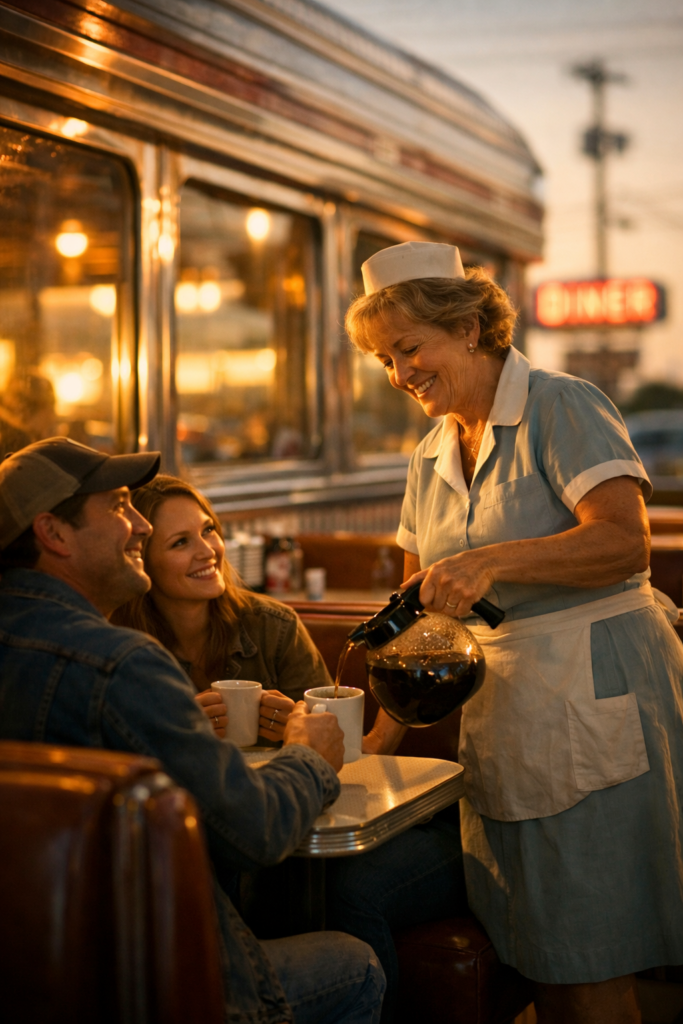
Few things feel more “road trip” than a diner breakfast. The menus are big, the coffee is bottomless, and the vibe is a mix of comfort and local flavor. And tipping here follows a simple truth: even if the meal is inexpensive, the service is still real service.
Classic Roadside Diners
In a traditional diner with table service, the usual approach is the same as anywhere else: tip as a percentage of the bill, and adjust based on service. The difference is that diner checks are often smaller, so a straight percentage can produce a tip that feels too tiny.
If your breakfast is $10 and you tip 20%, that’s $2. Many people feel awkward leaving $2 for a full table-service meal, especially if the server refilled coffee three times and checked on you.
A simple road-trip-friendly solution is to use a percentage as your starting point, then round up to a comfortable number.
Here’s what that looks like in real life.
If the service is normal and friendly, you might land in the 18–22% range.
If the bill is very small, you can round up so the tip still feels respectful.
If you linger a long time, ask for substitutions, or have a lot of needs, tip toward the higher end.
Practical examples:
A $12 breakfast for one with good service might become a $3 tip instead of $2.40.
A $25 breakfast for two might become a $5 tip instead of $4.50.
A $40 breakfast for two with extra attention might become an $8 tip.
This rounding method is especially helpful for seniors who prefer not to do precise calculations at the table. You’re not trying to win a math contest. You’re trying to be fair.
When should you tip more at a diner?
When the server is clearly busy and still stays attentive.
When you get special help, like changing seating due to mobility needs.
When you spill something, make a mess, or need extra cleanup.
When the server is kind in a way that goes beyond the basics.
When is tipping less understandable?
When service is truly careless or rude.
When you waited an unreasonable amount of time and no one explained.
When you never received basic things you asked for and attempts to fix it failed.
Even then, many travelers prefer to tip at least a modest amount unless the service was shockingly bad. That’s a personal choice. What matters is being consistent and honest.
Small-Town Cafés and Local Spots
Small-town restaurants can be the highlight of a road trip. You might find homemade pie, regional specialties, or a lunch counter where everyone knows everyone. Service can feel more personal, but tipping still matters.
In many small towns, wages can be low and tip income can make the difference between “getting by” and “not quite.” That doesn’t mean you need to tip excessively. It means your normal, steady tip is meaningful.
A good mindset in small towns is this: tip like you would want travelers to tip your own neighbors.
If it’s table service, the same general range applies. If it’s counter service with someone bringing food out and clearing tables, tips may be expected but smaller.
If you’re unsure whether a place is table service or counter service, look for these signs:
Did someone take your order at the table and check on you?
Did someone refill drinks and clear plates?
Did you pay at your table or at the counter?
If it’s true table service, tip like a restaurant.
If it’s mostly self-serve, smaller tips are common.
Buffets, Self-Serve, and Order-at-the-Counter
Road trips include lots of “in-between” food stops. You might order at a counter, grab your own drink, then sit down while someone brings your meal. Or you might go to a buffet where staff clears plates and refills drinks.
These situations can confuse even experienced travelers. Here’s a clean way to handle it.
If you order at the counter and do most of the work yourself, tipping is optional and usually modest.
If someone brings food to your table, refills drinks, and checks on you, tipping is more expected.
If it’s a buffet and staff clears plates and refills drinks, tipping is still appropriate, usually a bit less than a full-service restaurant.
A simple way to decide is to ask yourself: did someone “serve” you during the meal, or did you mostly serve yourself?
If you mostly served yourself, a small tip is fine.
If you were served in a meaningful way, tip more like a restaurant.
One more road-trip tip that helps: keep small bills handy. Counter-service tipping feels easiest when you can drop a dollar or two without overthinking.
Tipping at Motels and Budget Hotels
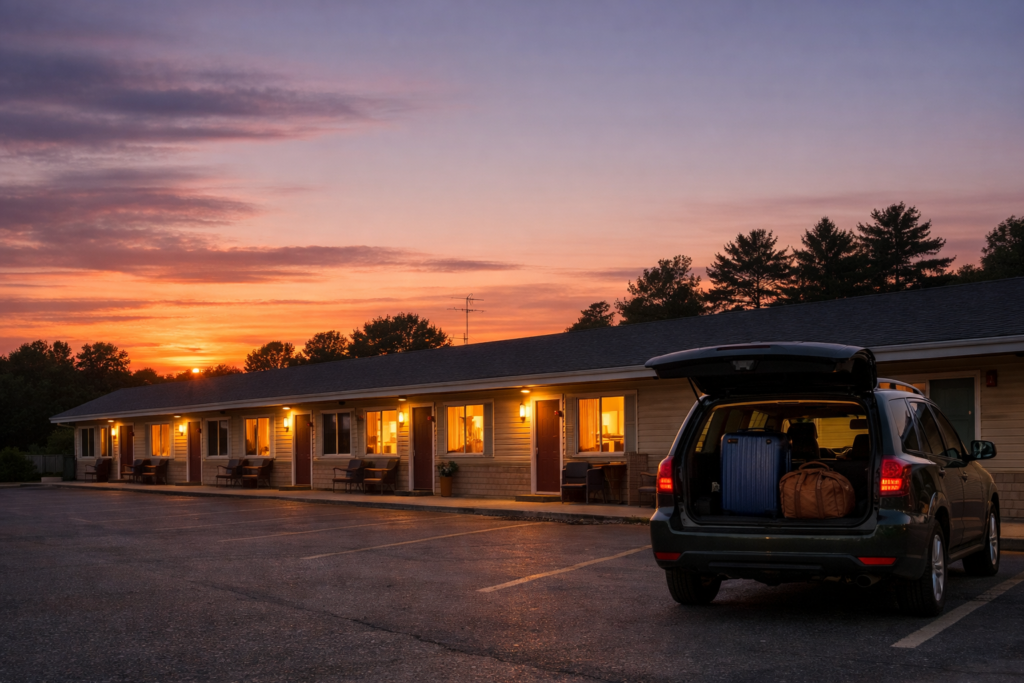
Motels are a road trip classic. They’re convenient, often affordable, and they get you back on the road quickly. But tipping at motels is also where many travelers get confused, because the setting feels casual even when the work behind the scenes is real.
Housekeeping is the biggest example. People often assume housekeeping tips are only for “nice hotels.” That’s a mistake. Housekeeping at a motel can be just as demanding, and sometimes more so, because staffing is lean and rooms still need to be flipped quickly.
Motel Housekeeping: What’s Appropriate?
If you stay at a motel and someone cleans your room, a tip is a kind and practical thing to do. Even if the room is basic, cleaning is still cleaning: bathrooms, floors, linens, trash, and restocking essentials.
For a one-night stay where you leave early, you might think, “They didn’t even clean while I was here.” But they still clean after you leave. That’s the point. It’s easy to forget because you don’t see the work.
A good road-trip range for motel housekeeping is a few dollars per night, adjusted by room size and mess level.
Tip more when:
You have more than one person in the room.
You use extra towels.
You track in dirt or sand.
You stay multiple nights and want to show appreciation.
You have a medical need that creates extra cleanup.
Tip less when:
No housekeeping service occurred at all.
You refused service and left the room extremely tidy.
Daily vs end-of-stay tipping:
Daily tips are best when you can do them, because housekeeping staff can change day to day. If you tip only at the end, the person who cleaned earlier might never see it.
That said, road trips are fast-paced. If daily tipping feels like a hassle, leaving a clear end-of-stay tip is still better than leaving none.
How to leave it:
Leave cash in a visible spot like the desk, with a small note that says “Housekeeping” or “Thank you.” This makes it clear the money is meant for the cleaning staff, not forgotten change.
If you don’t have a note, you can place the cash with a hotel notepad or even a simple hand-written message. Clarity matters.
Front Desk Staff: Tip or Not?
In most motels and hotels, tipping the front desk is not expected. They’re typically hourly or salaried, and the culture doesn’t treat front desk service as a tipped role.
However, there are exceptions where a small tip can be appropriate:
If someone goes far out of their way to solve a serious problem.
If they arrange something special that saves you significant stress.
If they help with complicated changes during a busy time.
Even in those situations, a tip isn’t required. A heartfelt thank-you and a positive comment can mean a lot. If you want to tip, keep it modest and discreet.
What you want to avoid is tipping for normal front desk tasks, because it can create awkward expectations and doesn’t align with typical etiquette.
Bellhops, Luggage Help, and Maintenance Staff
Motels often don’t have bellhops, but some do have staff who help with luggage, especially in tourist areas, casino-adjacent properties, or senior-friendly destinations.
If someone helps you carry bags, a tip is appropriate. The simplest method is per bag or based on effort:
One small bag is one thing.
Multiple heavy bags or mobility assistance is another.
If maintenance staff helps you quickly and kindly, tipping is not required, but can be appreciated if they truly saved the day. Some travelers offer a small cash thank-you when a staff member fixes something late at night or goes beyond the basics. If you do, keep it low-key and respectful.
Valet Parking and Car Help on Road Trips
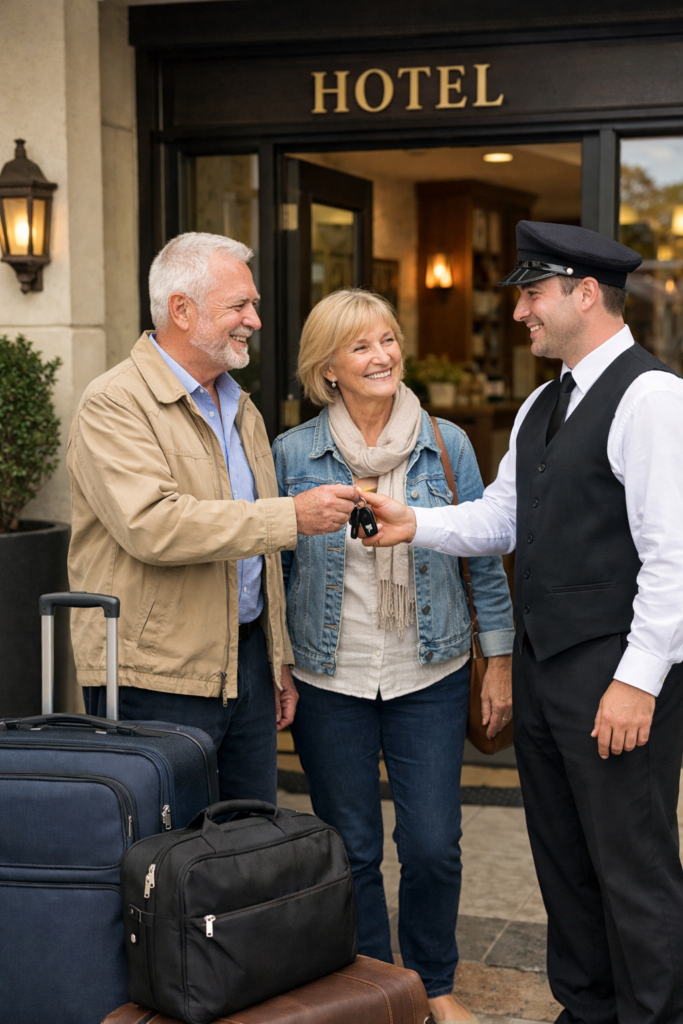
Valet parking is not an everyday road trip service, but it appears more often than people expect. You might run into it at a downtown hotel, a busy restaurant near an attraction, a casino hotel, or a medical campus if your road trip includes appointments.
Valet tipping is a classic “moment of pressure” because it happens quickly. The key is to have a plan before you pull up.
Valet Parking at Hotels and Restaurants
In most cases, valets are tipped in cash at the moment they return your vehicle. Some people tip when they hand off the car. Some tip both times. Most tip at pickup.
A clean, senior-friendly approach is:
Tip once, at pickup, unless the valet did something extra.
What counts as extra?
They helped with luggage.
They gave special assistance in bad weather.
They retrieved the car unusually fast during a chaotic rush.
They offered meaningful help beyond the handoff.
If you’re staying at a hotel and using valet daily, some travelers tip each time the car is retrieved, while others tip a bit more at the end. The safest and simplest is to tip per retrieval. That way the person helping you that day benefits.
If you hate fumbling for cash in a busy driveway, keep a few bills in an easy-to-reach place in your wallet, not buried in a bag.
Gas Station Attendants and Car Assistance
In most of the U.S., gas is self-serve, but you may run into attendants in certain regions or special situations. You may also encounter someone who helps you with directions, windshield cleaning, tire air, or a quick emergency.
In those moments, tipping is less about “rules” and more about appreciation. If someone takes time to help you, a small cash tip can be a kind gesture.
If you’re unsure, you can simply say, “Thank you so much for your help. I really appreciate it.” And if you choose to tip, do it like a thank-you rather than a formal transaction.
RV Parks, Campgrounds, and Roadside Stops
RV travel is its own world. Some RV parks feel like small communities, while others are simple overnight stops. Tipping here is less standardized than restaurants or hotels, but there are still common courtesy patterns.
RV Parks and Camp Hosts
Many camp hosts are volunteers, retirees themselves, or seasonal workers. In those cases, tips are not always expected, and sometimes they are not allowed. But appreciation is always welcome.
If a host or staff member helps you in a real way, like guiding you into a tight spot, fixing a water hook-up issue, or lending equipment, a small thank-you gift or tip can feel appropriate.
If you’re unsure whether tipping is allowed, you can express gratitude in other ways:
Leave a positive note.
Offer a small packaged item like snacks or a coffee gift card.
Follow park rules and keep your site tidy, which helps staff.
In private RV parks with paid staff, tipping is more likely to be accepted when someone provides a direct service like luggage help, site setup help, or shuttle driving.
Luggage Help, Shuttle Vans, and Courtesy Drivers
Some road trips include shuttle services, especially around airports, casino hotels, tourist districts, and large attractions. Shuttle and courtesy drivers are often tipped.
If a driver helps with luggage, that’s a stronger reason to tip.
If they provide a safe, friendly ride, a modest tip is common.
The best practical advice here is to keep small cash bills ready. Shuttle situations often happen fast, and you don’t want to be stuck saying “I’m sorry, I don’t have anything.”
Regional Differences in Road Trip Tipping
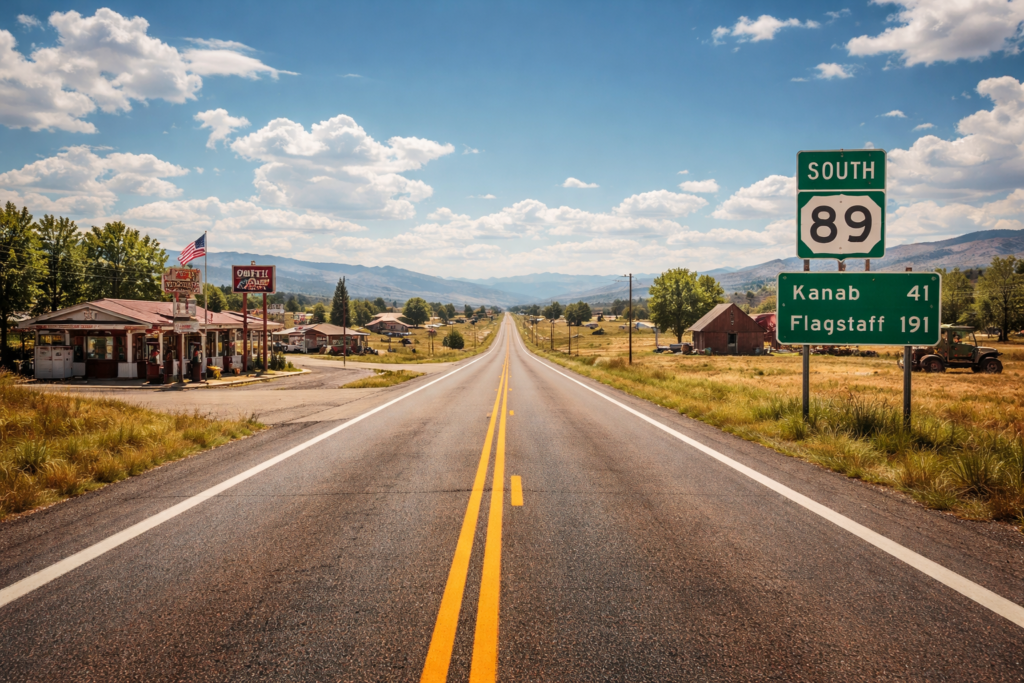
One of the reasons road-trip tipping feels confusing is that the United States is not culturally uniform. Tipping practices are broadly similar, but the “feel” changes.
In some regions, service is chatty and warm. In others, it’s efficient and quiet. Neither is better. But how you interpret service affects how you tip.
In many parts of the South, service may feel more personal. People might check on you often, call you “sweetheart,” and treat you like family. A higher tip can feel natural because the interaction feels generous.
In parts of the Northeast, service may feel brisk. It doesn’t mean it’s rude. It may simply be the local style. Tip based on competence and effort, not just cheerfulness.
In tourist-heavy corridors, staff may be overloaded. Tipping consistently and kindly can matter a lot.
In rural areas, wages can be lower and tips can be a bigger part of income. Again, you don’t need to tip wildly. You just need to be steady and fair.
If you want one regional rule that always works, it’s this:
Tip based on effort and service, and don’t punish people for local communication style.
Common Road Trip Tipping Mistakes
Road trips create predictable tipping mistakes. The good news is that they’re easy to fix.
One mistake is over-tipping out of guilt. Some travelers tip huge amounts because they feel awkward or because prices are low. That can mess with your travel budget and create stress. You don’t need to do that. You just need to tip well.
Another mistake is forgetting motel housekeeping. People remember servers because they see them. They forget housekeepers because the work happens out of sight. If you want to tip only one behind-the-scenes role on a road trip, make it housekeeping.
Another common mistake is tipping the wrong people. Front desk staff usually aren’t tipped. But valets, baggage help, and shuttle drivers often are. Road trips mix all of these together, which is why it gets confusing.
Finally, there’s the “all-or-nothing” mistake. Some travelers think: either I tip big, or I tip nothing. A small, steady tip is often better than an occasional dramatic one.
Quick Reference: Road Trip Tipping Cheat Sheet
Here’s a simple baseline you can use without stress.
Diners and table-service restaurants
Tip in the high-teens to low-twenties percent range, then round up to a comfortable number.
Small bills at small-town cafés
If service is real service, tip like a restaurant. If it’s mostly self-serve, a small tip is fine.
Buffets
Tip modestly, especially if staff clears plates and refills drinks.
Motel housekeeping
Leave a few dollars per night when possible. Daily is best, end-of-stay is still helpful.
Front desk
Not expected. Only consider a small thank-you if someone goes far beyond normal.
Luggage help
If someone carries bags or assists with mobility needs, tipping is appropriate.
Valet parking
Tip at pickup in cash. Tip more if they help with luggage or special circumstances.
Shuttle and courtesy drivers
Tip modestly, especially if they help with bags.
RV parks
Not always expected. Tip or give a small thank-you when someone provides direct personal help.
If you memorize nothing else, remember this:
Housekeeping, valets, and anyone physically handling your luggage are the most commonly overlooked roles on road trips.
Road Trip Tipping for Seniors: Simple Rules That Always Work
Tipping should not feel like a test. The easiest way to make it simple is to use rules that reduce decision-making.
Rule one is consistency beats perfection. If you tip fairly most of the time, you’re doing great. You don’t need to hit the “perfect number” every time.
Rule two is small cash tips reduce stress. A few small bills in your wallet can make tipping feel effortless. You don’t have to ask for change, you don’t have to wait for a card slip, and you don’t have to do math on the spot.
Rule three is round up when the bill is small. Small-town diners and cafés often have modest checks. Rounding up avoids leaving a tip that looks tiny even if it’s technically the correct percentage.
Rule four is tip based on effort, not fancy surroundings. A modest motel room still takes real work to clean. A simple diner meal still requires attention. Tip the person, not the décor.
Rule five is use a note when leaving housekeeping tips. It avoids confusion and ensures the money goes where you intended.
Rule six is don’t let tipping ruin your mood. If you forget once, it happens. You can fix it on the next stop. Road trips are supposed to feel good.
FAQ
Do you tip housekeeping at motels?
Yes, it’s a kind and common practice if your room is being cleaned after your stay, even at budget motels.
How much should I tip at a small-town diner?
Use a normal restaurant tip range, then round up when the bill is small so the tip still feels respectful.
Is tipping expected at roadside cafés?
If it’s table service, yes. If it’s mostly self-serve, tipping is usually smaller and often optional.
Do seniors tip differently on road trips?
Seniors often tip more consistently, which is appreciated. The goal is to tip fairly without stress or overthinking.
Should I tip motel front desk staff?
Usually no. It’s not expected. Consider a small thank-you only if someone goes far beyond normal help.
How much do you tip valet parking on a road trip?
Tip in cash when you get your car back. Tip more if they help with bags or provide special assistance.
Do RV park hosts expect tips?
Often no, especially if they are volunteers. A tip or small thank-you can be nice when they provide direct personal help.
Is it rude not to tip at a buffet?
If staff clears plates and refills drinks, a modest tip is usually appropriate.
Should tips be left daily or at checkout?
Daily is best for housekeeping because staff can rotate. End-of-stay is still helpful if daily tipping isn’t practical.
Is cash better than card for road trip tipping?
Cash is often easier for quick service moments like valets, housekeeping, and small cafés, but either can work depending on the situation.
What if I forgot to tip housekeeping?
It happens. If you can, leave a tip the next morning or tip well at your next stay. Don’t let one miss ruin your trip.
Conclusion
A road trip should feel light. Tipping should not be the thing that makes you tense at the end of the day.
If you remember the basics, you’ll be in great shape. Tip your diner servers like you would at home, and round up when the bill is small. Don’t forget motel housekeeping just because you don’t see the work. Tip valets and luggage help when someone is physically handling your belongings or making travel easier. Keep a few small bills ready so tipping feels natural instead of stressful.
Most of all, trust yourself. You don’t need to be perfect. You just need to be steady, fair, and kind.
Your road trip is more than miles and maps. It’s the people you meet along the way. And when you tip with quiet confidence, you’re part of what makes travel feel human.