

You’re about to start a cruise. You’ve planned the outfits. You’ve packed the medication. You’ve double-checked your documents. Then you arrive at the NYC cruise terminal and suddenly the day feels fast.
A car door opens. The sidewalk is busy. Someone in a uniform steps toward you. A hand reaches for your suitcase. A luggage tag appears. And right there—before you’ve even found the entrance—you hit the moment many seniors describe as the most awkward part of embarkation day:
The tip moment.
This guide is here for one purpose: to show you the exact moments you’ll be asked for tips at the Manhattan or Brooklyn cruise terminal, how much is appropriate, and who you can confidently skip. No guilt. No guessing. No overthinking. Just clear, practical guidance so you feel calm from curb to ship.
You’ll learn:
- The difference between cruise terminal porters and onboard crew gratuities
- What to tip at the curb, what not to tip inside
- The most common “pressure moments” and how to respond politely
- Senior-friendly ways to carry cash and handle tipping without fumbling
- Realistic examples so you can decide what feels right for your budget
If you’re searching for NYC cruise terminal tipping, tip cruise porter NYC, Manhattan cruise terminal porter tip, or Brooklyn cruise terminal tip, you’re in the right place.
Why NYC Cruise Terminals Feel More “Tip-Forward” Than Other Ports
Tipping expectations vary across the country, but New York City has its own rhythm. People move quickly. Services happen in short bursts. Help often appears before you request it. And many workers—especially those handling luggage—live in a culture where tipping is normal and expected.
At NYC cruise terminals, the main reason tipping feels so immediate is this:
The first service you receive is usually luggage handling, and it happens at the curb.
That’s different from many smaller ports where you might park, take your bag inside yourself, and only meet staff at the check-in counter. In NYC, curbside porters and helpers can be the first people you interact with, and that creates a feeling of “I’m already behind” if you’re not prepared.
For seniors, the pressure can feel stronger because:
- Mobility limitations make luggage help more necessary
- The scene can be noisy and crowded, making it harder to ask questions
- You may worry about doing the “right” thing without drawing attention
- “Gratuities included” messaging from cruise lines can be confusing on land
Here’s the cleanest way to think about it:
On the ship, gratuities are often structured and automated. At the terminal, tipping is personal and situational.
Once you know who is who, the entire day becomes easier.
Manhattan vs. Brooklyn: What Seniors Should Expect at Each Terminal
Both terminals can serve major cruise lines. Both handle large volumes. Both have porters. The tipping moments are similar, but the atmosphere is different.
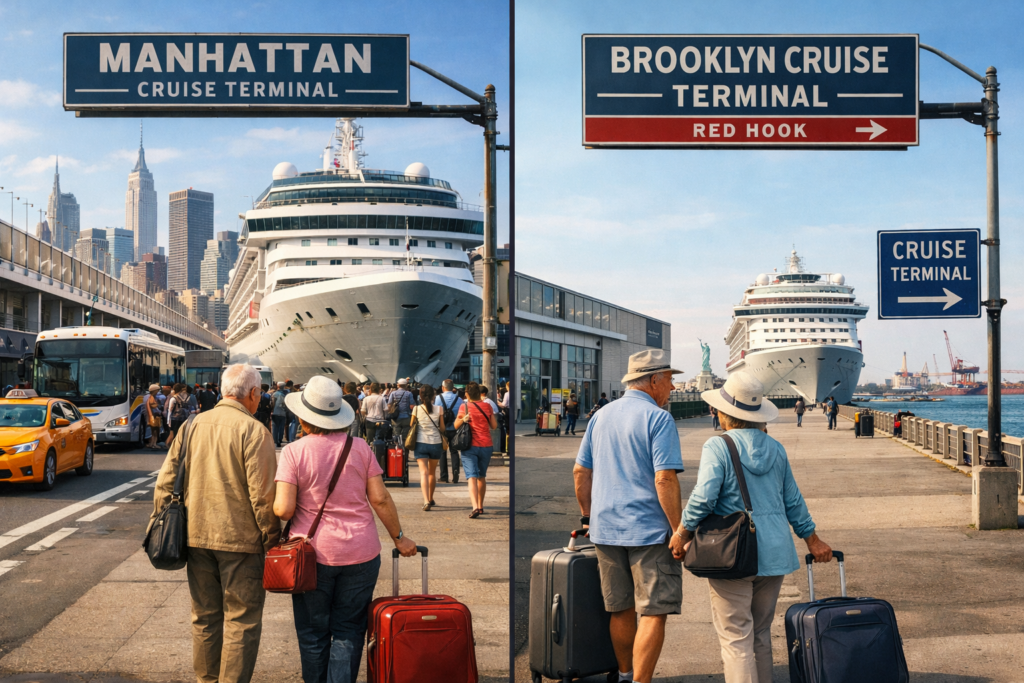
Manhattan Cruise Terminal: Busy, Fast, and Very “Curbside”
Manhattan’s cruise terminal area tends to feel like classic New York:
- More vehicles arriving back-to-back
- A stronger sense of urgency
- More people offering assistance immediately
For seniors, the upside is that help is usually easy to find. If you’re arriving by taxi, private car, or being dropped off, you’ll likely see porters with luggage carts near the curb. The downside is that everything can feel rushed, and the tipping moment can happen before you feel settled.
What it often looks like:
- Your driver pulls up.
- You open the door.
- A porter is already approaching.
- Your luggage is lifted onto a cart.
- You’re handed tags or your bags are tagged quickly.
- You’re walking toward the entrance within seconds.
If you like structure, plan ahead for Manhattan. Have cash ready before you step out of the vehicle.
Brooklyn Cruise Terminal: More Space, Less Noise, Same Tipping Questions
Brooklyn’s terminal area often feels more spread out:
- The pace can feel calmer
- There may be more walking depending on where you’re dropped off
- Help is available, but it might be less “in your face”
Some seniors find Brooklyn less stressful. Others find it more confusing because there can be fewer obvious landmarks and fewer staff clustered in one place.
What it often looks like:
- You arrive and pause to orient yourself.
- You may see porters, but not always in a big group.
- You might wonder, “Am I supposed to bring these inside myself?”
You can. You don’t have to use a porter. But if you do, the tipping expectations are similar to Manhattan.
The One Phrase That Causes the Most Confusion: “Gratuities Are Included”
Many cruises include or suggest onboard gratuities. Some bundles advertise “prepaid gratuities.” That’s real, and it matters—but it usually applies to onboard service, not curbside terminal services.
Here’s the simple breakdown:
Terminal tipping usually covers:
- People who physically handle your luggage curbside
- Specific personal assistance you receive on land
Onboard gratuities usually cover:
- Dining room and buffet service teams
- Cabin housekeeping
- Behind-the-scenes service staff
The easiest way to avoid double-stressing is to treat them as two different categories:
- Land help today
- Ship help all week
Even if you prepaid onboard gratuities, you may still choose to tip a porter who handled your bags at the terminal.
Who Cruise Porters Are (and Why They’re the Main Tipping Moment)
When people talk about NYC cruise terminal tipping, they’re usually talking about one person:
The porter.
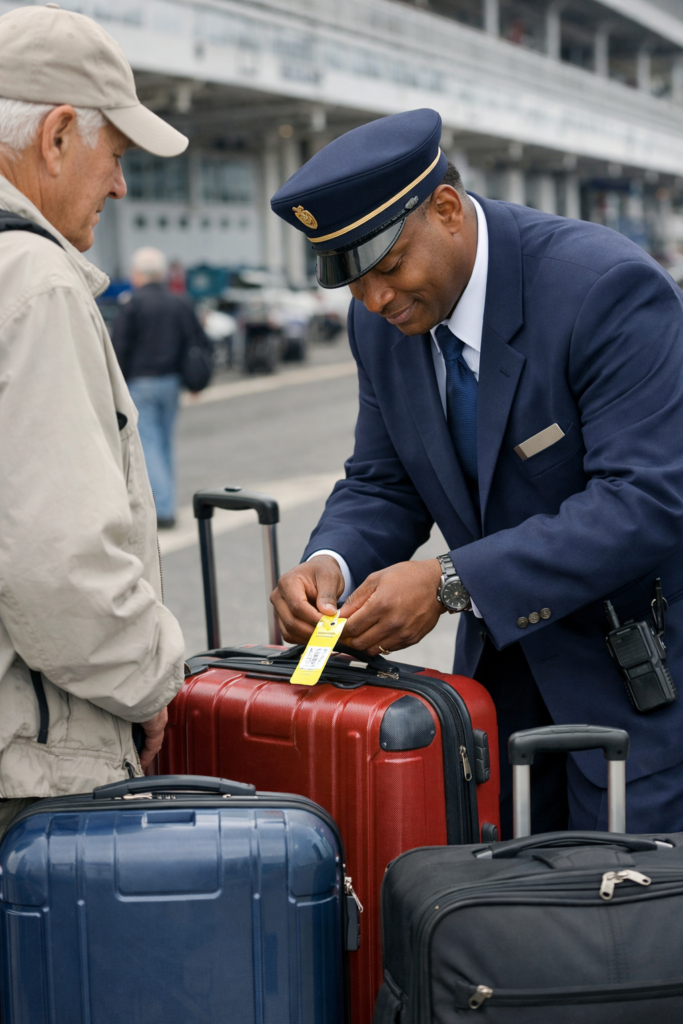
A porter is the worker who takes your luggage at the curb and sends it into the baggage system so it arrives near your cabin later. This is a hands-on, physical task. It’s also the moment where you might feel the most social pressure, because:
- It happens face-to-face
- It happens fast
- It happens before you’re “settled”
Porters are typically easy to spot:
- They’re working near the curb where cars drop passengers off
- They have luggage carts
- They may wear uniforms or vests
- They’re actively handling bags and tagging them
Important clarity for seniors:
- Porters are not the same as security staff.
- Porters are not the same as cruise check-in agents.
- Porters are not the same as ship crew.
Porters are usually the only people at the terminal where tipping is commonly expected.
The Exact Moments You’ll Be Asked for Tips (So You’re Ready)
Let’s make the day predictable. These are the moments that catch people off guard.
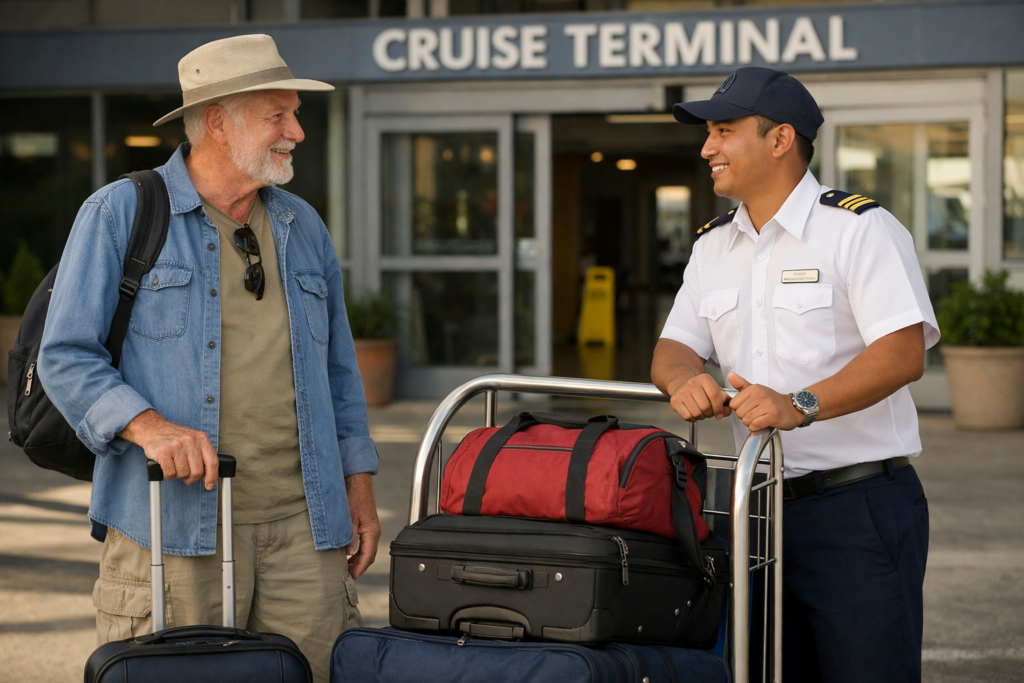
The Curbside Luggage Hand-Off
This is the classic moment:
- Your bag is picked up
- It goes onto a cart
- Tags are attached
- The porter looks at you, pauses, or thanks you
That pause is the unspoken cue.
If you plan to tip, this is when you do it.
The “Let Me Take That” Moment
Sometimes the approach is more direct:
- “I’ve got it.”
- “I’ll take those.”
- “I’ll get your luggage checked.”
This can feel like a surprise because you didn’t explicitly ask. If you accept the service, tipping is still optional, but it’s commonly done.
If you prefer not to use a porter, you can decline politely and keep walking with your bags.
The Extended Assistance Moment
This is less common, but it happens:
- Someone helps you find the right line
- Walks with you farther than expected
- Helps with a wheelchair request
- Helps you navigate multiple doors or ramps
This is not the standard porter moment. This is “extra help,” and tipping is more personal. If someone goes well beyond a quick gesture, a tip can be appropriate.
The “Random Ask” Moment Inside
Occasionally, seniors feel pressured by someone who:
- Doesn’t handle luggage
- Doesn’t provide real assistance
- Hovers, gestures, or asks outright
You do not have to tip in this situation. You can simply smile and say, “No thank you,” and move on.
You’re not being rude. You’re being clear.
How Much Should Seniors Tip Cruise Porters in NYC?
Here’s the practical guidance most travelers use for tip cruise porter NYC situations.
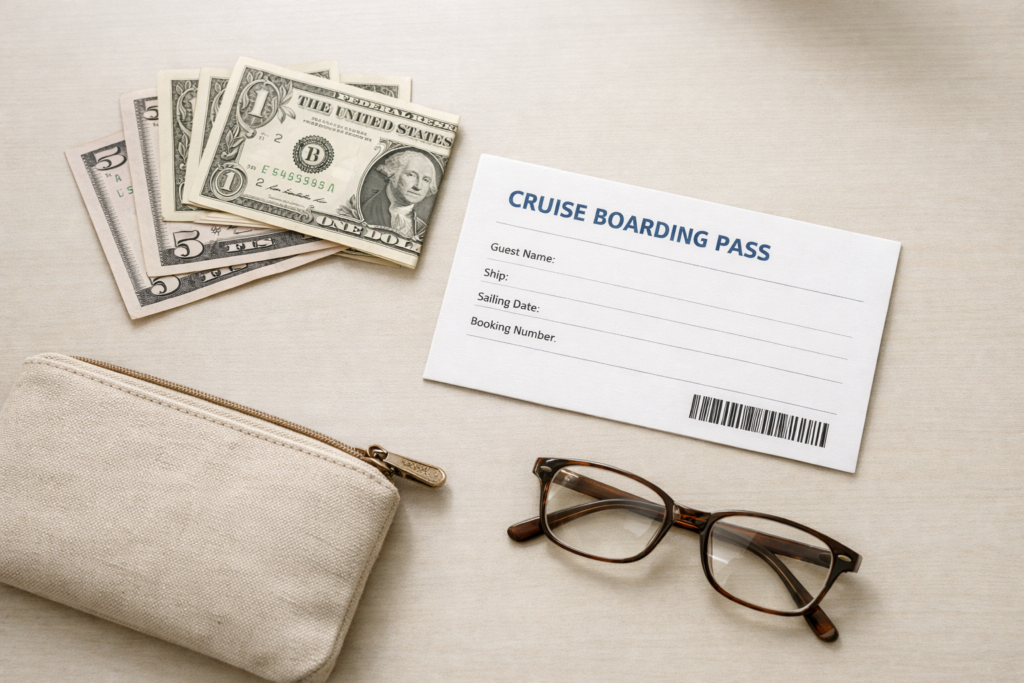
The Standard Range Most People Feel Comfortable With
- Around $2–$3 per bag for typical luggage
- Around $5 per bag for heavy bags or extra effort
If you’re on a fixed income, it’s completely reasonable to stay at the low end. A smaller tip is better than stressing yourself into discomfort.
Clear Examples (So You Can Decide Instantly)
- One suitcase + one carry-on handled: $5 total is common
- Two suitcases handled: $5–$10 total is common
- Four pieces handled: $10–$15 total is common
- Heavy bags or special handling: lean toward the higher end
You do not need to make this complicated. Most seniors prefer a simple rule:
- Small tip per bag
- Cash
- Done quickly
If You Have Medical Equipment or Mobility Gear
If a porter handles something delicate, heavy, or awkward—like a walker, mobility aid, or medical gear—you can treat that as “extra effort.” Many seniors choose to tip a bit more in that case. You’re acknowledging care, not buying special treatment.
The Best Way to Tip Without Feeling Awkward
Seniors often say the hardest part isn’t the money. It’s the moment: fumbling for cash while people move around you.
Here are senior-friendly ways to make it smooth.
Prep Your “Porter Cash” Before You Arrive
- Put a few bills in an easy-to-reach pocket or small envelope
- Keep it separate from your main wallet
- Decide your tip rule before you step out of the car
This prevents the classic “Where did I put my cash?” moment in front of a crowd.
Use One Simple Line
You don’t need a speech. A simple, warm line is perfect:
- “Thank you for your help.”
- “Thanks—really appreciate it.”
Hand the cash, make eye contact, and keep moving.
If You’re Traveling With Family
If adult children or a spouse is with you, decide ahead of time who will tip. The most common awkward moment happens when everyone assumes someone else is handling it.
A calm approach:
- One person becomes the “tipping person”
- That person carries the small bills
- Everyone else focuses on walking and documents
Cash vs. Card: What Works at NYC Cruise Terminals
At the curb, tipping is usually a cash interaction. Don’t assume there will be a card option.
Senior-friendly cash plan:
- Bring a few $1 bills and $5 bills
- Keep them in a separate pouch
- Avoid pulling out a thick wallet in a crowded curb area
If you truly do not have cash:
- You can still accept the service and simply say thank you
- You can also decline the porter service and bring your own luggage inside
You do not need to panic or apologize.
Who You Do Not Need to Tip at the NYC Cruise Terminal
This section is here to remove pressure.
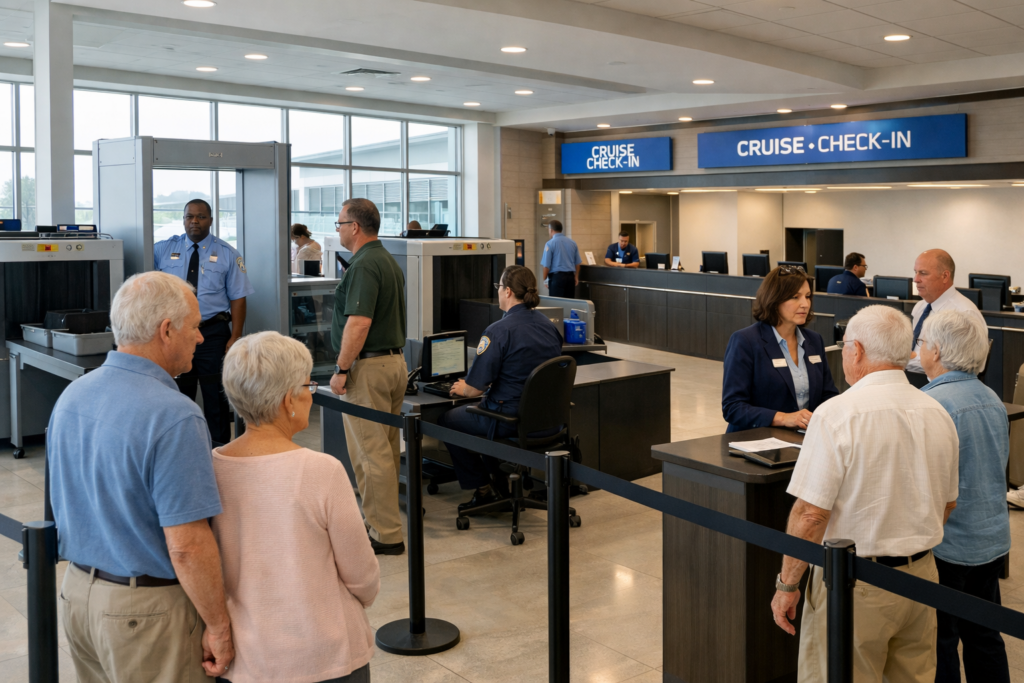
In most situations, you do not tip:
- Security staff
- Check-in staff at counters
- People scanning documents
- Terminal staff directing lines
- Standard employees who do not handle luggage or provide personal assistance
These roles are part of the normal process. You can show appreciation with a thank you and keep moving.
If someone provides truly exceptional, personal assistance—like walking with you, arranging special support, or helping you through a complicated situation—tipping becomes optional and personal. That’s not “expected.” That’s gratitude for real help.
Wheelchairs, Accessibility, and Senior Assistance: When Tipping Makes Sense
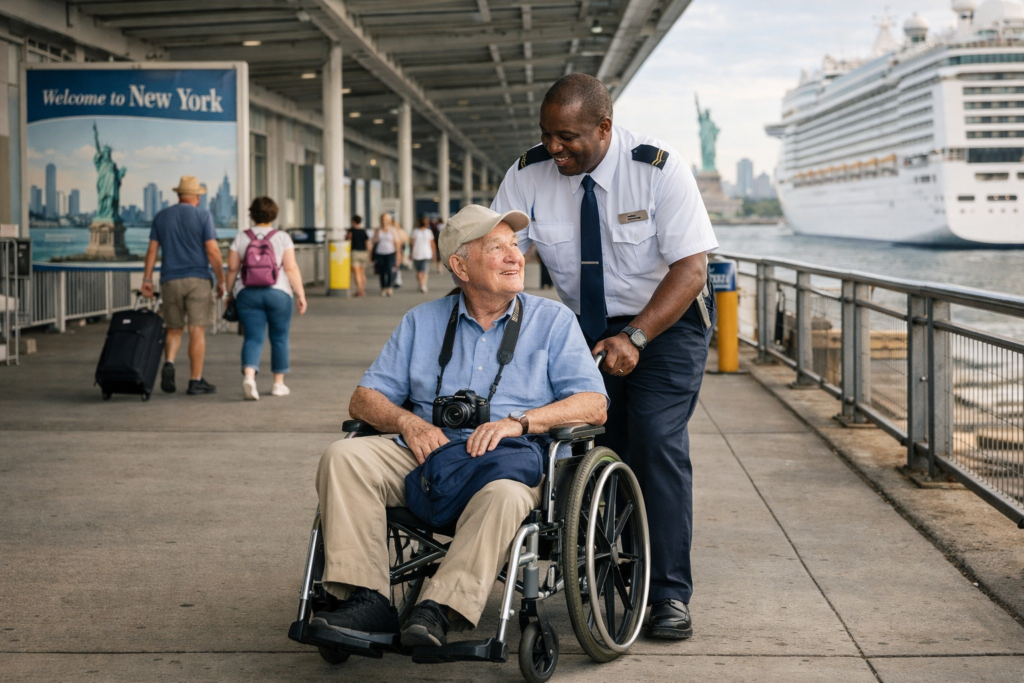
Cruise terminals can be physically demanding:
- Long lines
- Standing time
- Multiple checkpoints
- Long walks depending on drop-off position
Many seniors use wheelchairs, walkers, or request assistance. The tipping etiquette here depends on the situation.
If Assistance Is Quick and Minimal
Examples:
- Someone points you to an elevator
- Someone holds a door
- Someone answers a question
A tip is not necessary.
If Assistance Is Hands-On and Extended
Examples:
- Someone pushes a wheelchair for a long distance
- Someone stays with you through multiple steps
- Someone helps manage luggage while you move slowly
- Someone helps solve a problem (documents, check-in confusion, mobility barriers)
In these cases, some seniors choose to tip as a thank-you:
- A common range is $5–$10, depending on the help and time
You can also choose not to tip. A sincere thank you is still meaningful. The key is that you decide—not pressure.
The “Pressure Moments” Seniors Worry About (and How to Handle Them)
Even confident travelers can feel uncomfortable in NYC’s fast pace. Here are common situations and simple responses.
“Someone Grabbed My Bag Before I Could Answer”
If your luggage is taken quickly and you’re not comfortable, you can still regain control:
- “Thank you, but I’ll take it from here.”
If the bag is already tagged and on the cart, it may be easiest to proceed, tip modestly if you wish, and move on.
“Someone Asked Directly for a Tip”
This is rare, but it happens. Keep it simple:
- “No thank you.”
- “Not today, but thank you.”
- “I’m all set.”
You don’t need an explanation.
“I’m Worried My Bags Won’t Arrive If I Don’t Tip”
This fear is common. In practice, your bags move through a system. The cruise line wants luggage handled correctly and delivered. A tip is a courtesy for service, not a requirement for your bags to show up.
If you tip, you’re being kind. If you don’t, your cruise still functions.
“I Prepaid Gratuities—Am I Double-Tipping?”
Think of it like this:
- Prepaid gratuities support onboard service teams
- The porter is a separate curbside service
If you choose to tip the porter, you’re not “paying twice for the same thing.” You’re tipping a different person for a specific task.
How to Spot Legitimate Porters vs. People You Can Ignore
Seniors sometimes worry about tipping the wrong person. A simple rule helps:
Tip the person who physically handles your luggage and is part of the luggage flow into the terminal system.
Signs you’re dealing with a real porter:
- They are actively handling bags for multiple passengers
- They have a luggage cart with multiple suitcases
- They are tagging luggage or working with tagged luggage
- They are positioned in the curbside luggage handling area
If someone is simply hovering, offering vague help, or asking for money without providing a clear service, you can decline.
Your goal is not to police the terminal. Your goal is to protect your comfort and your budget.
Senior Budgeting: How to Plan for Tipping Without Stress
For many seniors, the question isn’t “what’s normal?” It’s “what can I afford without feeling anxious?”
Here’s a simple approach that works well.
Create a Tiny “Embarkation Cash” Budget
You’re not budgeting for the whole cruise here. You’re budgeting for the first day’s small interactions.
A common senior-friendly range:
- $10–$25 total set aside for terminal day
That covers:
- Porter tipping for typical luggage
- Optional extra help if you receive it
If your budget is smaller, that’s okay. The most important thing is deciding your plan in advance, so you don’t feel pressured to invent a number in the moment.
Use a “Minimum Tip Rule”
If you want a rule that never causes regret:
- Decide a modest tip per bag
- Stick to it
- Don’t negotiate with yourself on the curb
This protects you from the classic over-tipping spiral: “Maybe I should do more because it’s New York.”
You don’t have to. Your cruise is already paid for.
Embarkation Day Flow: What Happens After the Porter
Once your luggage is handed off, tipping mostly fades away. That’s good news.
After curbside:
- You head to security screening
- You proceed to check-in
- You move through terminal lines
- You eventually board the ship
Inside the terminal, what you’ll mostly do is show documents, follow signs, and wait your turn. That’s not a tipping environment.
If you feel anxious, remind yourself:
- The main tipping moment is usually already behind you
- You can now focus on comfort, hydration, and moving at your pace
A Few Real-Life Scenarios (So You Can Picture Yourself Handling It)
These are the moments seniors describe most often.
Scenario: Two Seniors, Four Bags, Manhattan Curbside
You arrive by taxi. You have two suitcases, one small carry-on, and a garment bag. A porter comes over immediately and starts loading everything.
What many seniors do:
- Hand a $10 bill as a simple, clean tip
- Say, “Thank you so much.”
- Walk inside without second-guessing
Could it be a bit more? Sure. Could it be a bit less? Also yes. The goal is comfort and clarity.
Scenario: Traveling Alone, Brooklyn Terminal, One Medium Suitcase
You’re dropped off. You see porters, but no one approaches you. You can either roll your bag inside or request help.
If you choose a porter:
- A $3–$5 tip is a common choice
- You’ve kept it simple and respectful
Scenario: Wheelchair Help That Goes Beyond the Basics
A staff member helps you from the curb, through several steps, and stays with you until you’re seated comfortably.
Many seniors choose:
- A $5–$10 tip
- Or a heartfelt thank you if tipping isn’t possible
The “right” answer is the one that matches your budget and your comfort.
What About Tipping the Driver, Shuttle, or Car Service?
This can come up around cruise day. It’s not the terminal itself, but it’s part of the trip.
If you take a taxi, rideshare, or private car:
- That tip is separate from porter tipping
- It depends on the service and your personal preference
The key is not mixing the two moments:
- Tip the driver based on the ride
- Tip the porter based on luggage handling
Keeping them separate reduces stress.
The Most Senior-Friendly Packing Tip for Embarkation Day
This isn’t about fashion. It’s about making your life easier.
If you can, pack so that:
- The bags you hand to porters are clearly “checked” luggage
- You keep a smaller carry-on with essentials
Why seniors love this approach:
- You don’t worry if you won’t see your main suitcase for a few hours
- You can carry medications, documents, and a snack comfortably
- You feel in control even when the terminal is busy
It also reduces the urge to “hover” over luggage handling, which can raise stress during the tipping moment.
Quick Confidence Phrases Seniors Can Use
Sometimes the hardest part is finding words in a busy environment. Here are simple phrases that work.
If You Want to Use a Porter
- “Yes, please—thank you.”
- “These are the bags going to the ship.”
If You Want to Decline
- “No thank you, I’m all set.”
- “I’ve got it, thank you.”
If Someone Pressures You
- “No thank you.”
- “I’m all set.”
No explanation required. Short is strong.
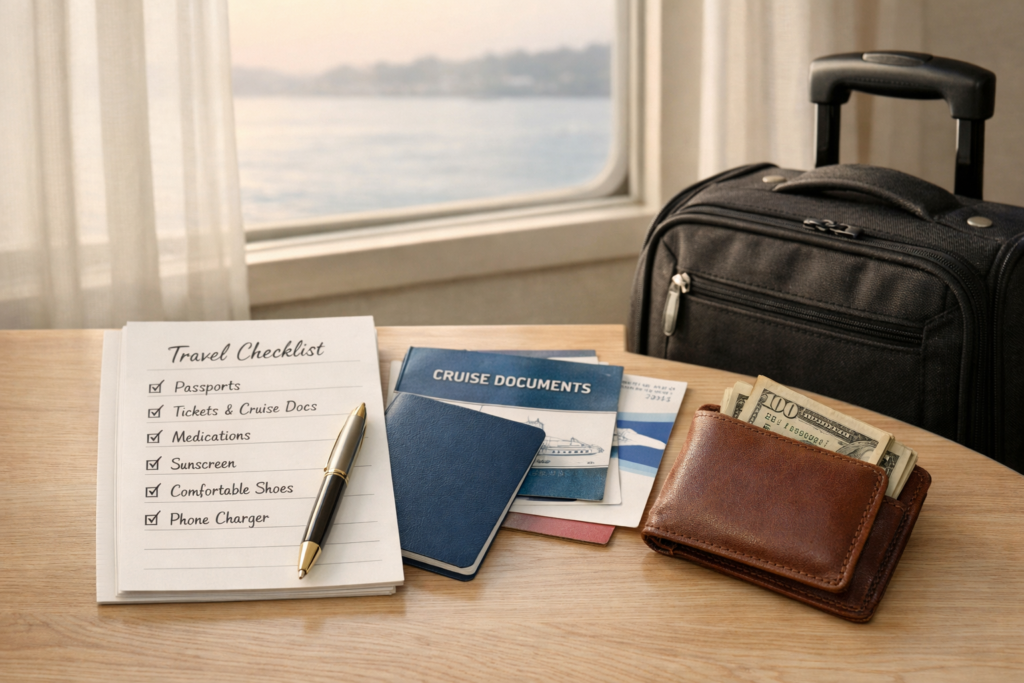
Simple NYC Cruise Tipping Checklist for Seniors
Use this as your calm, pre-arrival plan.
- Bring small cash: a few $1s and $5s
- Decide your porter tip rule before arriving
- Keep porter cash in an easy-to-reach spot
- Tip when your luggage is loaded and tagged
- Skip tipping security and check-in staff
- Tip extra only if you receive real, extended help
- Don’t let “gratuities included” confuse the curbside moment
- Keep moving after tipping—no need to linger

Conclusion: You Deserve a Calm Start to Your Cruise
Cruising from Manhattan or Brooklyn should feel exciting, not stressful. The reason tipping feels confusing at NYC cruise terminals is because it happens early, quickly, and face-to-face—often before you’ve even taken a deep breath.
Now you know the truth of embarkation day:
- The main tipping moment is usually the porter at the curb
- A small, respectful tip per bag is common and enough
- Most other terminal roles do not require tipping
- Prepaid gratuities onboard are a different category
- You get to decide what fits your budget and comfort
If you do one thing, do this:
Have your porter cash ready before you arrive.
That small preparation turns the most awkward moment into a smooth one—and lets you focus on what you came for: a great trip.
FAQ: NYC Cruise Terminal Tipping for Seniors
Do seniors have to tip cruise porters in NYC?
No. Tipping is optional. It’s a courtesy for luggage handling, not a requirement to board or receive your bags.
How much should I tip a cruise porter at the Manhattan cruise terminal?
Many travelers tip around $2–$3 per bag, or more for heavy luggage. Seniors often choose a simple total like $5–$10 depending on the number of bags.
How much should I tip at the Brooklyn cruise terminal?
The same general approach applies. If a porter handles your bags curbside, a modest per-bag tip in cash is common.
Is tipping included in my cruise fare?
Usually, “included gratuities” refers to onboard service charges or prepaid crew gratuities. It typically does not cover curbside terminal porters.
What if I only have one small bag?
If a porter handles it, a small tip is still fine. Many seniors choose $3–$5. If you handle it yourself, you can skip tipping entirely.
Can I bring my own luggage inside without using a porter?
Yes. If you prefer not to tip or don’t want help, you can usually roll your luggage inside yourself.
What if I don’t have cash?
You can still say thank you and proceed. If you want to avoid the situation, you can also decline porter help and bring your bags inside yourself.
Will my luggage be delayed if I don’t tip?
Your luggage moves through a system. A tip is not a “fee” for delivery. It’s gratitude for service, not a condition for your bags to arrive.
Do I tip security, check-in agents, or terminal staff?
In most cases, no. Those roles are part of the normal process and are not standard tipping situations.
Should wheelchair assistance be tipped?
If the help is extended and hands-on—like pushing you a long distance or staying with you through multiple steps—some seniors choose a small thank-you tip (often $5–$10). If the help is minimal, tipping isn’t necessary.
What if someone asks directly for a tip?
You can decline politely and simply: “No thank you,” or “I’m all set.” You don’t owe an explanation.
What’s the easiest way to avoid tipping stress on embarkation day?
Decide your porter tip rule ahead of time and keep small bills ready in a separate pocket or envelope. That’s the whole secret.