New York City is exciting. It is also fast, crowded, and full of little surprises. If you are a senior traveler, or traveling with a mobility device, you may already be planning carefully. You might book an accessible room. You might research ramps, elevators, and distance to attractions. You might also be thinking about something that feels small until you are standing in the lobby.
A staff member helps you through a heavy door. A bellhop steadies your walker while you step onto a threshold. Someone guides you to the elevator, carries your bag, and makes sure you get to your room safely. It feels kind, professional, and very helpful.
Then comes the question that makes many people tense up.
Do you tip for mobility assistance? How much? When? And how do you do it without feeling awkward?
This guide is built for seniors, caregivers, and anyone who wants clear, respectful etiquette. You will learn who to tip, when to tip, how much to tip, and how to handle tricky moments. You will also get practical tips for Midtown and Times Square hotels, where crowds and older buildings can make extra help more common.
The goal is simple. You should feel confident, prepared, and comfortable. You should never feel embarrassed for needing help, and you should never feel unsure about how to show appreciation.
Why Tipping for Mobility Assistance Feels Awkward (And Why It Doesn’t Have to)
Tipping can feel straightforward in a restaurant. You eat, you pay, you tip. But mobility assistance in a hotel can feel more personal. It may involve your body, your balance, your wheelchair, or your walker. That makes the interaction feel different.
It is normal to feel unsure. Here is why it happens, and why it does not need to be stressful.
Mobility help feels personal, but it is still professional. Hotel staff are trained to assist guests. In NYC, especially in busy Manhattan hotels, staff often help with doors, luggage, elevators, and navigating a crowded entrance. When that help goes beyond a quick gesture, tipping is commonly expected. Not because staff are “doing you a favor,” but because tipping is a normal part of hospitality pay culture in many U.S. hotels.
Many seniors worry about offending someone. They wonder if tipping makes it seem like the staff member is “below them,” or if it looks like pity. In most NYC hotels, a tip is read as appreciation. It says, “Thank you for taking care of me.” It is not charity. It is not awkward to the staff. It is usually only awkward in your own head.
Another common worry is, “Isn’t this their job?” Yes, it is. But many hotel roles have tipping built into the culture. Bell staff and doormen are classic examples. They may be paid hourly, but tips often make a meaningful difference. In NYC, where the cost of living is high, tips can matter a lot.
There is also the question of fairness. Some people think, “I already paid for an accessible room. Why should I tip for accessibility?” That is a fair feeling. The key distinction is this: accessible features are part of the building. Personal help is a service. A ramp is access. A staff member guiding you safely through a busy entrance while managing your luggage is service.
Finally, NYC itself increases the uncertainty. New York runs fast. Staff move fast. You may feel pressure to keep up, and you may not want to slow anyone down. That pressure can make tipping moments feel rushed. With a simple plan, you can keep it calm and respectful.
The good news is that there are clear norms, and you do not need to overthink it. You just need a few practical rules.
What Counts as Mobility Assistance at NYC Hotels?
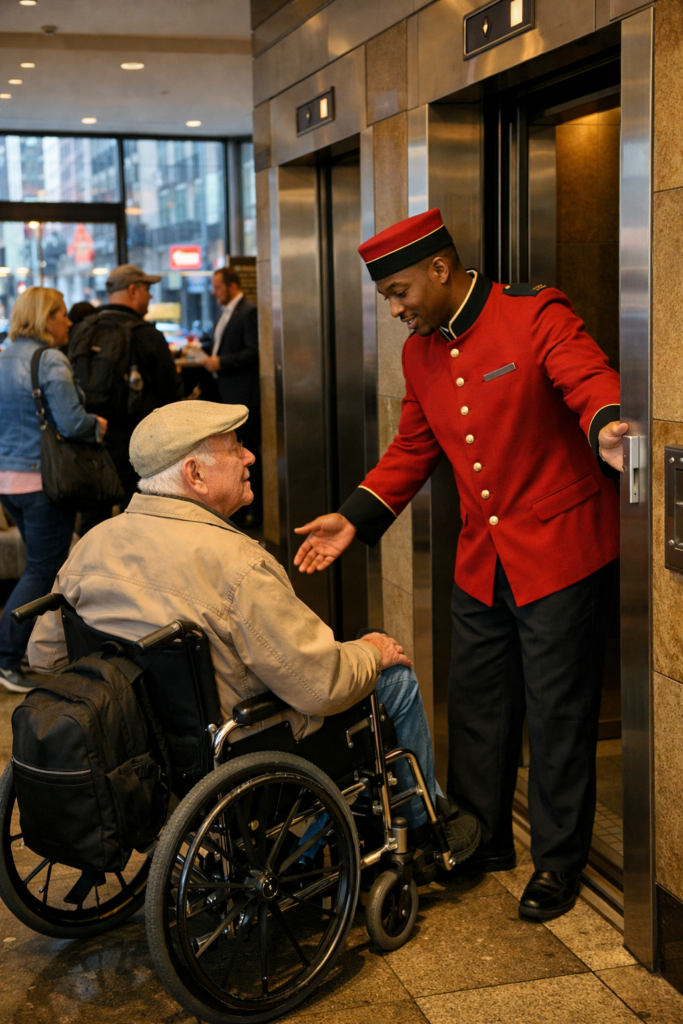
Not all help is the same. Some actions are basic courtesy. Some are part of a staff member’s normal role. Some are extra care and attention that deserves a tip.
Mobility assistance can include many small moments that add up. In Midtown and Times Square, it is also common because hotels are busy, entrances are crowded, and older buildings may have tight spaces.
Here are common types of mobility assistance you may encounter.
Helping you through heavy doors or narrow entryways. Many hotel doors are heavy, and some entrances have multiple sets of doors. If a staff member actively positions themselves to hold doors and clear a path while you move with a walker or wheelchair, that is meaningful help.
Guiding you over ramps, thresholds, or uneven surfaces. Even small changes in height can be difficult with wheels or reduced balance. If a staff member watches your wheels, offers guidance, or steadies a bag so you can focus on your steps, that counts.
Helping with elevators. Elevators in busy hotels can be chaotic. Staff may hold an elevator, clear space, or guide you to the correct elevator bank. In some buildings, accessible routes require specific elevators. Staff who ensure you do not get stuck on a stair route are providing valuable assistance.
Carrying luggage while you manage mobility. This is one of the most common situations. If you are using a cane, walker, or wheelchair, even “light” luggage becomes harder. A bellhop carrying bags is normal. A bellhop carrying bags while also making sure you can move safely is more than normal service.
Escorting you from lobby to room. In a large hotel, this can be a long walk with turns, carpeting, crowds, and elevator transfers. A staff member who escorts you and ensures the route works for you is giving a real service.
Coordinating accessibility needs. Sometimes the “help” is not physical. A concierge or front desk manager may coordinate a room change to get you closer to an elevator, arrange a shower chair, confirm that the accessible route to the lobby is working, or communicate your needs to staff. That can save you stress and time.
Now, what is usually not considered tip-expected mobility help?
Basic directions. If the front desk tells you where the elevator is, that is not a tipping situation.
Basic building compliance. Automatic doors, ramps, and accessible signage are not “services.” They are features.
Quick courtesy gestures. A quick door hold that any passerby might do is not something you need to tip for.
The line can feel blurry. When it is blurry, a simple rule helps: if the staff member gave you focused attention and effort that made your movement safer or easier, tipping is appropriate.
Who You Tip and Who You Usually Don’t
Hotels have many roles. Some positions are traditionally tipped. Others are not. Mobility assistance can come from several different people, and the etiquette depends on what they do.
Bellhops and Porters
These are the most common people to tip for mobility-related help. If a bellhop helps with luggage, escorts you to your room, and makes sure you can navigate safely, a tip is standard. If they also help position luggage in the room or make sure your mobility device can move comfortably in the space, that is added value.
If you only have a small bag and a bellhop simply points you toward an elevator, that is not a bell service moment. But if they actually handle your belongings and support your movement, tipping is expected.
Doormen
Doormen often help with doors, taxis, and the flow of the entrance. In Midtown and Times Square, they may be managing crowds, cars, and a busy sidewalk. If a doorman actively assists you into a taxi, clears a path, steadies you, or helps with a walker over a curb, tipping is appropriate.
If the doorman just opens the door as you pass, tipping is usually optional and depends on how frequent and personal the help is. If they open the door for you every day and recognize you, some seniors like to tip occasionally or at the end of the stay. Others tip per meaningful assistance. Both approaches can work.
Concierge
Concierges are not always tipped for simple questions. But when they do something that takes time and improves accessibility, tipping becomes more appropriate. Examples include arranging a wheelchair-accessible car service, securing an accessible restaurant reservation, coordinating a room move due to elevator access, or sourcing mobility equipment.
If the concierge spends real time solving a problem for you, a tip is a polite way to show appreciation.
Front Desk Staff
Front desk staff are usually not tipped for routine check-in, key replacement, or basic information. If a manager goes far out of their way to fix a major accessibility issue, some people choose to tip, but it is not required, and it can feel confusing because it is not the standard norm.
If you want to show appreciation for exceptional front desk help, a sincere thank-you note, compliment to a manager, or positive feedback can also be meaningful.
Housekeeping
Housekeeping tipping is common, but it is usually separate from mobility assistance. However, mobility needs can increase the work. If you request extra towels, a shower chair, a specific room setup, or extra cleaning due to medical or mobility equipment, tipping housekeeping becomes even more appreciated.
Many travelers tip housekeeping daily. This matters because the person cleaning your room may change day to day. Daily tipping also connects the gratitude to the specific work done that day.
Valet, Shuttle, and Other Staff
Some hotels have valet parking, shuttles, or baggage teams. In Manhattan, parking setups vary, and many guests arrive by taxi or rideshare. If someone actively helps you with mobility and loading, tipping follows similar norms: tip for meaningful help that requires attention and effort.
How Much to Tip for Mobility Assistance (Clear Dollar Amounts)
The biggest stress point is often the amount. People worry about tipping too little and looking rude, or tipping too much and feeling uncomfortable. The truth is that tipping is a range. You do not need a perfect number. You need a reasonable number.
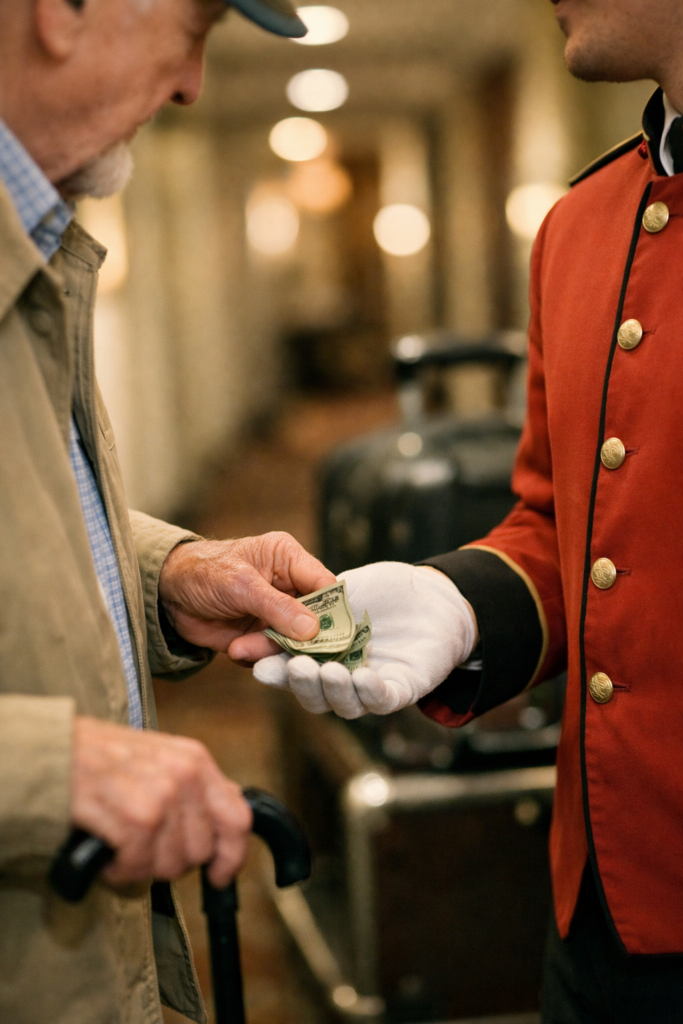
Below are practical NYC ranges that work well for most seniors and caregivers.
A Simple Way to Think About It
Think in terms of time, effort, and impact.
Time: Was it a quick moment or a longer escort?
Effort: Did staff carry items, manage doors, or navigate crowds?
Impact: Did their help make your movement safer, calmer, or possible?
When the help is “light,” tips are smaller. When help is extended or physically demanding, tips increase.
Bellhop or Porter Mobility Help
If a bellhop carries luggage and escorts you to your room, tipping is standard. Mobility assistance increases the value because the bellhop is not just moving luggage. They are often helping you move safely.
A practical range for NYC:
A quick luggage assist with minimal mobility help: about five dollars.
Luggage plus escort, doors, elevators, and careful pacing: around ten dollars.
A longer escort, multiple bags, multiple stops, or extra care: ten to twenty dollars.
If you feel that the bellhop truly made the process easy and safe, tipping toward the higher end is reasonable.
Doorman Mobility Assistance
A doorman opening the door as you pass is usually optional. But mobility-specific help is different.
Helping you into a taxi, clearing a safe path, handling a curb, or assisting with a walker: two to five dollars is common.
If the doorman also handles luggage, manages traffic, or provides extended help: five dollars or a bit more can make sense.
If you are staying multiple days and the doorman helps repeatedly, you can tip per significant help or tip occasionally in slightly larger amounts.
Concierge Accessibility Help
Concierge tips depend on complexity.
Simple accessibility advice or directions: no tip required.
Calling a cab or making a basic reservation: often no tip.
Arranging a wheelchair-accessible ride, solving an accessibility issue, coordinating equipment, or fixing a room situation: five to twenty dollars, depending on how much work it took and how valuable the result was.
If you are unsure, lean toward ten dollars for meaningful help that required time and attention.
Housekeeping for Mobility-Related Needs
Many seniors tip housekeeping daily. A typical daily tip range is a few dollars per day, increasing if there is extra work.
If you requested additional mobility-related items or the room needs more careful setup, tipping a bit more daily is thoughtful.
If you prefer end-of-stay tipping, that is still common, but daily is often better because staffing changes.
What If You’re on a Fixed Income?
You can still tip respectfully without stretching your budget.
Consistency often matters more than size. A smaller tip given reliably and kindly is better than nothing followed by guilt. If a staff member helped you in a meaningful way, even a modest amount paired with a sincere thank-you is appreciated.
When to Tip: Timing Matters More Than Amount
Most awkward tipping moments happen because of timing. People wait too long, then the moment passes. Or they try to tip while juggling bags and a walker, and everything feels messy.
A few timing rules can make this easy.
Tip right after the help is complete. This is the cleanest approach. The staff member helped you to the room, you arrive, you say thank you, you tip. The interaction ends naturally.
If help happens in short bursts, tip after the meaningful moment. For example, a doorman helps you safely into a taxi. Tip right then. A bellhop escorts you and gets you settled. Tip at the end.
For repeated help, choose a consistent pattern. If a doorman helps you multiple times a day, you can tip each time they do something meaningful. Or you can tip once per day or once per stay. What matters is that you do not leave them guessing.
If you forget, it is not a disaster. If you see the person again, you can say, “Thank you again for your help earlier,” and tip then. Staff understand that guests get distracted.
If you are uncomfortable tipping in public, tip in a quieter moment. You can wait until you are by the elevator or in the hallway. You can also have your cash ready in a pocket or envelope so you do not need to fumble.
How to Tip Without Feeling Awkward
The best way to avoid awkwardness is to treat tipping like a normal part of travel, not like a secret or a big emotional moment.
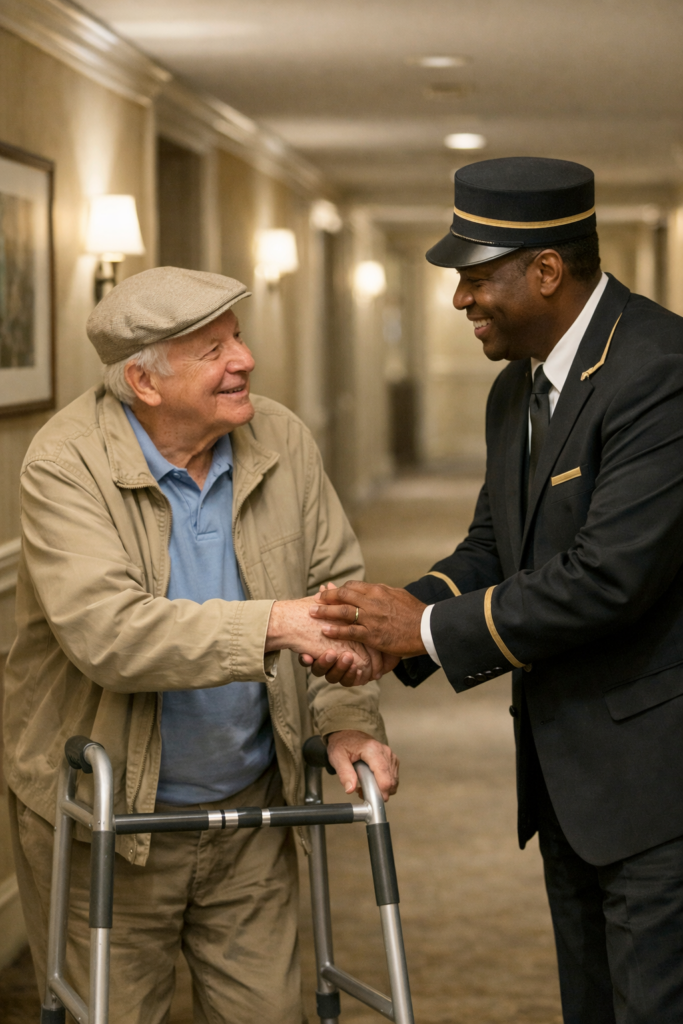
Here are practical habits that help.
Use Simple Words
You do not need a speech. A short phrase works.
“Thank you so much for your help.”
“I really appreciate you taking the time.”
“Thanks for making that easy.”
These phrases make the tip feel like appreciation, not like an uncomfortable transaction.
Make It Physically Easy
If you are using a cane, walker, or wheelchair, you do not want to be digging through a wallet while balancing.
Before you enter the hotel, put small bills in an easy place. A pocket, a small zip pouch, or a wallet slot you can access easily. If you use a bag, place tip cash in an outer pocket.
If you travel with a caregiver, decide who handles tips. This reduces stress. One person can handle cash while the other focuses on movement.
Hand It Over Calmly
A simple handoff is best. You can fold the bill once. You can place it in the staff member’s hand during your thank-you. Keep your body relaxed and your tone calm.
You do not need to hide it dramatically. In NYC, staff see tipping all day. A normal, simple handoff is the least awkward approach.
What If the Staff Member Refuses?
Sometimes a staff member will say, “No, it’s okay,” or “You don’t have to.”
Often, this is polite habit, not a strong refusal. You can respond with a gentle, friendly line.
“Please, I appreciate it.”
If they truly refuse and step back, do not force it. You can say thank you warmly and move on. If you want, you can tip another staff member later or tip housekeeping a bit more.
What If You Only Have Larger Bills?
This is very common, especially if you forgot to break cash.
If you have a ten or a twenty and the help was meaningful, it may still be fine. But if you feel it is too much for the situation, you can ask the front desk to break bills. In NYC hotels, this is normal. You can also plan ahead by carrying a mix of ones and fives.
What If You Don’t Want to Tip Cash?
Cash is still the simplest method for most hotel tips. Some hotels have digital tipping options, but you cannot rely on them. If you do not like carrying cash, plan a small “tip wallet” with a limited amount, so you do not feel exposed.
Special Situations Seniors Ask About
Mobility assistance can create unique moments that regular tipping guides do not address well. Here are common scenarios and what to do.
You Received Help But It Was “Very Brief”
If someone briefly holds a door, you can treat it as courtesy and simply say thank you. No tip required.
If the “brief” help was still meaningful for your safety, like stabilizing your walker on a curb, tipping a couple dollars is a polite choice.
You Needed Help Because the Hotel Setup Was Difficult
Sometimes the hotel’s accessibility is not ideal. Maybe the ramp is steep. Maybe the elevator route is confusing. You may feel frustrated that you need extra staff support.
It is okay to feel that frustration. Still, the staff member assisting you is not the one who designed the building. If they provide real help, tipping is still the normal etiquette. If you want to address the underlying issue, you can also speak with the hotel manager about improving access.
Staff Helped You With a Mobility Device and Luggage
This is one of the clearest tipping moments. It combines two services: luggage handling and mobility support. Tip toward the mid to higher range. If the bellhop was careful, patient, and respectful, tipping more is appropriate.
You Are Traveling With Family and It Feels Confusing Who Should Tip
Pick one person as the “tip captain.” This can be a caregiver, adult child, or travel companion. That person carries tip cash and handles tips. This avoids duplicate tips and avoids the awkward “should we?” moment in front of staff.
You Feel Self-Conscious Accepting Help
This is emotional, and it matters. Many seniors do not want to feel like a burden. But hotels exist to serve guests. You are not doing anything wrong by accepting help. Staff prefer when guests are safe. A fall or a stuck wheelchair is far worse than a guest asking for a little support.
Tipping is one way to turn that emotional discomfort into something simple: gratitude.
Midtown and Times Square Hotels: What Seniors Should Expect
Midtown and Times Square are popular for seniors because they are central. You are close to shows, museums, major transit hubs, and iconic sights. But the area has quirks that affect accessibility and staff help.
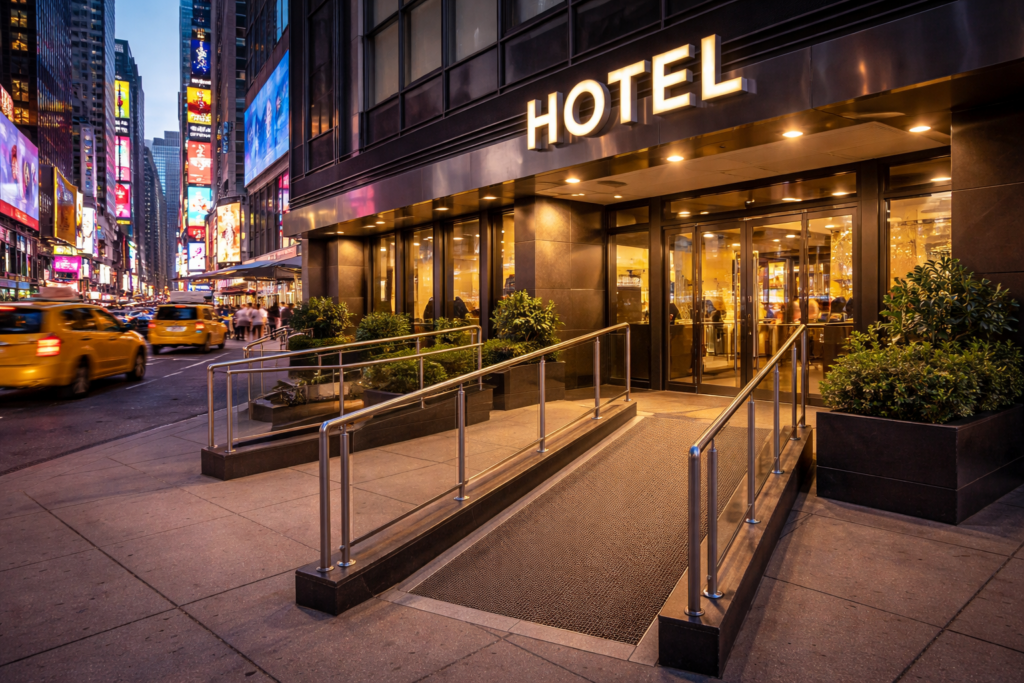
Hotels can be very busy. Lobbies may be crowded with tour groups, business travelers, and families. Elevators can be packed during peak times. Staff may be moving quickly, but that does not mean they are unwilling to help. It means they need clear signals.
Older buildings are common. Many hotels are older towers that have been updated over time. They may have accessible rooms, but the path from entrance to elevator might include tight turns or thresholds. A staff member who knows the best route can save you stress.
Sidewalks are intense. Outside, Midtown sidewalks can be uneven, crowded, and full of sudden stops. If a doorman helps you with a taxi pickup or clears space near the curb, that help is very real.
Because of this environment, tipping norms can feel stronger in this area. Not because staff demand it, but because the level of service can be higher and more frequent.
A practical tip for seniors staying in Midtown or Times Square is to assume you will have more small “help moments” than you would in a quieter city. Prepare a small stash of ones and fives so you can handle those moments smoothly.
A Quick Senior-Friendly Tipping Cheat Sheet
Use this as a simple mental guide. It is not about being perfect. It is about being prepared.
Bellhop helps with luggage and mobility to your room
Tip around ten dollars, more if it was extended help or multiple bags
Bellhop does a quick bag assist with minimal mobility help
Tip around five dollars
Doorman helps with a taxi, curb, ramp, or walker stability
Tip two to five dollars
Doorman opens the door repeatedly during your stay with friendly recognition
Optional small tips occasionally, or a tip near the end of the stay
Concierge solves a real accessibility problem or arranges accessible transport
Tip five to twenty dollars depending on effort
Housekeeping supports extra mobility needs or provides extra items
Tip daily if possible, slightly more when extra work is involved
If you are unsure
Tip modestly and say thank you warmly
Conclusion: Confidence Makes Travel Easier
Tipping for mobility assistance in NYC does not have to feel awkward. It becomes awkward when you are guessing. When you know the norms, it becomes simple.
Remember the core idea: accessible features are part of the hotel. Mobility assistance from staff is personal service that often deserves a tip. You are not tipping because you “needed help.” You are tipping because someone gave attention and effort to make your stay safer and easier.
If you plan ahead with small bills, choose a consistent pattern for repeated help, and use simple words, tipping becomes a smooth part of travel. It also builds goodwill. When staff recognize you as a respectful guest, you often receive better help throughout the stay.
New York City can feel intense, but it can also feel very supportive when you know how to navigate it. With the guidance in this article, you can move through Midtown or Times Square with more confidence, less stress, and a calm sense of control.
If you want, I can also write a short printable version of this guide that seniors can keep in a wallet or travel folder, with quick tip ranges and simple phrases to use in the moment.
FAQ
Do you tip hotel staff for wheelchair assistance?
If the assistance is meaningful and involves focused effort, tipping is appropriate. If it is a quick courtesy gesture, tipping is optional.
How much should you tip for wheelchair help at a hotel?
A common range is five to ten dollars for a bellhop, and two to five dollars for a doorman, increasing when help is extended or more physically demanding.
Is tipping required for ADA-related support?
Accessible features like ramps and automatic doors are not services, so they are not tipped. Personal assistance from staff is a service and often tipped.
Do you tip every time someone helps you?
Not necessarily. For repeated small help, you can tip occasionally or daily. For meaningful one-time assistance, tip at the end of the help.
Should a caregiver tip on behalf of a senior?
Yes. Many seniors prefer that a caregiver handles tips so the senior can focus on mobility and comfort.
What if I forgot to tip in the moment?
If you see the staff member again, you can tip then with a simple thank-you. If you do not see them again, it is okay to let it go and tip appropriately in future interactions.
What if the staff member refuses a tip?
You can offer once more with a polite “Please, I appreciate it.” If they still refuse, do not force it.
Should you tip the front desk for mobility-related room requests?
Front desk tipping is not standard for routine help. If someone went far beyond normal duties to fix a serious issue, a tip can be given, but it is optional.
Is it rude not to tip for mobility help?
If the help was significant, not tipping can be seen as a missed social norm in NYC hotels. That said, staff rarely confront guests. The bigger goal is to tip reasonably when it matters.
Does Midtown or Times Square change tipping expectations?
The norms are similar everywhere, but staff help may be more frequent in busy Midtown hotels, so being prepared with small bills is especially helpful.