
Flying into Newark Liberty International Airport and heading into New York City can feel like a big adventure. It can also feel like a puzzle, especially if you’re a senior traveler or you’re helping a parent plan the trip.
One of the most stressful parts is not the flight. It’s the small, awkward moments on the ground:
Who do you tip?
How much is “normal”?
What if you don’t have cash?
What if someone helps you for five minutes… or fifty?
This guide is here to make those moments easy.
You’ll get clear tipping ranges for the most common help seniors use at Newark Airport, along with simple rules you can remember when you’re tired, carrying bags, or trying to get through a crowded terminal. You’ll also learn what to do when service is limited, when you’re not sure who is being paid, and how to avoid the feeling that you’re either tipping too much or not enough.
If you’re flying into EWR for a Manhattan hotel, think of tipping as a “thank you” for personal effort. Not for the job title. Not for the uniform. For what the person actually did for you.
When you understand that one idea, tipping becomes much less confusing.
Understanding Tipping at Newark Airport
Newark is a major U.S. airport. It serves business travelers, tourists, and many international visitors. It also has a mix of services that look similar on the surface, but work differently behind the scenes.
Some people helping you are paid hourly. Some work with tips in mind. Some are contractors. Some are airport staff. Some are connected to airlines. You usually can’t tell which is which in the moment, and you shouldn’t have to.
The good news is that tipping at airports doesn’t need to be perfect. It only needs to be reasonable.
A reasonable tip depends on three things:
How much time did the person spend helping you?
How physically demanding was the help?
Did they make your trip noticeably easier or safer?
If the answer is “yes, they really helped me,” tipping a few dollars is usually appropriate.
Is tipping required at Newark Airport?
In the U.S., tipping is customary in many service situations, especially when the service is personal, hands-on, or time-consuming. It’s not usually required the way a fee is required. No one should threaten you, shame you, or refuse service because you didn’t tip.
But in practice, tipping is often expected for certain kinds of help. It’s part of the culture, and people who do these jobs may rely on tips to supplement their income.
For seniors, the goal isn’t to follow every unwritten rule. The goal is to travel comfortably and confidently. That means having a simple plan and sticking to it.
Why tipping feels harder for seniors
Seniors often face a unique set of pressures:
You may need mobility help, which makes you feel more dependent.
You may worry about appearing “difficult.”
You may be traveling alone and want to keep things smooth.
You may be tired and not want extra conversations.
You may be on a fixed income and want to be careful.
All of that is normal.
The way out of that pressure is to decide your tipping approach before you land. If you already know what you’ll do, you won’t feel trapped in the moment.
Cash vs card at EWR
Cash is still the easiest way to tip at airports.
Many airport services do not offer a simple card tip option. Some drivers can accept tips through apps. Some attendants may have a digital option. Many do not.
If you want a simple, low-stress plan, carry small bills.
A solid senior-friendly cash plan looks like this:
Ten $1 bills
Six $5 bills
Two $10 bills
That’s $50 total, and it covers nearly every normal tipping scenario from Newark to a Manhattan hotel. If you don’t use it, you still have cash for snacks, small purchases, or emergencies.
If you prefer to carry less, $30 in small bills can still cover the basics.
Wheelchair Assistance at EWR: How Much Should Seniors Tip?
Wheelchair assistance is one of the most important services for seniors at the airport, and it’s also the most confusing when it comes to tipping.
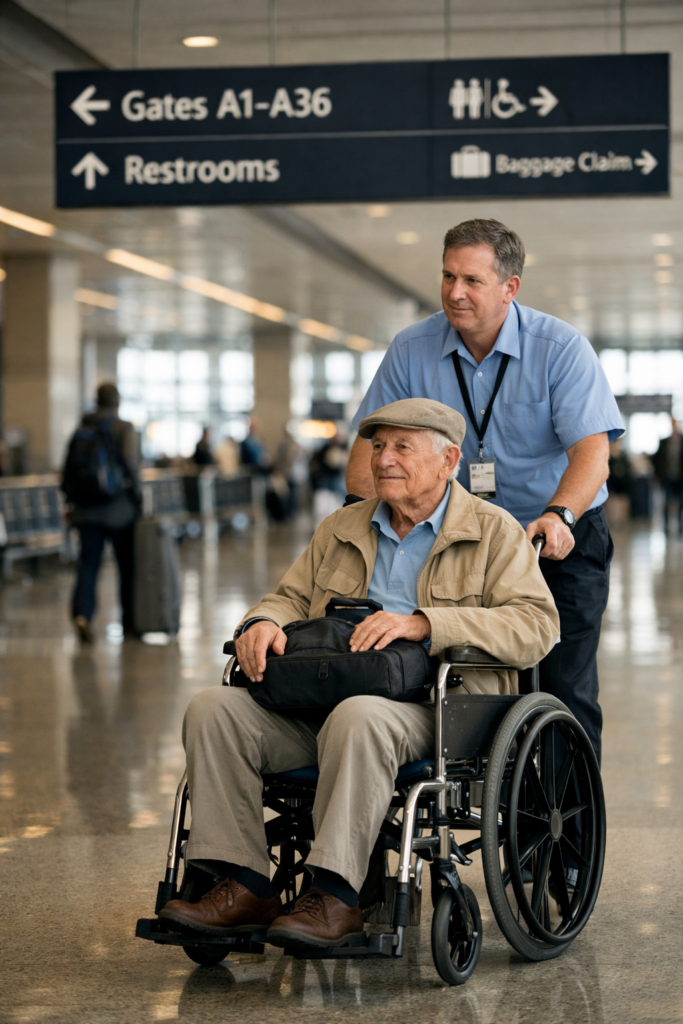
You might be thinking: Isn’t this medical? Shouldn’t it be included? Is it rude not to tip? What is the “right” amount?
Here’s the simplest way to think about it:
Wheelchair assistance is a service that can range from minimal to major. Tip based on what you received.
What wheelchair assistance can include
Wheelchair assistance might involve:
Meeting you at the gate when you land
Pushing you through a large terminal
Helping you navigate elevators and long hallways
Waiting with you during a delay
Helping you reach baggage claim
Guiding you to the correct pickup area
Helping you get to a shuttle, taxi, or rideshare zone
Assisting with carry-on items
In a busy airport like Newark, that can be a short, simple trip. Or it can be a long, complicated one.
Typical tipping ranges for wheelchair assistance
These ranges are practical and common:
Short assistance (a short push, minimal walking time): $5
Moderate assistance (a longer route, helpful guidance, normal wait time): $10
Full assistance (long distance, multiple stops, baggage claim, and handoff to transport): $15
Extra effort or long wait times (delays, slow lines, complicated routing): $20
If you want one number you can remember, use this:
Most seniors tip $10 for wheelchair assistance at a major airport when the service is meaningful and helpful.
That’s not a rule. It’s a useful anchor.
When to tip more
Tip on the higher end when the attendant:
Is patient and calm
Helps you feel safe and un-rushed
Waits with you through a delay
Helps you with carry-on bags
Makes sure you get to the right place, not just “somewhere close”
This kind of help matters a lot for seniors, especially when you’re tired after a flight. An extra $5 can be a fair way to say “thank you” when someone truly made your arrival easier.
When it’s okay to tip less
It’s reasonable to tip less when:
The assistance was brief and basic
The attendant clearly did not provide meaningful help beyond pushing the chair a short distance
You were handed off quickly without guidance
In those cases, $5 is often fine.
When it’s okay not to tip
This can feel uncomfortable to say out loud, but it’s important.
It’s okay not to tip when:
You felt unsafe
The attendant was rude or inappropriate
They ignored basic needs
They did not actually provide the service you requested
Your comfort and safety come first.
If you do choose not to tip, keep it simple. You don’t need to argue. You can just say, “Thank you,” and move on.
The best timing for wheelchair tips
The easiest moment to tip is at the end of the assistance, when you’ve arrived at your destination point.
Keep your tip in an easy-to-reach pocket or small envelope. That way you’re not digging through a purse or wallet while trying to stand up, manage bags, or avoid holding up a line.
A quick, friendly handoff is enough:
“Thank you so much. I really appreciate it.”
Then you hand the tip.
No speech needed. No explanations.
Luggage and Curbside Help at Newark Airport
Luggage help can happen in a few different ways at Newark:
Curbside baggage helpers outside the terminal
Help with bags inside the terminal
Help at baggage claim
Assistance getting bags into a vehicle or shuttle
Not every senior will use all of these. But when you do, tipping norms are fairly straightforward.
Curbside baggage helpers
If you use curbside check-in and someone handles your bags for you, tipping is customary.
A practical range is:
$2–$3 per bag
$5 minimum if you have multiple bags or heavier luggage
If you have two bags and someone does the lifting and tagging work, $5 is a simple, clean tip.
If you have three or four bags, or they are very heavy, $10 can be reasonable.
Inside-terminal luggage help
Some help is informal. For example, a staff member might lift a bag onto a scale, help you reposition a suitcase, or steady a cart.
If it’s minor help, you usually do not need to tip.
Tip when it becomes personal assistance, such as:
Walking with you while managing bags
Handling multiple items for several minutes
Helping you reach the correct area
In that case, a small tip like $5 is reasonable.
Bags, mobility equipment, and medical items
Seniors often travel with more than suitcases:
Walkers
Canes
Wheelchairs
Medical equipment
Extra carry-on items
Special pillows, supports, or bulky essentials
If someone helps you manage these items carefully and respectfully, tip based on effort.
A good rule is:
Small extra help: add $2–$5
Major help handling special equipment: add $5–$10
Think of it as gratitude for making a complicated situation smoother.
Airport Shuttle Services from EWR: Senior Tipping Rules
This is where many seniors feel unsure, because “shuttle” can mean different things.
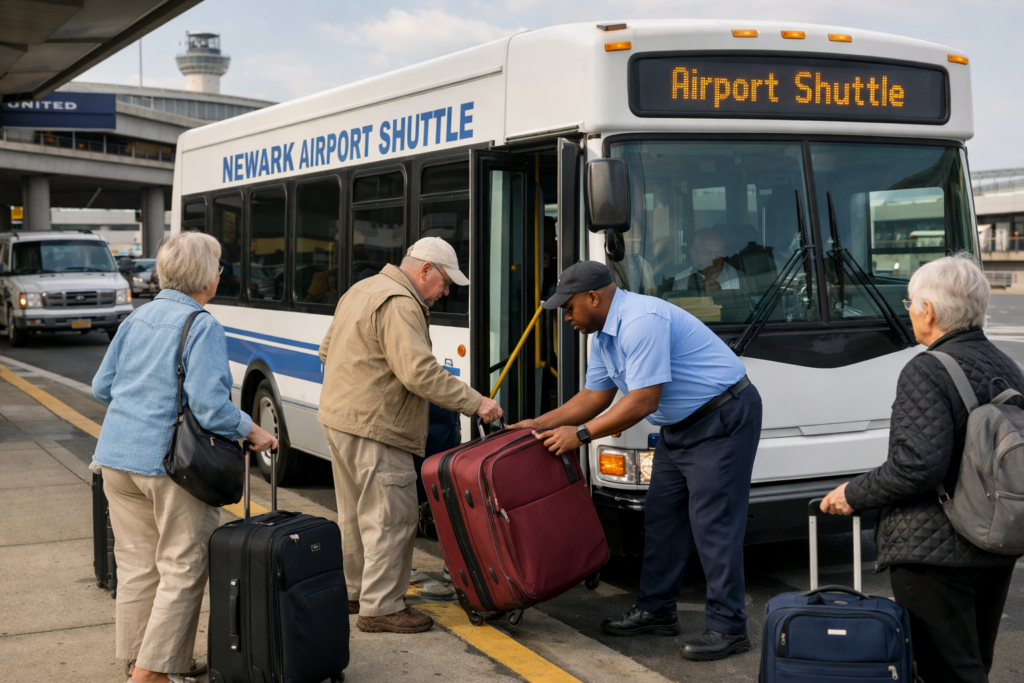
A shuttle might be:
A free hotel shuttle
A shared shuttle van
A paid shuttle service
A bus-style shuttle to a transit hub
A private senior-friendly transport arranged in advance
The tipping approach depends on two things:
Did the driver handle luggage?
Did the driver provide extra personal help?
Hotel shuttles: what seniors should know
Many hotels offer shuttles from Newark. Some are free, some are included in a package, and some are paid.
Even when the ride is “free,” the driver often expects tips, especially if they load and unload luggage.
A practical range:
No luggage help, quick ride: $2–$3 per person
Luggage help (loading and unloading): $5 per person
Extra help (steadying you, walking you to the door, special care): $5–$10 per person
If you’re traveling as a couple, you can tip as a pair rather than separate. For example, $10 total is often fine if the driver handled luggage for two people.
Shared vans and paid shuttles
If you pay for a shuttle service, you might assume tipping is included. Sometimes it is. Often it isn’t.
If it’s not included, tip similarly:
Short ride with luggage: $5
Longer ride, heavier bags, multiple stops: $10
Exceptional help: $15
If you’re not sure whether tipping is included, you can ask in a simple way:
“Is gratuity included?”
If they say yes, you’re done.
If they say no, you tip based on service.
When it’s okay not to tip a shuttle driver
It’s okay to tip little or not at all when:
The driver did not help with luggage
The shuttle is essentially self-service
The driver was rude or unsafe
You felt pressured or uncomfortable
But in most common senior travel scenarios, the shuttle driver does at least some luggage handling. When that happens, a few dollars is a fair and normal tip.
Senior-friendly move: tip at the end
For shuttles, tip after your bags are unloaded, just before you step away.
That timing ensures:
You’re tipping the right person
You’ve seen the full service
You’re not tipping early and then struggling later
It also keeps things clean and simple.
Taxis, Uber, and Car Services from Newark to NYC
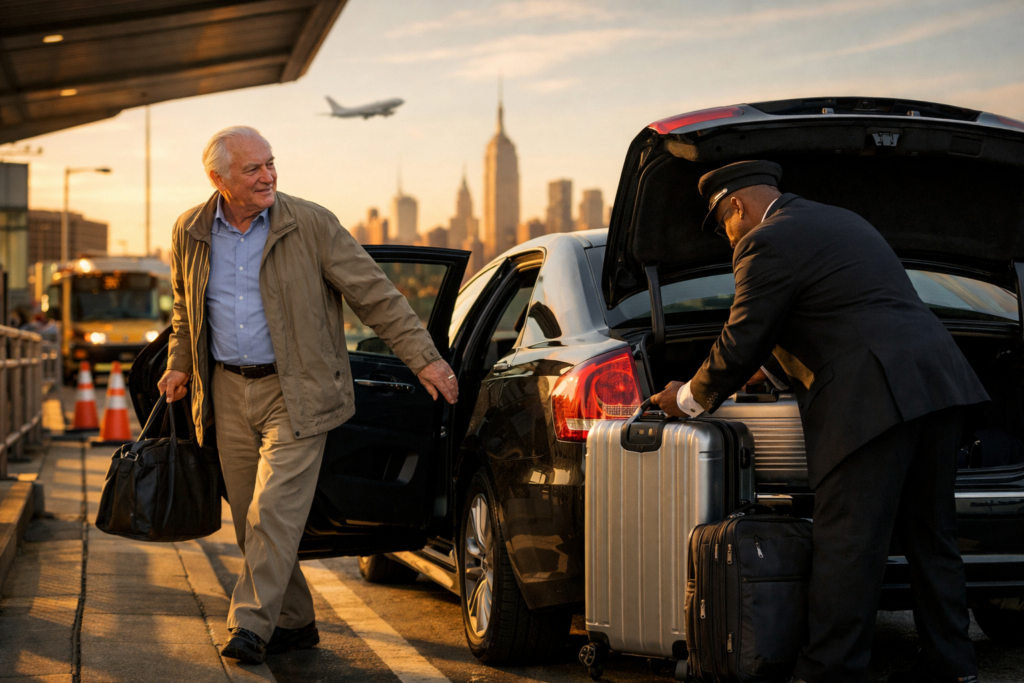
Many seniors skip shuttles and choose a direct ride to Manhattan. This can feel safer and simpler, especially if you have mobility concerns or you want door-to-door service.
The ride from Newark to NYC can be expensive, so tipping percentages may feel intimidating. But the rules are simpler than they seem.
Taxi tipping norms
In New York-area taxi culture, a common tip range is:
15% for standard service
20% for great service
A bit more if the driver provides significant help
If you don’t want to do math, you can use a simple shortcut:
On a large fare, aim for something close to 15–20%.
On a smaller fare, round up enough that the tip feels meaningful.
If the driver helps with luggage, especially heavy bags, tipping closer to 20% is common.
If the driver does not help, 15% is typically fine.
Uber and Lyft tipping for seniors
With rideshare apps, tipping is optional and usually done in the app after the ride.
That can be convenient, but seniors often prefer the certainty of cash.
Here’s a simple approach:
If you tip in the app, tip 15–20% depending on service.
If the driver handles luggage, add a little extra.
If you prefer cash, $5–$10 is common for airport rides, plus more for heavy luggage or extra help.
If the ride is long and costly, a percentage tip may be larger than you’re comfortable with. In that case, you can still tip in a way that feels fair:
Focus on effort, safety, and help with bags.
If a driver picks you up, drives safely, and helps with two heavy bags, a cash tip of $10–$20 can be a reasonable “thank you,” even if it’s not a perfect percentage.
Private car services
Private car services often have different rules. Some include gratuity. Some do not.
Before you tip, check:
Your receipt
Your booking confirmation
Any service charge line
If gratuity is included, you may still tip a small extra amount for exceptional help, but you don’t have to.
If gratuity is not included, tipping 15–20% is common.
When to tip more for drivers
Tip more when:
They help you in and out of the vehicle
They handle luggage without being asked
They are patient with slower movement
They drop you at the best possible entrance
They wait calmly while you gather belongings
This kind of service can make a senior arrival much easier, especially at Manhattan hotels where curb space is tight and everything is moving quickly.
Hotel Drop-Offs in Manhattan: Who to Tip and How Much

When you arrive at a Manhattan hotel, tipping may appear all at once.
There may be:
A driver helping unload
A doorman opening the door
A bellhop taking bags
A front desk interaction
An elevator moment where you’re trying not to block anyone
This can feel overwhelming.
The key is to remember: you don’t tip everyone. You tip the people who provide hands-on help.
Doormen and door staff
If a doorman opens the door, that alone does not always require a tip. Many guests do not tip for a simple door open.
Tip when the doorman:
Helps with bags
Hails a taxi
Gives personal assistance
Provides extra help in bad weather or crowded conditions
A good range:
Small help: $2–$5
Bags and real assistance: $5–$10
Bellhops and luggage delivery
Bellhops are usually tipped based on bags and effort.
Common ranges:
Taking bags from curb to lobby: $2–$3 per bag
Delivering bags to your room: $5–$10 total for a typical set of luggage
Large amount of luggage or heavy items: $10–$20
If you have two bags and a carry-on and they bring everything to your room, $10 is a simple, solid tip.
If you have medical equipment or something bulky, tip toward the higher end.
Avoiding double-tipping when multiple people help
Sometimes the shuttle driver helps unload and a bellhop immediately takes over. You may wonder if you should tip both.
Here’s a simple rule:
Tip each person who did meaningful work.
If the driver handled your bags during the ride and unloaded them, tip the driver.
If the bellhop then carries bags inside and to your room, tip the bellhop.
They did different work at different times.
If the driver simply opens a door and you unload everything yourself, tipping the driver may not be necessary.
Seniors staying in medical-friendly or extended-stay hotels
Some seniors prefer hotels that feel quieter, more spacious, and easier to navigate.
In these hotels, staff may do more hands-on help, like:
Slower, more careful assistance
More time spent with you
Help finding the right elevator or accessible entrance
Tip based on the added care.
Even a small extra amount can be a meaningful thank you.
Complete Newark Airport Tipping Cheat Sheet for Seniors
If you want a simple plan you can follow without thinking, use this.
Wheelchair assistance
$5 for short help
$10 for normal help
$15–$20 for long or extra-helpful assistance
Shuttle drivers
$2–$3 per person if no luggage handling
$5 per person if they handle luggage
$10 total if they provide extra senior-friendly help
Luggage help at curbside
$2–$3 per bag
$5 minimum for multiple bags
$10 if heavy or complicated
Taxi and rideshare
15–20% depending on service
Or $10–$20 cash if they handle luggage and you prefer a simple approach
Hotel bellhop
$2–$3 per bag to lobby
$5–$10 for room delivery
$10–$20 if many bags or special equipment
How much cash should you carry?
$30–$50 in small bills is a strong, low-stress amount for an EWR-to-Manhattan arrival day.
Common Tipping Mistakes Seniors Make at EWR
Tipping mistakes aren’t about “bad manners.” They usually happen because travel is tiring and confusing.
Here are the big ones, and how to avoid them.
Over-tipping out of worry
Some seniors tip too much because they fear being judged.
If that’s you, anchor yourself to one idea:
Most airport help can be thanked with $5–$10.
You don’t need to tip like a celebrity. You need to tip like a normal traveler.
Not tipping because no one asked
Many service workers won’t ask directly. That doesn’t mean tipping isn’t customary.
If someone pushes your wheelchair across a terminal or loads heavy bags into a shuttle, tipping is normal even if it’s never mentioned.
Tipping too early
When you tip early, you may feel uncomfortable later if service changes or gets rushed.
In most airport scenarios, tipping at the end is best. It lets you base your tip on the full experience.
Digging for cash at the worst moment
Seniors often end up searching for a wallet while trying to stand, balance, or manage bags.
A simple fix:
Keep a few bills in an easy-to-reach spot before you land.
A pocket, a small pouch, or a side zipper compartment works well.
That way tipping is calm and quick.
Travel Planning Tips for Seniors Flying into Newark
This section isn’t about tipping. It’s about making tipping easier by making the whole arrival smoother.
When travel goes smoothly, tipping feels simple. When travel feels chaotic, tipping feels stressful.
Request assistance early
If you think you might need wheelchair help, request it before your travel day.
Many airlines allow you to request assistance during booking or through customer service. Even if you’re unsure, it’s often better to request it and cancel later than to need it and have no support.
If you’re an adult child booking travel for a parent, build assistance into the plan. It can turn a difficult arrival into a calm one.
Plan your transport before you land
The worst tipping confusion happens when you’re making transport decisions while tired.
Before your flight, decide:
Hotel shuttle or direct ride?
Shared shuttle or private car?
Taxi or rideshare?
Once you choose, you can prepare your cash and expectations.
Use a simple “help level” mindset
Instead of trying to memorize rules, use help levels.
Basic help: $2–$5
Meaningful help: $5–$10
Major help: $10–$20
This works across almost every situation.
If you’re traveling alone, keep it simple
Seniors traveling alone should aim for fewer steps:
Wheelchair assistance if needed
Direct ride if possible
A hotel that is easy to access
More steps means more handoffs, and more handoffs means more tipping decisions.
Sometimes spending a bit more on a simpler ride saves you stress, time, and confusion.
A Calm, Confident Way to Tip
Many seniors worry they’ll look foolish.
Here’s the truth: Most service workers aren’t judging your tip like a test. They’re experiencing hundreds of travelers a day. They notice kindness, respect, and the basic effort to acknowledge help.
If you tip in the ranges above, you’re doing well.
If you tip slightly less or slightly more sometimes, you’re still doing well.
What matters most is that you don’t let tipping steal your joy on a travel day.
Conclusion: A Smooth Arrival from Newark to NYC
Arriving at Newark and heading to a Manhattan hotel can be exciting. It can also be exhausting. The goal of tipping isn’t to add stress. It’s to match your gratitude to the effort someone gave you.
If you remember only a few things, remember these:
Carry small bills.
Tip at the end of service.
Most meaningful airport help is thanked with $5–$10.
Tip more for long distances, heavy bags, and patient care.
Don’t overthink it.
When you land, your job is not to be perfect. Your job is to get to your hotel safely and comfortably.
New York is waiting. And you’re going to arrive like you belong there.