
A senior-friendly NYC guide that stops the confusion (and the accidental overtipping).
You’re finally in Manhattan. The lobby is buzzing. Someone grabs your suitcase. Another person opens the door like you’re a VIP. A third person asks if you need dinner reservations. It can feel like tipping is happening every ten seconds.
If you’re an older traveler, it’s extra easy to overtip here—not because you’re “doing it wrong,” but because NYC hotels have more roles, faster interactions, and more pressure-y moments than most places.
This guide makes it simple. It gives you clear ranges, plain-English rules, and calm scripts you can use on the spot.
The 30-Second Checklist You Can Screenshot

Use this as your “I’m not overthinking it” guide:
- Housekeeping: $3–$5 per night (leave daily)
- Bellhop (bags to room): $2–$3 per bag
- Bell desk (stored bags): $2–$3 per bag when you pick up
- Doorman opening the door: no tip expected
- Doorman hailing a taxi: optional $1–$2 (only if they truly help)
- Concierge quick questions (directions, simple tips): no tip expected
- Concierge special help (hard reservations, tickets, big favors): about $5–$20
- Valet (if used): about $5–$10 when the car is returned
That’s the core. Everything else is “only if extra effort happened.”
Why Tipping in Manhattan Hotels Feels So Confusing (Especially for Seniors)
Manhattan hotels have more staff roles than most cities
In many towns, you might see one front-desk person and one housekeeper. In Manhattan, you can walk through a lobby and interact with:
- A doorperson (or several)
- A bell staff team
- A concierge
- A porter
- A luggage storage attendant
- A club lounge attendant (in some hotels)
- Housekeeping plus a separate “runner” who brings towels
When you’re not sure who does what, it’s easy to assume everyone expects a tip. In reality, some roles are tipped often, some are tipped only for extra help, and some are usually not tipped at all.
NYC pace creates “pressure moments”
People move quickly. Interactions are short. You can feel like you need to decide immediately or you’ll look awkward. Seniors are especially likely to tip “just to be safe.”
The lobby itself can be intimidating
Luxury hotels create a subtle social pressure: the uniforms, the marble, the “sir/ma’am,” the polished service. It can make you feel like tipping is part of the performance.
Tipping norms have shifted over the years
If you traveled decades ago, you might remember different amounts, fewer staff roles, and more obvious “tipping moments.” Now you’ll see:
- Less cash in general
- More transactions happening by card
- More staff roles that feel “tippable,” even when they aren’t
The result is simple: you’re not confused because you’re behind the times. You’re confused because the system is messy.
A Calm Rule That Prevents Overtipping
Here’s the rule that keeps you from tipping every uniform in sight:
Tip for real service, not for mere presence.
If someone actively helped you, carried something, solved a problem, or made something happen, tipping is often appropriate. If someone simply stood there or opened a door as part of the job, tipping usually isn’t expected.
Even in NYC.
Before You Arrive: The Senior “Small Bills Strategy”
A lot of tipping stress is actually “cash stress.”
What to bring
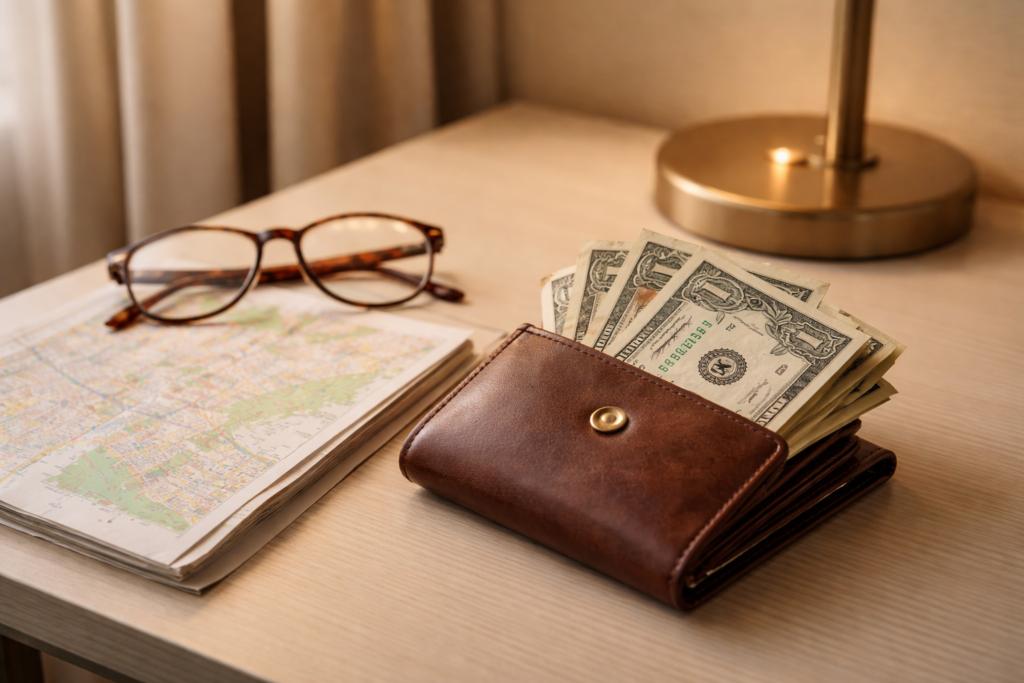
Try to travel with a small stack of:
- $1 bills
- $5 bills
- A few $10 bills
Why it matters
You avoid three common problems:
- Over-tipping because you only have $20s
- Not tipping because you can’t break a bill
- Awkward “I’ll get you later” moments you don’t want to manage
Where to keep it (simple + safe)
- Keep a small “tip wallet” separate from your main wallet.
- Put it in an easy-to-reach pocket or pouch so you’re not pulling out a full wallet in a busy lobby.
- Keep the bulk of your cash tucked away in a safer spot.
Housekeeping Tipping in Manhattan Hotels (The Most Common Senior Mistake)
Housekeeping is the place where seniors most often overtip, mostly because it feels personal: your room is your home base. You see the results. You want to show gratitude.
How much to tip housekeeping in NYC
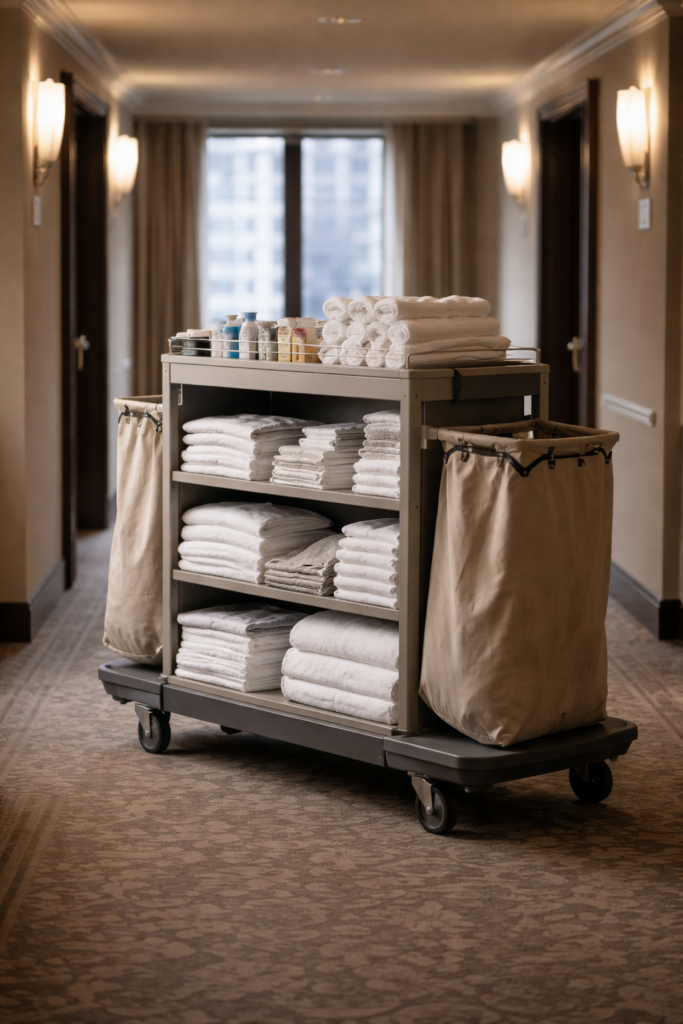
A solid, stress-free range is:
- $3–$5 per night in most Manhattan hotels
- More if you request extra work or create extra mess
- More if you’re staying with multiple people and the room is heavily used
Why daily tipping works better than end-of-stay tipping
Housekeeping teams rotate. The person cleaning your room today may not be the person cleaning it tomorrow. If you leave one big tip at the end, it might not reach everyone who helped you.
Daily tipping is the fairest method and removes mental burden.
Where to leave it so it’s clearly for housekeeping
NYC hotels can be busy. Make it obvious:
- Leave cash on the desk or nightstand
- Consider an envelope (even a plain one) with “Housekeeping” written on it
- Add a short note if you like: “Thank you!”
That note matters more than you think. It makes the cash unambiguous.
When it’s reasonable to tip less
You do not need to feel guilty if:
- You declined housekeeping most days
- You stayed only one night and requested no service
- You used “Do Not Disturb” and the room wasn’t cleaned
If nobody cleaned, nobody expects a cleaning tip.
When it’s kind to tip more (and how much)
You can increase the tip if any of these happened:
- You asked for extra towels multiple times
- You needed extra trash removal
- You had medical supplies, mobility equipment, or special room arrangement needs
- You spilled something, tracked in slush, or had extra cleanup needs
In those cases, think in terms of adding a few dollars for the day that required extra effort.
A senior-friendly housekeeping approach that removes anxiety
If you want a no-drama plan:
- Decide your nightly amount at check-in
- Put the cash where you’ll see it in the morning
- Leave it only on days you receive service
- Stop thinking about it after you leave it
Example: three-night stay, light room use
- Tip housekeeping $3–$5 on each day service happens
- If you skip a day of service, you don’t tip for that day
Example: week-long stay, heavier room use
- Tip daily at the same amount
- Add a small extra on the day you request special help
Bellhops and Luggage: The “Per Bag” Answer That NYC Uses
Bellhop tipping feels stressful because it happens in the lobby, with people watching, while you’re tired and trying to check in.

Here’s the simple NYC method.
Tip bellhop per bag in NYC
A common, practical range is:
- $2–$3 per bag if the bellhop brings bags to your room
- More if bags are unusually heavy, bulky, or numerous
What counts as a “bag”
Count items that require lifting and carrying:
- Suitcases
- Large duffels
- Garment bags
- Heavy backpacks
- Mobility aids that require careful handling (if they carry them)
Small purses or items you keep in your hands don’t need to be counted.
When you don’t need to tip a bellhop
No tip is expected if:
- You carry your own bags entirely
- The bellhop simply points you toward the elevators
- You refuse help and they do not handle anything
If you store luggage before check-in or after checkout
This is extremely common in Manhattan. You can tip when you pick up:
- $2–$3 per bag when retrieving is a clean, easy choice
A simple script that avoids awkwardness
If they bring bags to your room, you can say:
- “Thank you so much. I appreciate it.”
…and hand the cash naturally. No speech needed.
If you prefer, you can keep it even simpler:
- “Thanks—here you go.”
You don’t have to justify the amount. Normal, calm delivery is the whole trick.
Doormen in Manhattan Hotels: Tip or No Tip?
This is where seniors most often tip too often—because a doorman feels like a “classic tipping role.” In reality, most of the time, a tip is not expected.
When a tip is not expected
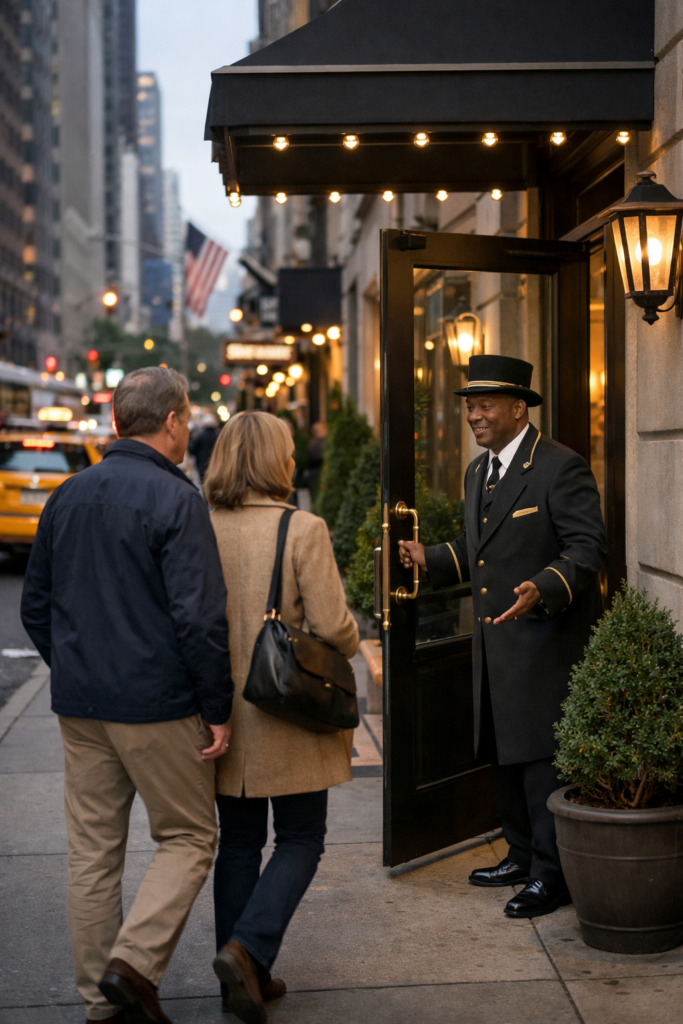
In most Manhattan hotels, a doorman opening the door is simply doing the job. You’re not expected to tip every entrance and exit.
If you did that, you’d spend a fortune by day two.
When a tip can make sense
A small tip becomes reasonable when the doorman does something that takes extra effort, such as:
- Hailing a taxi in busy weather or heavy traffic
- Carrying something heavy when bell staff aren’t involved
- Helping you with an umbrella, packages, or accessibility assistance
- Finding a car service quickly when you’re in a rush
In those “extra effort” moments, many travelers choose:
- $1–$2 as an optional thank-you
What about longer stays?
If you’ve stayed many days, the staff recognizes you, helps regularly, and genuinely makes your day easier, some guests choose to tip occasionally rather than constantly.
A good senior approach is:
- Tip only when there’s real help
- Tip occasionally if one person goes above and beyond repeatedly
- Don’t feel obligated on every pass
The holiday envelope question
Some NYC hotels have a tradition of “holiday tipping” for doormen and building staff, especially for long-term residents. For short hotel stays, it’s not something you need to worry about. If you’re visiting for a few nights, skip the holiday-pressure mindset entirely.
Concierge Tipping in NYC: When It’s Appropriate (and When It’s Not)
Concierges can be incredibly helpful in Manhattan, especially for seniors. But many older travelers tip for basic questions that don’t require tipping at all.

When you do not need to tip
No tip is typically expected for:
- Directions
- Subway suggestions
- Basic restaurant recommendations
- Printing a document
- Quick “what’s nearby?” advice
- Calling a standard taxi or giving a phone number
A warm “thank you” is enough.
When tipping the concierge is appropriate
Tipping becomes reasonable when the concierge:
- Gets you a hard-to-book reservation
- Secures tickets that were difficult to find
- Makes a complex plan happen fast
- Solves a problem that would have been stressful for you to handle alone
- Helps with accessibility arrangements, medical needs, or special assistance
How much to tip a concierge in NYC
A practical range that covers most situations:
- Around $5–$10 for meaningful help
- Around $15–$20 for big wins or major time-saving help
You’re tipping for the difficulty and effort, not just the result.
A senior-friendly way to ask without feeling awkward
If you’re unsure, you can ask a simple question that doesn’t feel cringey:
- “Is there anything I should know about how this works here?”
That keeps it respectful, and it signals you’re trying to do the right thing.
Watch-outs: avoiding pressure and upsells
Most concierges are excellent. Still, in NYC you might encounter situations where:
- A “recommendation” is really a paid partnership
- A tour suggestion is overpriced
- A ticket arrangement includes hidden markups
If something sounds too expensive or overly pushy, it’s fine to say:
- “Thank you. I’m going to think about it.”
You never owe a tip for advice you didn’t use.
Luxury vs Standard Manhattan Hotels: Does Tipping Change?
This is a big misconception: people think luxury hotels require bigger tips across the board.
The truth
The basic tipping ranges stay similar because the roles stay similar. What changes is the number of staff interactions—and that’s what makes you feel like you’re tipping “more.”
What can increase at higher-end hotels
You might see:
- More bell staff interactions
- More door staff presence
- Extra housekeeping touches (like turndown service)
If extra service is delivered, tipping moments may increase. But you don’t need to inflate every tip just because the lobby is fancy.
Cash vs Card: How Seniors Should Tip in NYC Hotels
Why cash still works best for hotel tips
Cash is immediate and simple for:
- Housekeeping
- Bellhops
- Luggage storage attendants
- Doormen
When card tipping may appear
Some hotels can add gratuities for certain services, but it’s not consistent. If someone truly helped you and you have no cash, you can calmly ask:
- “Is there a way to add a tip on the bill?”
If the answer is no, that’s not a crisis. A sincere thank-you is still meaningful.
The “service charge” confusion
Sometimes a hotel includes a service charge or fee. That does not always replace tipping for individual staff help. The clean approach is:
- If a staff member directly helped you, tip them in cash when appropriate
- Don’t assume fees cover everything
- Don’t double-tip blindly either
If you’re unsure, ask the front desk:
- “Is there already a gratuity included for this service?”
That’s a normal question in NYC.
Senior-Friendly Scenarios (So You Can Decide Fast)
You checked in and a bellhop takes bags to your room
- Tip $2–$3 per bag at the room
You stayed three nights and housekeeping cleaned twice
- Tip $3–$5 on each day service happened
The doorman opens the door repeatedly but doesn’t do anything else
- No tip needed
The doorman gets you a taxi during bad weather quickly
- Optional $1–$2 if you want
Concierge gets you a hard reservation for a special night
- Tip around $10–$20 depending on effort and difficulty
Concierge gives you a list of nearby restaurants casually
- No tip needed
Common NYC Hotel Tipping Mistakes Seniors Make (and the Fix)
Tipping the doorman every time
Fix: tip only for extra help, not routine door opening.
Leaving one large housekeeping tip at the end
Fix: tip daily when service happens so the right people benefit.
Tipping because someone is standing nearby
Fix: tie tips to actual service.
Over-tipping because you only have large bills
Fix: keep $1s and $5s ready before you arrive.
Feeling embarrassed to ask what’s normal
Fix: ask simple questions. NYC staff hear them constantly.
What Happens If You Don’t Tip? The Honest Answer
This is the fear beneath the whole topic: “Will service get worse?”
In most Manhattan hotels, staff professionalism is steady. People are doing their jobs in a high-volume environment. They are used to:
- International guests who don’t tip the same way
- Business travelers who barely interact
- Guests who never carry cash
A tip is appreciated. It is not a magic key that unlocks basic human decency.
If someone helped you and you didn’t tip because you were flustered or short on cash, you haven’t committed a social crime. Take a breath and move on.
A Simple System That Prevents Over-Tipping All Week
If you like having a plan (many seniors do), this works well:
Set a daily “tip budget”
Pick a number that feels comfortable for you. You don’t need a strict spreadsheet. You just need a cap so you don’t tip emotionally.
Decide your “default” tips in advance
- Housekeeping: your chosen nightly amount
- Bellhop: your chosen per-bag amount
- Concierge: only if special help happens
- Doorman: only if real extra effort happens
Keep the tips physically separated
If your tip cash is separate, you’re less likely to hand over too much in a rushed moment.
Small Scripts That Save You From Awkward Lobby Moments
Sometimes staff stand there politely and your brain goes blank. These short lines help.
If you want to tip
- “Thank you—this is for you.”
- “I really appreciate it.”
If you don’t want to tip because no service happened
- “Thank you.” (and keep moving)
No explanation needed.
If you need a second because you’re finding cash
- “One moment—thank you.”
Calm, normal, no panic.
If you have no cash and feel embarrassed
- “Thank you so much. I don’t have cash on me right now, but I really appreciate your help.”
A warm tone matters more than you think.
Extra Hotel Roles Seniors Ask About (Quick Clarity)
This article is focused on housekeeping, bellhop, doorman, and concierge, but seniors often run into a few other situations in Manhattan hotels.
Front desk staff
Front desk staff generally aren’t tipped for standard check-in or answering questions. If someone goes far beyond—solving a major problem, moving mountains, or making a special accommodation happen—you can express gratitude in other ways:
- Ask for the manager and praise them by name
- Leave a positive note at checkout
- Use a short written compliment if the hotel collects feedback
That kind of recognition can matter a lot.
Maintenance or engineering help
If someone comes to fix something quickly, a tip is not always expected, but some guests offer a small thank-you if the help is immediate and significant—especially if the staff member is dealing with a tricky issue late at night. If you tip, keep it modest and natural.
Turndown service
If your hotel has turndown service (more common in higher-end properties), you can treat it like housekeeping:
- A small daily tip is reasonable if you’re receiving that extra service
Room service delivery
Many hotels add an automatic charge. If a fee is already included, you usually don’t need to add extra unless the service was unusually helpful. If no fee is included and someone brings a full meal to your room, many guests tip similarly to food delivery norms.
Confidence Is the Goal (Not Perfection)
NYC tipping culture can feel like a test you didn’t study for. But here’s the secret: you don’t need to be perfect. You need to be consistent and reasonable.
If you follow the screenshot checklist and keep one guiding rule—tip for real service, not for presence—you’ll avoid the senior over-tipping trap and still be generous in the moments that truly count.

Closing Thought: Enjoy Manhattan, Don’t Let Tipping Steal the Joy
You came to New York to see the lights, the parks, the museums, the shows, the skyline. You didn’t come to run a mental tipping calculator every time a door opens.
Screenshot the checklist. Keep a few small bills ready. Tip calmly when real help happens. Then go enjoy your trip with the peace of mind that you’re doing this the right way.