
“You shouldn’t feel pressured. Here’s what’s normal.”
If you’re a senior traveling through JFK and you’ve requested wheelchair or mobility assistance, tipping can feel like the most awkward part of the whole trip. Not because you don’t appreciate the help. But because nobody explains what’s expected, what’s allowed, or what’s simply optional.
You might be wondering:
Is tipping required?
Will the attendant treat me differently if I don’t tip?
Are they even allowed to take tips at JFK?
What if someone hints for money or makes me uncomfortable?
This guide is here to make it simple. You’ll learn what wheelchair assistance at JFK usually includes, what attendants can and cannot do, how tipping normally works, and how to protect your comfort and dignity—especially if you’re traveling alone, on a fixed income, or feeling a little anxious.
The big picture is this: you are not required to tip. You can tip if you want to. And you should never feel pressured.
What Is Wheelchair and Mobility Assistance at JFK Airport?
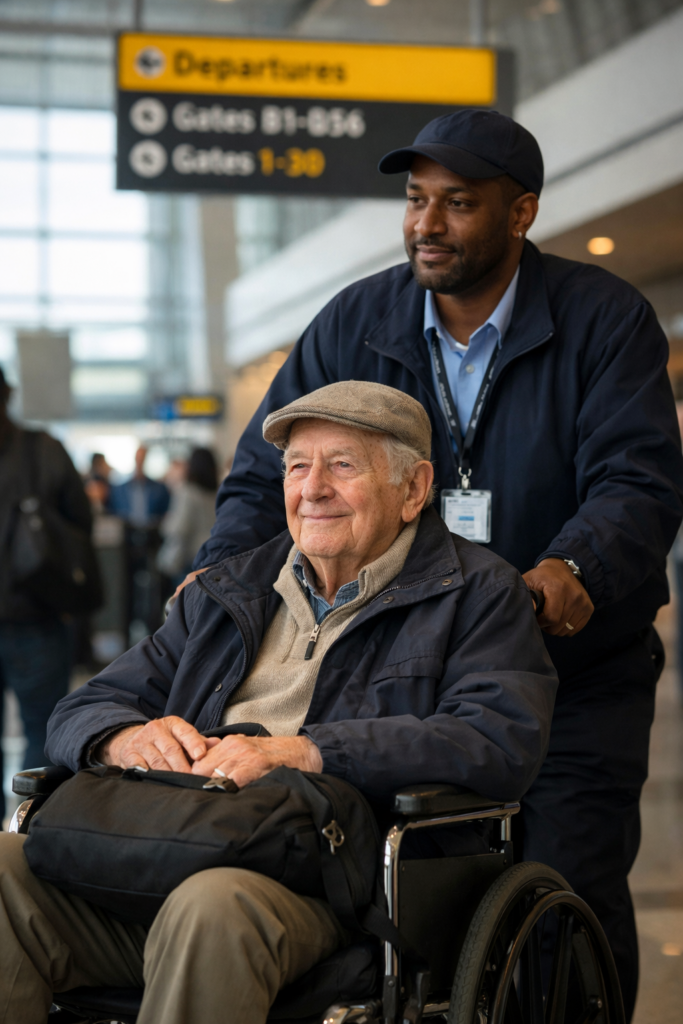
Wheelchair and mobility assistance at JFK is designed to help passengers who have trouble walking long distances, standing for long periods, or navigating busy terminals. It’s not “special treatment.” It’s a practical service to help you get from one part of the airport to another safely and with less strain.
At JFK, distances can be surprisingly long. Even if you feel fine walking short distances, airports are a different kind of walking. You may need to cover long corridors, move between check-in and security, wait in lines, and get to gates that feel miles away. Add luggage, crowds, and time pressure, and even strong travelers can feel overwhelmed.
Mobility assistance is often the difference between feeling calm and feeling exhausted before you even board.
Who provides wheelchair assistance?
This is where confusion starts.
In most cases, the people who push wheelchairs or escort you through the terminal are not airline flight attendants or TSA agents. Wheelchair attendants are often contracted through service companies working on behalf of airlines. They may be stationed at check-in areas, curbside drop-off points, or within the terminal.
So you might see different uniforms. Different badges. Different levels of experience. And different communication styles.
But no matter who the attendant works for, the service should follow basic rules: it’s help with mobility, not personal caregiving. And tipping is not supposed to be demanded.
What wheelchair assistance usually includes
Most seniors using wheelchair assistance at JFK can expect help with:
Getting from curbside or check-in to the airline counter
Moving from the airline counter to security
Navigating queues and airport flow
Getting from security to the gate
Gate-to-gate help during connections
Getting from the arrival gate to baggage claim
Getting to the curb, pickup area, or shuttle
Sometimes the attendant will help you keep track of your carry-on, guide you to the right line, or help you find a restroom or information desk. A good attendant can make the airport feel manageable again.
What wheelchair assistance does not include
It’s also important to know what this service typically does not cover. Many seniors assume wheelchair help includes things that actually fall under personal care.
Wheelchair attendants generally are not supposed to:
Lift you out of the chair or carry you
Provide personal care like bathroom assistance
Handle your money, wallet, passport, or medication
Carry heavy bags like a porter service
Act as a caregiver
They can guide you, push your chair, and help you navigate. They can be kind and patient. But they are not meant to do tasks that require physical lifting or personal contact beyond standard assistance.
Knowing that helps you set the right expectations, and it can also protect you. If someone offers “extra help” that crosses into uncomfortable territory, you can decline and ask for official assistance through your airline.
JFK’s Policy on Tipping Wheelchair Attendants
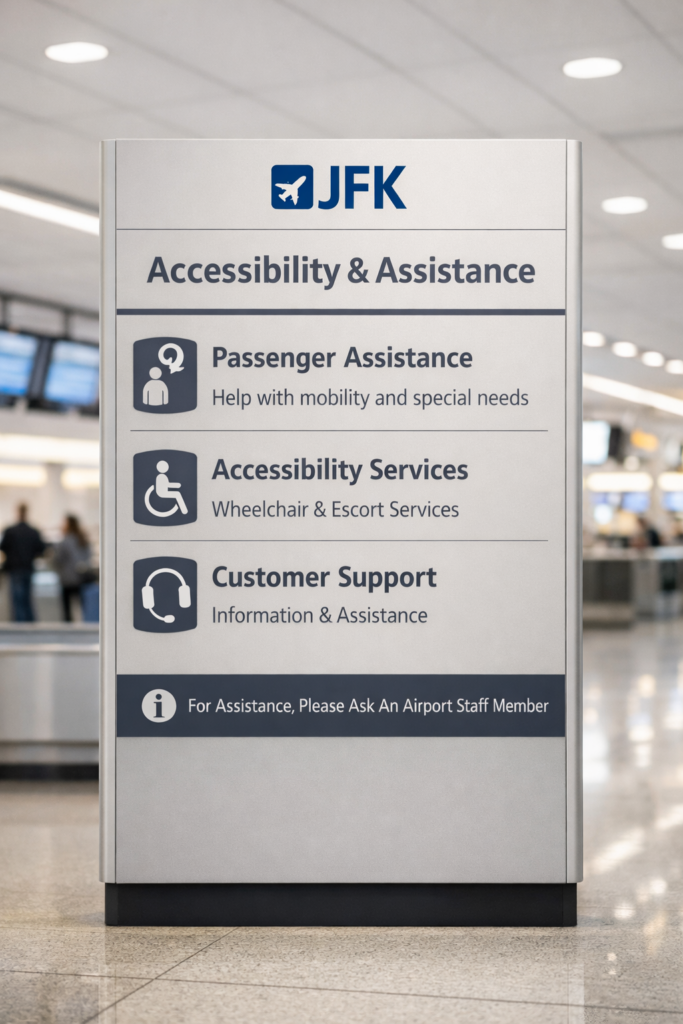
Here’s the part seniors really want: the rule.
At JFK, wheelchair attendants can accept tips. But they cannot ask for them.
That matters. Because “allowed to accept” is not the same as “expected to receive.” The airport’s stance, in simple terms, is that tipping may happen voluntarily. It is not something attendants should request, pressure you into, or imply you must do.
If you tip, it should be your choice.
If you don’t tip, you should still get help.
What attendants cannot do
If an attendant directly asks you for money, that is not how this service is supposed to work.
They should not:
Ask you outright for a tip
Hint repeatedly or make comments like “We work for tips”
Stand silently and stare in a way that feels like pressure
Suggest your service will be slower or worse without cash
Refuse to help you because you didn’t tip
Even if you’ve heard stories from other travelers, you should know this: you are not “breaking a rule” by not tipping. Tipping is a personal decision. Some seniors tip every time. Some tip only for extra effort. Some do not tip at all due to budget or discomfort. All of those choices can be reasonable.
Should You Tip Wheelchair Assistance at JFK?
Most seniors don’t want a lecture. They want a clear answer.
You do not have to tip.
At the same time, many travelers do tip wheelchair attendants when the assistance feels meaningful, difficult, or especially kind. The best way to think about it is like this:
Tipping is a thank-you, not a requirement.
You can treat it as optional gratitude for service that made your travel easier.
When tipping feels appropriate
Many seniors choose to tip when:
The airport is crowded and the attendant helps you stay calm
You have a long distance from curb to gate
You’re traveling during holidays, peak hours, or bad weather
You have a tight connection and the attendant keeps you moving
The attendant is patient, respectful, and reassuring
They help you navigate confusing terminal layouts
They help you when you’re stressed, tired, or overwhelmed
In other words, if the service clearly improved your experience, tipping can be a kind gesture.
When it’s perfectly fine not to tip
It is also completely okay not to tip when:
You are on a fixed income or tight budget
The help was very brief or limited
You did not feel safe or comfortable
You were rushed and didn’t have cash ready
You already paid fees associated with your travel
The attendant made you feel pressured or awkward
Seniors often carry guilt about this. But you shouldn’t. Travel is expensive, and mobility assistance exists because people need it. It is not meant to become a stressful “extra cost” that makes you dread the airport.
If you want a simple mental rule: tip when it feels like a genuine thank-you and you can afford it comfortably. Otherwise, a warm thank-you and a calm goodbye is enough.
How Much Do Seniors Typically Tip at JFK?
The most practical question is usually: “Okay, if I do tip, how much is normal?”
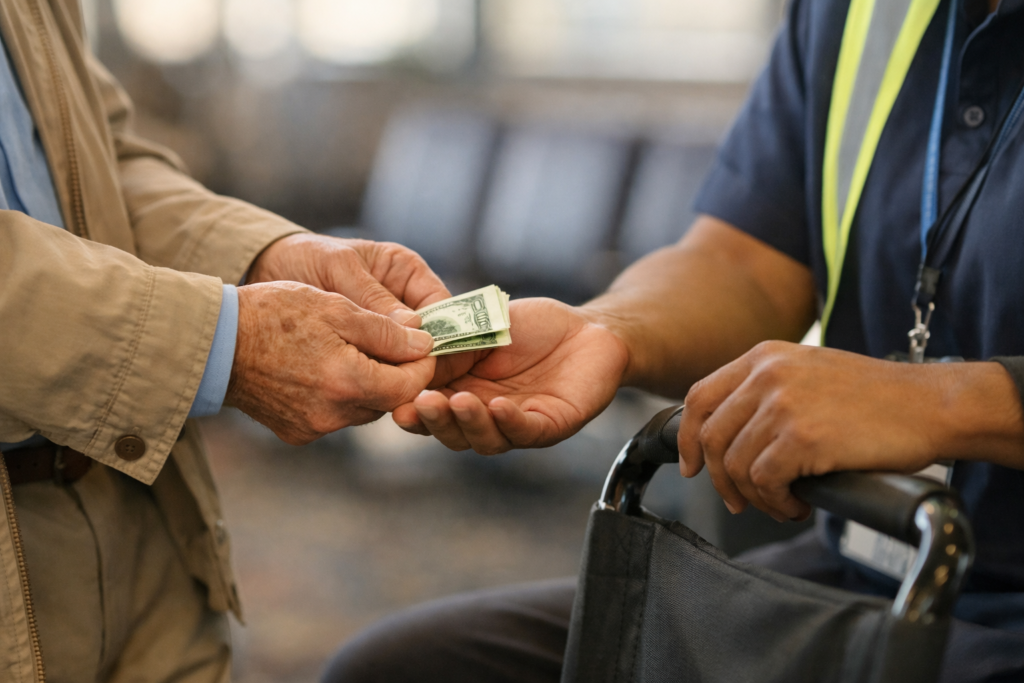
Here are ranges that many travelers consider typical for wheelchair assistance in large U.S. airports like JFK:
A short distance with basic help: around $5
Average help from check-in to gate: around $10
Long distance, heavy crowds, or extra time: $15 to $20
Complex help like long waits or difficult navigation: $20 or more
These are not official numbers. Think of them as “common behavior,” not a rulebook.
The right tip depends on the situation and your comfort.
A few real-world examples
If you’re dropped off curbside, checked in quickly, and the attendant takes you to a nearby security line and gate in a smooth, short trip, many seniors would tip on the lower end if they tip at all.
If you have a long international terminal walk, multiple lines, and a long distance to the gate, many would tip more because the assistance required more effort and time.
If your attendant stayed calm during confusion, helped you communicate, or made you feel safe and respected, you might choose to tip more because the value wasn’t just physical—it was emotional comfort.
Cash or card?
Cash is the easiest option for tips at the airport. Most attendants are not set up to take card tips directly.
If you want tipping to be stress-free, consider bringing small bills. A few fives and tens can remove the “I don’t have the right amount” pressure.
But if you don’t have cash, don’t panic. You can still say thank you and move on. You are not required to find an ATM just to tip.
How to tip discreetly and comfortably
Many seniors dislike the idea of making a moment out of tipping. You don’t have to.
A simple approach is:
Make eye contact
Smile
Say “Thank you so much for your help”
Hand the tip quietly
Walk away
No announcement. No explanation. No awkwardness.
And if you choose not to tip, the same script works without the handoff: “Thank you so much, I really appreciate it.”
Can Wheelchair Attendants Ask for Tips at JFK?
No. They should not ask.
This matters because some seniors feel unsure whether a request is “normal.” It isn’t.
What counts as asking?
It can look like:
A direct request: “Do you have a tip?”
A comment: “Most people tip.”
A hint: “We don’t get paid much.”
A drawn-out pause while staring at your hands or wallet
Repeated reminders that feel like pressure
Sometimes people will say, “They didn’t ask, but they made it obvious.” If you feel pressured, you are allowed to set a boundary.
What to do if someone asks or hints
You do not need a confrontation. You also do not need to justify your finances.
Try a simple response:
“Thank you, I’m all set.”
“I appreciate your help.”
“Thank you, have a good day.”
Then continue with your travel. You are not obligated to keep engaging.
If the behavior was aggressive or repeated, consider reporting it. You deserve to travel without being shaken down.
What If You Feel Pressured or Uncomfortable?
This is where many senior travelers quietly struggle. The airport is loud. You’re tired. You might be alone. And you don’t want drama.
So here are the most common pressure situations seniors describe, and how to handle them calmly.
The silent stare
You arrive at your gate or destination. The attendant stops. They don’t speak. They wait.
This can feel like an unspoken demand.
If you want to tip, tip and move on.
If you don’t want to tip, end the moment politely:
“Thank you very much. I really appreciate your help.”
Then turn your attention to your next step—your gate agent, your family, your phone, your boarding pass.
You do not need to fill the silence with nervousness.
The comment that makes you feel guilty
Some attendants might say something like “Tips are appreciated” or “Most people tip.”
If it feels gentle, you can respond with a simple thanks and decide what you want to do.
If it feels pressuring, treat it as noise. You can say:
“Thank you.”
And end the interaction.
You do not owe a debate. You do not owe an explanation.
When pressure becomes unacceptable
If the attendant becomes rude, blocks your movement, raises their voice, or repeatedly asks, that’s not okay.
In that case, focus on safety and ending the interaction:
Move toward a gate desk, airline counter, or information desk
Ask for a supervisor or airport assistance
If you feel unsafe, ask nearby staff for help immediately
You can keep it simple: “I’m being pressured for money and I need help.”
You’re not causing trouble. You’re protecting yourself.
Senior Travel Tips for Mobility Assistance at JFK
The smoothest travel days are planned before you even arrive. Seniors who have the best experiences at JFK often do a few simple things that remove stress early.
Book assistance in advance
Request wheelchair or mobility assistance through your airline, not just at the airport.
Many seniors assume they can “figure it out” at check-in. Sometimes you can. But pre-booking makes it more likely someone is assigned to you and you aren’t waiting while tired or in pain.
If you’re traveling during busy times, it’s even more important.
Arrive earlier than you think you need
Mobility assistance can involve waiting. The attendant may not be immediately available. Security lines may be longer. Elevators may be slow.
Give yourself extra time so you don’t feel rushed. Rushing is when pressure and confusion feel worse.
Pack tipping bills if you want the option
If tipping helps you feel appreciative, bring small bills.
A simple setup: a couple of $5 bills and one or two $10 bills. That covers most situations without needing change.
But again, this is optional. It’s a convenience, not a requirement.
Know what help you actually need
Some seniors need a wheelchair from curb to gate. Others only need help from security to gate. Some can walk but need help standing in long lines.
When you know your needs, you can communicate them clearly. That reduces confusion and makes the service feel better for everyone.
If you use your own mobility device
If you use a walker, cane, or personal wheelchair, ask your airline how it will be handled.
Some seniors are anxious about losing access to their device. A little planning can reduce that stress. Make sure your device is labeled and ask what happens at the gate and after landing.
Terminal Considerations at JFK
JFK is not a small airport. It’s a major international hub, and that can make mobility assistance feel more complicated.
Some terminals have longer distances and more crowded flows. Some international processes add time. Connections can be stressful if the schedule is tight.
Here’s the key senior mindset:
JFK is not the place to “tough it out.”
If you need help, request it. If you’re unsure, request it anyway. It’s better to cancel assistance you didn’t need than to suffer through a painful or exhausting journey.
International flights often mean longer assistance
If you’re flying internationally, expect longer distances and more steps. Customs and immigration can add waits, and the airport can feel confusing if you haven’t traveled in a while.
That doesn’t mean tipping becomes required. It means you may want to plan more time and, if you tip, you may choose a higher amount because the help was longer.
Myths Seniors Believe About Airport Tipping
A lot of tipping anxiety comes from myths. Let’s clear them up.
Myth: “If I don’t tip, I’ll get bad service.”
You should not get bad service because you didn’t tip. Assistance exists because it is needed, not because it is a luxury.
If you feel you are treated poorly or delayed because of tipping, that’s a problem worth reporting.
Myth: “Tipping is required.”
It is not required. There is no law that you must tip a wheelchair attendant.
Myth: “They only get paid through tips.”
Some attendants may rely on tips to supplement income, but that does not make tipping mandatory. You are not responsible for the wage structure of an airport contractor.
You can be kind without being pressured.
Myth: “If they accept tips, it means I should tip.”
Accepting tips means it is permitted. It does not mean it is expected in every case.
Advice for Caregivers Traveling With Seniors
If you’re a caregiver, adult child, or family member traveling with a senior, you can reduce stress with a little preparation.
Decide in advance how you’ll handle tipping
One of the most uncomfortable moments is when the senior feels put on the spot, especially if they are already nervous.
If you expect to tip, you can quietly handle it for them.
If you don’t plan to tip, you can support them emotionally: “You don’t have to tip. You already got the help you needed. Let’s just say thank you and go.”
Keep your focus on dignity, not money
The real goal is that the senior traveler feels safe and respected.
A good caregiver approach is to treat tipping like a private detail, not a dramatic moment.
Advocate without escalating
If something feels wrong, you can step in calmly:
“Thanks for your help. We’re all set.”
Then guide the senior away.
If someone becomes pushy, the caregiver can move toward staff support and report it without creating a scene.
Conclusion: You Shouldn’t Feel Pressured
If you remember one thing, remember this:
You are not required to tip wheelchair assistance at JFK.
You can tip if it feels right and you can afford it. Many seniors do, especially when the help is long, complex, or offered with patience and kindness.
But attendants should not ask, pressure, or imply that service depends on money. Your comfort matters. Your dignity matters. And your travel day should not be shaped by awkward tipping anxiety.
If you want tipping to be simple, bring small bills and treat it like a quiet thank-you.
If you don’t want to tip, a warm thank-you is enough, and you can move on without guilt.
Safe travels—and may your JFK experience feel calm, supported, and respectful from curb to gate.
FAQ: JFK Wheelchair Assistance and Tipping
Do seniors have to tip wheelchair attendants at JFK?
No. Tipping is optional. You can tip as a thank-you, but you do not have to.
Is tipping wheelchair assistance required by law?
No. There is no legal requirement to tip.
Can an attendant refuse help if I don’t tip?
They should not. If you feel service is withheld due to tipping, report it.
How much should I tip for long distances?
Many travelers tip in the $15–$20 range for long or complex assistance, if they choose to tip.
Is cash better than card for tips?
Yes. Cash is simpler. Many attendants cannot accept card tips directly.
What if I can’t afford to tip?
That is okay. You can still receive assistance. A sincere thank-you is enough.
Can attendants ask for tips at JFK?
They should not ask. Tips can be accepted, but not requested.
Who do I report uncomfortable behavior to?
Start with your airline desk or airport support staff. If needed, request a supervisor.
Does TSA wheelchair help require tipping?
No. TSA assistance is not a tipping situation.
Is tipping different for international flights?
Tipping is still optional. Some travelers tip more for longer assistance, but it is never required.
Can family members tip on my behalf?
Yes. A caregiver or family member can tip quietly if that feels easier.
Are tips shared among attendants?
It depends on the employer. Many tips are kept by the individual attendant, but practices vary.