
A senior-friendly day trip from New York City can feel like the perfect choice. You get out of the crowds. You sit down most of the day. You enjoy scenery, history, and a gentle pace without trekking across Manhattan.
Then the tour ends.
The guide smiles. The driver opens the door. Someone near the front pulls out an envelope. A few people start passing cash forward. And suddenly you’re doing mental math you didn’t plan to do.
How much is normal? Who gets tipped? Is it expected? What if you’re on a fixed budget? What if the tour wasn’t great?
This guide is here to take the stress out of that moment—especially for seniors who want to be generous, but also want to be practical. You’ll get clear dollar ranges, simple rules, and real-life examples for the exact kind of day trips seniors actually take from NYC: Hudson Valley scenic tours, West Point tours, Sleepy Hollow outings, and the classic “one comfortable bus, lots of sights, minimal walking” experience.
A quick promise before we start: this is not a guilt trip. This is a clarity trip. You’ll know what to do, and you’ll feel good about it.
Why Seniors Love Hudson Valley Day Trips From NYC

There’s a reason so many older travelers choose day trips out of the city.
New York can be thrilling, but it can also be exhausting. The sidewalks are crowded. The noise is constant. Museums require standing. Subway stairs feel longer than they used to. Even a “relaxed” city day can turn into an unplanned workout.
Hudson Valley, West Point, and Sleepy Hollow trips offer the opposite.
A bus tour usually means you have a seat with you all day. You can bring a light sweater and a snack. You can enjoy scenery without needing to navigate. You get a predictable schedule with breaks, bathrooms, and usually a lunch stop. Many tours are designed to be “easy on the knees,” even if they don’t say that out loud.
These trips also tend to attract travelers who appreciate storytelling and comfort. The guide does the heavy lifting—explaining what you’re seeing, offering context, making sure the group stays together, and keeping the day moving without feeling rushed.
In other words, it’s senior-friendly by nature.
And that’s exactly why tipping comes up. You’re not just paying for transportation. You’re paying for someone to make the day smooth, safe, and enjoyable. In the U.S., tipping is still a major part of how many tour guides and drivers earn a fair living.
Understanding Who You’re Tipping on a Day Trip
Before we talk numbers, it helps to understand who the tip is for. On most NYC day trips, there are two different roles.
The Tour Guide
The guide is the person who talks, explains, and manages the “experience” part of the day.
A good guide doesn’t just recite facts. They do things that seniors notice and appreciate:
They speak clearly and repeat key details.
They offer gentle reminders about steps, curbs, and uneven paths.
They manage bathroom timing so no one feels rushed or left behind.
They point out places to sit, where to stand, and how to avoid crowd bottlenecks.
They adjust the pace if the group needs it.
They answer questions with patience, even when the same question gets asked twice.
They also keep the mood calm. That matters. Especially on a bus tour, the guide sets the tone. If they’re organized and kind, the whole day feels easier.
The Bus Driver
The driver handles the safety and flow of the day.
On a Hudson Valley trip, the driver is dealing with city traffic, narrow roads, changing weather, parking logistics, and tight time windows. They’re responsible for getting everyone there and back without drama. That’s a big job.
Drivers often help with:
Loading and unloading bags or walkers
Stabilizing the bus when people are stepping down
Keeping stops on schedule so you’re not stuck in traffic late into the evening
Driving smoothly so you’re not jostled for hours
Seniors tend to remember a driver who is steady, patient, and careful.
When One Person Does Both
On some smaller tours, one person might drive and guide, or the guide might also manage everything. In that case, your tip is usually directed to that one person, and you can tip a bit more because they’re doing two jobs.
The biggest takeaway: on most bus tours, it’s normal to tip both the guide and the driver separately.
Hudson Valley Tour Guide Tip: Exact Dollar Amounts That Work

Now to the question everyone wants answered without awkwardness.
For a typical full-day bus tour from NYC to Hudson Valley, West Point, and/or Sleepy Hollow, the most common, reasonable tipping ranges are:
For the tour guide: ten to twenty dollars per person
For the bus driver: five to ten dollars per person
That’s the simple version.
Here’s the useful version, with context and examples so you can choose confidently.
Full-Day Bus Tours (About Eight to Ten Hours)
A full-day tour usually includes:
A long round-trip drive
Several stops
A guided experience at one or more locations
Some narration and coordination throughout the day
A schedule that needs active management
For these, a very typical tip approach looks like this:
Guide: ten to twenty dollars per person
Driver: five to ten dollars per person
If you’re a couple traveling together, you can tip as a couple:
Guide: twenty to forty dollars total
Driver: ten to twenty dollars total
If you’re part of a larger senior group, you’ll often see people cluster around the middle of those ranges.
Half-Day Tours
Half-day trips are shorter, have fewer moving parts, and require less endurance from the guide.
A fair range might be:
Guide: five to ten dollars per person
Driver: three to five dollars per person
If the guide is exceptional, you can bump it up. If the tour is very basic, staying toward the lower end is completely fine.
Small-Group Premium Tours
Some tours are marketed as “small group,” “luxury,” or “premium.” They usually cost more and provide more attention per person.
For those, tipping often shifts upward:
Guide: fifteen to thirty dollars per person
Driver: ten to fifteen dollars per person
This is not because you’re obligated. It’s because the service level is often higher. If you received that higher level, the tip can reflect it.
If the Tour Company Collects Tips as a Group
Some tours do a collection toward the end. You might see an envelope passed around, or the guide might say something like, “If you’d like to leave gratuity, it’s appreciated.”
For seniors, this is where stress can spike because it can feel public. It doesn’t have to be.
You can simply place what you’ve decided into the envelope and pass it along. No one is counting in front of you. No one should comment. Most people are focused on their own moment, not yours.
If you prefer privacy, you can tip directly to the guide and driver when exiting, with a simple “Thank you for a lovely day.”
West Point Day Trip Tipping Etiquette
West Point tours have a unique feel because you’re visiting a military institution. Seniors sometimes worry: is tipping appropriate here?
The answer is usually yes for the bus tour staff, and sometimes no for certain on-site personnel.
Here’s the difference.
Tipping Your NYC-Based Tour Guide and Bus Driver
If you booked a bus tour from NYC that includes West Point as a major stop, you are tipping the guide and driver who brought you there and managed the day. That is normal and expected in U.S. tour culture.
Use the same ranges:
Guide: ten to twenty dollars per person
Driver: five to ten dollars per person
If you had a particularly smooth day—easy pacing, clear instructions, thoughtful assistance—lean toward the top end.
What About On-Site Guides?
Sometimes West Point tours include an official on-site guide or a local docent. Depending on the setup, tipping may not be expected for that person, especially if they’re part of a fixed program.
If you’re unsure, here’s a stress-free approach:
Tip your main guide and driver as usual.
If the on-site guide is independent and clearly doing a service role, a small tip may be appreciated, but it’s not always expected.
Many seniors prefer to show appreciation through a warm thank-you, a compliment, and attention. That matters more than you think.
A Senior-Friendly Tip Mindset for West Point
West Point is about respect and tradition. Tipping your bus guide and driver is not disrespectful. In fact, doing it quietly and thoughtfully fits the tone: appreciation without fuss.
Sleepy Hollow and Historic Village Tours: What to Tip
Sleepy Hollow trips are often more story-driven. Seniors love these because the pace can be gentle, and the experience is more “listen and enjoy” than “walk and sweat.”
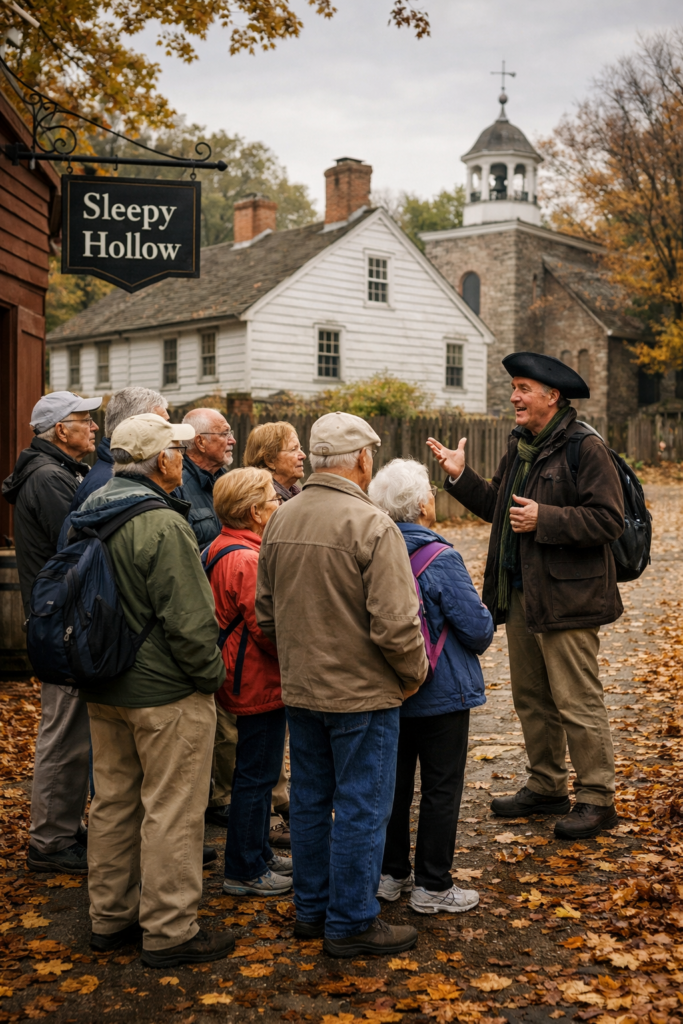
A typical Sleepy Hollow day trip from NYC might include:
A scenic ride
A historical village stop
A cemetery or landmark visit
Storytelling tied to local history and legends
If your guide did a great job bringing the place to life, that’s real value. Even if the walking was light, the guide’s work can be significant.
For a full-day version, keep to the standard:
Guide: ten to twenty dollars per person
Driver: five to ten dollars per person
For shorter or simpler trips:
Guide: five to ten dollars per person
Driver: three to five dollars per person
If you’re traveling in the fall season when tours are crowded and logistics are harder, drivers and guides often have more pressure. If the day still feels smooth, tipping on the higher end is a kind way to acknowledge that.
Bus Tour Driver Tip Hudson Valley: What Seniors Should Know
The driver is often the quiet hero of the day trip. Seniors may not realize just how much skill it takes to move a large group in and out of NYC traffic and still keep everyone comfortable.
Here’s what makes a driver tip feel truly deserved:
The ride feels smooth, not jerky.
The driver is patient with boarding and exits.
They position the bus for easy access.
They drive safely in rain, fog, or heavy traffic.
They keep the schedule under control without making people feel rushed.
If you noticed any of those things, a five to ten dollar per person tip is not just normal—it’s meaningful.
When to Tip More
There are specific situations where it’s kind to tip more, especially for seniors:
The driver assisted with a walker or cane.
The driver was exceptionally careful with steps and timing.
The driver helped someone who was anxious or unsteady.
The weather was difficult and the driving required extra caution.
In those cases, adding a few extra dollars is a nice gesture.
When a Smaller Tip Is Still Fine
If you’re on a very large coach with minimal interaction, tipping on the lower end is still respectful. In big groups, the driver often receives tips from many people, so the “per person” average can work out well even if individuals tip modestly.
Fixed Income? How to Tip Respectfully Without Stress
Many seniors live with a careful budget. That doesn’t mean you can’t tip. It just means you should tip in a way that feels comfortable and planned.
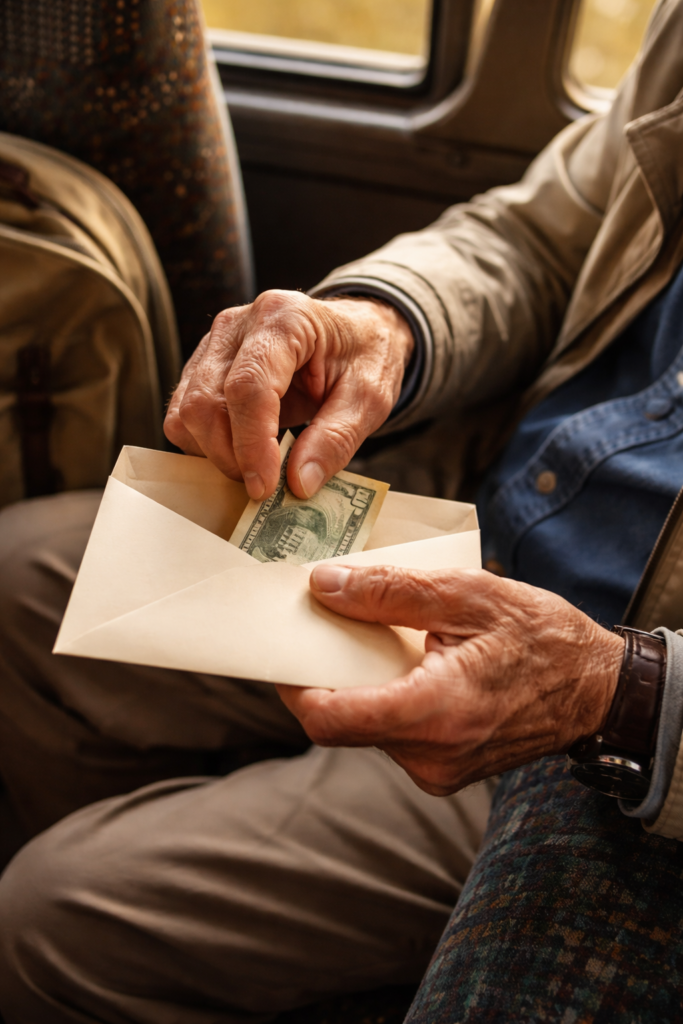
Here’s the best approach: decide before the tour ends.
If you wait until the envelope appears, you’ll feel pressure. If you decide in advance, you’ll feel calm.
A Simple Plan That Works
Bring cash in small bills, if you can.
Pick your tipping level before you board or during the ride out.
Keep it separate so you’re not digging around in your wallet at the end.
If you’re a couple, decide whether you’re tipping together.
That’s it.
What Tour Staff Actually Remember
This is important.
Most guides and drivers remember:
The kind “thank you.”
The smile and eye contact.
The person who said, “You made this easy for me today.”
The thoughtful note.
They do not want seniors to feel embarrassed.
If you tip a little lower because you’re on a budget, you are still participating. That matters. And it’s completely okay.
Non-Cash Appreciation That Still Helps
While cash tips are standard, you can also add value with:
A quick compliment to the tour company afterward (even a brief message)
Mentioning the guide or driver by name
Telling the guide you enjoyed their stories
Those are small, but they can help the staff, especially when companies track feedback.
When You Don’t Need to Tip
Sometimes tipping is already built into the tour price, or the company has a specific policy.
You generally do not need to tip if:
The tour explicitly says gratuity is included.
The company clearly states “no tipping.”
You booked a private service with a set gratuity charge included.
If you’re unsure, here’s a simple rule: if tipping is included, companies usually tell you clearly, because it helps reduce awkwardness and makes the tour feel “simpler.”
If no one told you, tipping is usually still expected.
Common Senior Tipping Mistakes on NYC Day Trips
Seniors are often the most thoughtful tippers, but confusion can lead to a few common missteps. Here’s how to avoid them.
Assuming Tips Are Included
This is the big one. Many seniors come from a time when pricing felt more “all-in.” Modern tours often are not.
If the tour didn’t clearly say tips are included, plan to tip.
Tipping Only the Driver
Some seniors tip the driver because the driver is visible at the door. But guides usually rely on tips heavily too, especially on narration-heavy tours.
When in doubt, tip both.
Over-Tipping Out of Pressure
If an envelope comes around and you feel watched, it can trigger over-tipping.
This is why deciding ahead matters. Your planned amount is enough.
Not Tipping Because the Tour Was Confusing
If you didn’t know what to do, it’s understandable. But if the service was good, tipping in a modest amount is a way to participate and show thanks—even if it’s not perfect.
Quick Reference Tip Guide for Seniors
Use this as your calm, practical cheat sheet.
Full-day bus tour from NYC (Hudson Valley / West Point / Sleepy Hollow):
Guide: ten to twenty dollars per person
Driver: five to ten dollars per person
Half-day bus tour:
Guide: five to ten dollars per person
Driver: three to five dollars per person
Small-group premium day trip:
Guide: fifteen to thirty dollars per person
Driver: ten to fifteen dollars per person
Couple tipping together on a full-day tour:
Guide: twenty to forty dollars total
Driver: ten to twenty dollars total
If your budget is tight, aim for the lower end. If the service was outstanding, lean higher.
FAQ: Seniors and Tipping on NYC Day Trips
How much should seniors tip a Hudson Valley tour guide?
A common, comfortable amount is ten to twenty dollars per person for a full-day tour. If the day was shorter, five to ten dollars can be fine.
Do seniors have to tip on bus tours from NYC?
You are not legally required, but tipping is strongly expected in U.S. tour culture unless the tour says gratuity is included.
Is tipping expected on West Point tours?
Tipping the NYC tour guide and bus driver is normal. On-site personnel may be a different situation depending on the program.
Should I tip both the guide and the driver?
Yes, on most bus tours they are separate roles, and tipping both is standard.
What if I’m on a fixed income?
Tip what you can comfortably afford, even if it’s at the lower end. Planning ahead helps reduce stress.
Are tips shared among staff?
Sometimes guides and drivers keep their own tips. Some companies pool. You usually won’t know, so tip both separately if possible.
Is it rude not to tip on a senior group tour?
It can feel noticeable if everyone else is tipping, but it’s better to tip a small amount than to feel pressured into more than you can afford.
Should couples tip separately or together?
Either is fine. Many couples tip together because it’s simpler.
What if the guide wasn’t very good?
If the service was poor, it’s okay to tip less. If the driver was excellent but the guide wasn’t, you can tip them differently.
Can I tip with a thank-you card instead of cash?
A card is lovely, but cash tips are the standard expectation. If you prefer, you can give a small cash tip and add a note.
Is it okay to tip discreetly?
Yes. Handing the tip directly to the guide and driver as you exit is normal and often preferred by seniors who want privacy.

Conclusion: A Calm, Confident Way to End Your Day Trip
Senior-friendly day trips from NYC are meant to feel easy. Hudson Valley scenery, West Point history, and Sleepy Hollow stories are the reward for choosing comfort over chaos.
Tipping shouldn’t ruin that calm.
If you remember one simple rule, let it be this: tip the guide and the driver in modest, reasonable amounts that fit your budget and reflect your experience.
When you decide ahead of time, bring small bills, and keep it simple, the end of the tour becomes what it should be—a final thank-you, not a stressful moment.
And if you’re ever unsure, choose the lower end of the recommended range, add a sincere thank-you, and walk away feeling good. That’s the senior traveler’s sweet spot: thoughtful, practical, and confident.