
The holidays do something funny to tipping.
All year long, you probably have a rhythm. You know what you tip at the salon. You know what you leave at a restaurant. You might have a “usual” for the delivery person who brings your groceries when your knees are acting up. It’s not perfect, but it’s familiar.
Then December rolls in.
Suddenly there are weather delays, crowded dining rooms, family in town, extra errands, and a dozen little moments where you wonder, “Do I tip more because it’s the holidays?” And if you’re a senior, a grandparent, or someone traveling to see family, there’s an added layer: you may be managing a tighter budget, carrying more of the “hosting” responsibility, and trying to do the right thing without making anything awkward.
If that sounds familiar, here’s the good news: holiday tipping doesn’t have to be complicated, expensive, or stressful.
This guide is built for real life. It’s for grandparents visiting grandkids. It’s for seniors meeting the whole family for a group dinner. It’s for people who want to be generous but also practical. You’ll get simple rules you can remember, clear ranges for common situations, and examples that match the way holiday travel actually happens.
You’ll also see something important repeated throughout: holiday tipping is about appreciation, not perfection. A small tip given thoughtfully can mean more than a big tip given with stress. And if money is tight, there are respectful ways to show gratitude that still feel good to everyone involved.
Let’s make this easy.
Why Holiday Tipping Feels So Confusing
Holiday tipping feels confusing because it’s not really one thing. It’s several different situations mixed together.
Some people mean “end-of-year tipping” for people who help them all year. Think hairdresser, regular driver, caregiver, or someone who delivers often.
Other people mean “holiday week tipping” when everything is harder. Think bad weather, long waits, packed restaurants, heavy bags, traffic, and rushed schedules.
Then there’s the third kind: “family-visit tipping,” which is what happens when you’re out of your normal routine. You’re traveling, you’re in a different town, and you’re using services you don’t usually use. You might be taking rides instead of driving. You might be ordering more takeout. You might be getting a haircut because you want to look nice for photos. You might be hosting a big meal and relying on deliveries.
That’s why advice online can sound contradictory. One person is talking about regular helpers. Another is talking about one-time service. Another is talking about emergencies and storms.
Holiday tipping also changed in recent years because payment screens changed. You used to tip mainly at restaurants, salons, and taxis. Now you’re asked to tip in places where tipping used to be rare. That doesn’t mean you have to tip everywhere. It just means the question shows up more often.
If you’re a senior, there’s another reason it feels tricky: the “rules” many people grew up with have shifted. In the past, tipping might have been smaller, less frequent, and mostly in cash. Today, many tips are digital, suggested amounts are higher, and people talk about tipping more often.
So if you’ve felt unsure lately, that’s not because you’re behind. It’s because the landscape really did get noisier.
The solution is not memorizing a hundred rules. The solution is using a few simple principles that work everywhere.
Holiday Tipping Rules You Can Actually Remember
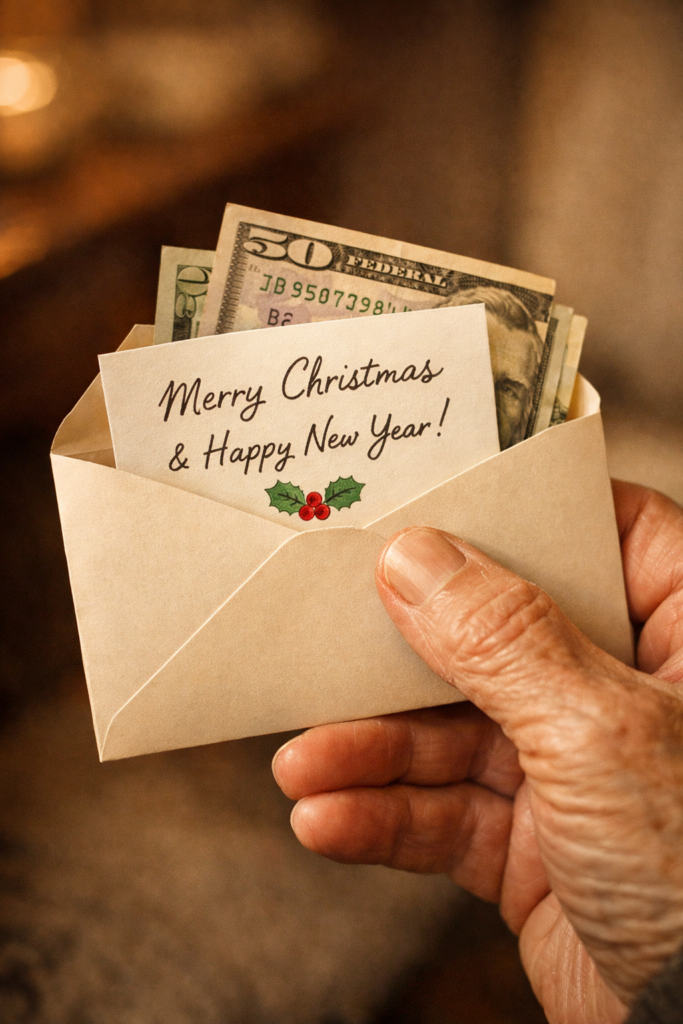
Here are the “sticky” rules that keep you from overthinking.
Keep it simple: the three holiday tipping principles
Favor consistency over drama.
A steady, reasonable tip is better than a big one that makes you feel resentful later.
Frequency matters more than the calendar.
If someone helps you regularly, the holidays are a natural time to add a little extra. If you’ll never see them again, a normal tip is usually enough.
Kindness beats precision.
Most service workers aren’t grading you. They notice whether you’re respectful. They notice whether you’re patient. They notice whether you acknowledge effort.
When extra tipping makes sense
Extra tipping usually makes sense when one of these is true:
- The person helps you often or reliably.
- The service becomes harder during the holidays.
- You are asking for special help, special timing, or extra effort.
- Weather, traffic, or holiday crowds made the job noticeably tougher.
- You’re a large group and the worker’s workload is clearly higher.
When extra tipping usually doesn’t make sense
Extra tipping usually does not make sense when:
- The service is fully automated or self-serve.
- You’re paying a built-in service fee that is clearly explained as a gratuity.
- You have a strict budget and extra tips would force you to cut necessities.
- The person did the bare minimum, without effort or care.
- You’re being prompted to tip in a situation where tipping is optional and you feel pressured.
You don’t need to “holiday tip” everyone. You just want to tip the right people, in the right moments, in a way you can afford.
A quick decision question
When you’re unsure, ask yourself this:
“Will this person remember me as a regular, or am I just one stop today?”
If you’re a regular, holiday tipping can be a warm gesture. If you’re a one-time customer, a solid normal tip is usually the best choice.
Holiday Tipping for Haircuts and Personal Care
Personal care is one of the most common holiday tipping stress points. People want to look nice for gatherings and photos. Appointments fill up. Schedules get tight. Stylists squeeze people in. It’s a perfect storm for uncertainty.
Here’s a practical way to handle it.
Hairdressers and barbers: what most people do
If you have a stylist or barber you see regularly, holiday tipping is common. The “classic” approach is giving an extra amount that feels like a small bonus.
Many people use one of these approaches:
- Tip the cost of one haircut as a holiday bonus if you see them often and want to do something generous.
- Add an extra amount on top of your normal tip if a full haircut cost feels too high.
- Give a cash holiday tip plus a card with a short note if you want it to feel personal.
If you only go a few times a year, you can usually stick to your normal tip and save holiday extras for truly regular helpers.
A senior-friendly way to decide the amount
Use your normal tip as your anchor, then adjust based on how close your relationship is.
- Close relationship and frequent visits: normal tip, plus an extra amount that feels like a thank-you.
- Regular but not close: normal tip, plus a smaller add-on if you want to.
- Occasional visits: normal tip is enough.
There’s no single perfect number here. What matters is that it fits your budget and matches the relationship.
If you’re getting squeezed in before a big holiday event
If your stylist squeezes you in at the last minute, stays late, or rearranges the schedule for you, that’s a classic moment to tip a bit extra. Not because you “have to,” but because it acknowledges the extra effort.
If money is tight, even a modest extra amount plus a sincere note can land beautifully.
What about nail salons, spa services, and massages?
Treat these similarly:
- If you have a regular person you request by name and see often, holiday tipping is reasonable.
- If you’re just taking whoever is available during a busy week, a normal tip is fine.
For services that are medically related, keep it respectful and simple. If you’re unsure whether a tip is appropriate, a heartfelt card is a safe option.
Cash vs card at the salon
A lot of people prefer cash holiday tips for one simple reason: it’s direct and clear. But if you pay with a card and the system makes tipping easy, that’s fine too.
If you want it to feel special, a small envelope with a note is a classic. It doesn’t need to be fancy. One sentence is enough.
Simple examples that work:
- “Thank you for always taking care of me. Happy holidays.”
- “I appreciate you fitting me in during such a busy season.”
- “You helped me feel confident this year. Thank you.”
Those words are remembered.
Holiday Tipping for Rides and Transportation

Holiday travel often means more rides. Maybe you’re flying to see family. Maybe you don’t want to drive at night. Maybe you’re in a city where parking is hard. Maybe you’re traveling with grandkids and you need a bigger car.
Transportation tipping is usually easier than it feels because the structure is simple: most of it is one-time service. That means you rarely need a big “holiday bonus.” You just want to tip appropriately for the ride you’re taking.
Rideshare drivers: what matters most
For rideshare drivers, your tip usually reflects:
- Distance and time
- Difficulty (traffic, weather, pickup location)
- Extra help (luggage, car seat patience, waiting)
- Holiday intensity (crowds, surge conditions)
If you’re traveling with family, you may also be taking longer rides to airports, hotels, or large homes in the suburbs. Those rides take drivers out of busy areas and often reduce their ability to get quick rides afterward. That’s a good reason to tip a bit more than you would for a short local trip.
Travel with grandkids: the “extra patience” tip
Drivers who help with luggage, wait while you buckle a child, handle a stop at a pharmacy, or deal with a chaotic pickup at a crowded venue are doing more than a basic ride. That’s a natural moment for an extra tip.
You don’t need to overdo it. You just want the tip to say, “I noticed.”
Taxis and shuttles
Taxis and hotel shuttles can vary by city and by situation. The easiest rule is:
- Tip more when the driver helps more.
If they handle bags, offer assistance, or go out of their way to make things easier for an older traveler, that’s worth recognizing.
For shuttles, especially if there are bags involved, many people tip based on assistance rather than distance.
Valet parking
Valets are often overlooked during the holidays, even though they’re working in bad weather and high-volume conditions.
If you use valet at a hotel or a busy restaurant during holiday season, a small cash tip handed directly is common. If you’re in a rush, have it ready before you step out of the car.
A simple approach if you hate awkwardness
If the moment feels awkward, remove the awkwardness by planning.
- Keep a few small bills in an easy pocket.
- Decide your “standard” before you travel.
- When someone helps you, tip with a quick “Thank you, I appreciate it.”
That’s it. No speeches needed.
Holiday Tipping for Deliveries
Deliveries are where holiday tipping can feel the most confusing because you may have multiple types of delivery in the same week:
- Food delivery
- Grocery delivery
- Packages
- Special holiday items (flowers, gifts, last-minute essentials)
It helps to split this into two categories: deliveries you request and deliveries that arrive as part of a bigger system.
Food delivery: when to tip extra
Food delivery drivers often face the worst holiday conditions: traffic, long wait times at restaurants, incorrect orders, crowded parking lots, and winter weather.
Tip extra when:
- The weather is bad.
- The restaurant is busy and the driver likely waited.
- You live in a hard-to-access building.
- You ordered a large, heavy order for a group.
- You asked for special timing.
If you’re hosting family, food delivery can become the backup plan that saves the evening. That’s a good moment to be a little more generous if you can.
Grocery delivery: the “heavy lifting” factor
Grocery delivery is often physically demanding. For seniors, it’s also one of the most helpful services during the holidays.
Tip extra when:
- There are heavy items like water, soda, pet food, or large bags.
- The driver or shopper carries items to your door, especially up stairs.
- You order during peak holiday days.
- They handle special instructions carefully.
If you use grocery delivery regularly, the holidays can be a nice time to add a bit extra as a thank-you for the whole year. If you only use it occasionally, a normal tip is still perfectly fine.
Package delivery: keep it simple and respectful
Package delivery is trickier because not all delivery workers have the same policies about gifts and tips. Some workers are contractors. Some work for large carriers with different rules. Some are government employees with strict limits.
If you want to show appreciation to a package delivery person:
- Keep it modest.
- Consider non-cash options like a small snack, a sealed drink, or a simple thank-you note.
- If you do give something, make it clearly optional and easy to accept without discomfort.
A friendly note goes farther than people think, especially during a season when many workers feel invisible.
If you’re staying with family
When seniors travel to stay with adult children or relatives, deliveries might be arriving at someone else’s home. If you’re ordering the delivery, you can tip normally through the app. If a family member ordered it, you don’t need to “correct” their tip unless you’re sure it’s too low. It’s usually better to avoid turning tipping into a family debate.
If you want to contribute, offer to cover the delivery cost or add cash quietly without making it a group discussion.
Holiday Tipping When Dining Out With Family
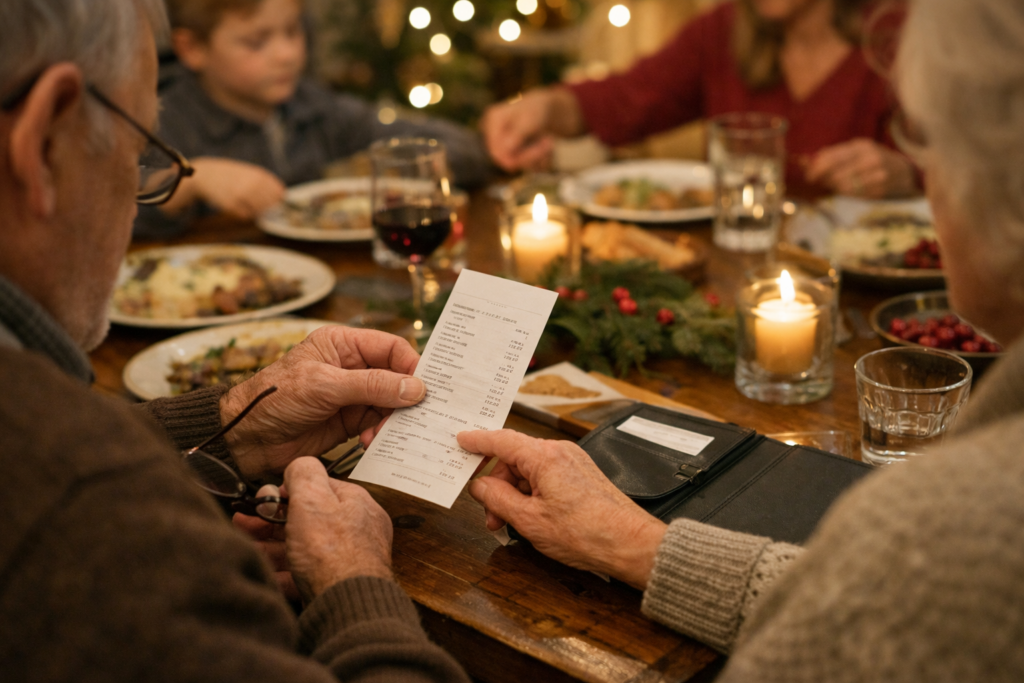
Dining out during holiday visits is often the big social event. It can also be the biggest tipping stress point because groups create complexity:
- Larger tables
- More requests
- More time
- More clean-up
- More coordination
The server isn’t just carrying plates. They’re managing a small event.
The basic restaurant rule that still works
For sit-down dining in the United States, most people tip as a percentage of the bill. That’s the baseline expectation in many places.
During the holidays, tipping tends to rise a bit because:
- Restaurants are busier.
- Staff may be working on days they would prefer to be home.
- Large groups create more work.
If your group is large, the most practical thing you can do is make tipping smooth and fair.
Large group dining: avoid the common traps
Large family meals often involve these tipping problems:
- Someone assumes a tip is included when it isn’t.
- Multiple people try to pay and nobody knows who is tipping.
- The bill gets split and the tip gets accidentally reduced.
- A service fee is included and someone adds another full tip on top without realizing it.
Here’s the clean approach:
- Check the bill for any service charge or automatic gratuity.
- Decide who is paying and who is tipping before the check arrives.
- If the bill is split, agree on a tip percentage and apply it to the whole bill, not just “your” part.
If there’s an automatic gratuity included, you can still add a little extra if the service was excellent, but you don’t have to.
Buffets, fixed menus, and holiday specials
Buffets and fixed menus can feel confusing because you might be getting your own food. But staff are still working: clearing plates, refilling drinks, managing the table, and turning over seats quickly in a busy season.
A solid tip is still appreciated, especially when the dining room is packed.
Takeout vs sit-down
Takeout tipping is different. If you’re walking in, picking up a bag, and leaving, tipping is often optional.
Consider tipping for takeout when:
- The order is large or complicated.
- The staff handled special requests carefully.
- It’s a holiday rush and the restaurant is working hard.
- You’re ordering catering-style food for a family gathering.
If it’s a simple pickup and your budget is tight, you can skip it without guilt.
Bars and coffee shops during holiday travel
If you stop for coffee with the grandkids, or you meet family at a hotel bar, you’ll often see tip prompts.
A useful way to think about it:
- If someone is truly serving you, mixing, making, and cleaning, tipping makes sense.
- If it’s self-serve or minimal interaction, it’s optional.
No need to overthink it. Pick a consistent rule and stick with it.
A special note for seniors: don’t let anyone rush you
Holiday restaurants can feel rushed. That’s not your fault. If you need a little more time to read the menu, to ask questions, or to manage a grandchild, that’s part of hospitality.
If your server is patient and kind, that’s worth rewarding.
Cash, Cards, or Gifts: What Works Best for Seniors
This is one of the most common questions, and it matters because seniors often prefer simple, traditional methods.
Cash
Cash is clear, flexible, and immediate. If you want to give a holiday bonus to someone you see regularly, cash in a card is the classic choice.
Cash works especially well for:
- Hairdressers and barbers
- Regular helpers you see in person
- Valets, hotel staff, and drivers
- People who might not receive digital tips easily
Card tips
Card tips are fine when:
- The system is straightforward
- You’re tipping a one-time service
- You want a receipt record
- You don’t carry cash comfortably
If you use a card, the “holiday touch” can still be added with a kind note or a direct thank-you.
Gift cards
Gift cards can be thoughtful, but they have drawbacks:
- Not everyone shops where you think they do.
- Some gift cards have restrictions.
- A gift card can feel less flexible than cash.
If you choose a gift card, keep it simple and widely usable.
Notes and small gestures
A sincere note can be powerful, especially for regular service workers who feel unseen during the holiday rush.
Simple gestures that feel good without being expensive:
- A holiday card with a short message
- A small sealed snack pack for delivery workers
- A “thank you” note left where it’s easy to see
If you’re on a fixed income, this is where you can shine. You can be warm without stretching your budget past comfort.
Holiday Tipping on a Fixed Income
A lot of holiday tipping advice is written as if everyone has unlimited flexibility. Many seniors don’t. That’s normal, and it deserves practical strategies.
Holiday tipping should never force you to:
- Skip medication
- Cut groceries
- Delay bills
- Take on debt
- Feel anxious for months afterward
You can be generous within your means.
Build a small holiday tipping budget
Instead of reacting in the moment, decide your plan in advance.
A simple approach:
- Pick a total amount you feel comfortable spending.
- Make a short list of the people you want to recognize.
- Divide the money based on who helps you most often.
Even a small total budget can go a long way when it’s intentional.
Prioritize the people who truly impact your life
If you’re choosing, prioritize:
- Regular helpers who save you time, effort, or pain
- People who show consistent care
- Workers who make it easier for you to live independently
For many seniors, that might be:
- A regular hairstylist
- A frequent grocery delivery person
- A caregiver or home helper
- A driver you use repeatedly
One meaningful tip to someone who truly helps you is better than tiny tips scattered everywhere out of obligation.
If you can’t afford extra tips at all
If your budget is tight, you can still do something kind.
Options that cost little or nothing:
- A handwritten note
- A sincere verbal thank-you
- A positive review if you’re comfortable doing that
- Being patient, polite, and prepared so their job is easier
That may sound small, but during the holidays, respectful customers stand out.
Common Holiday Tipping Mistakes Seniors Should Avoid
Holiday tipping mistakes usually happen for understandable reasons: pressure, confusion, or family chaos. Here are the biggest ones, with simple fixes.
Mistake: tipping everyone the same
Not every service is equal in frequency or effort. If you’re handing out holiday appreciation, base it on how often and how meaningfully the person helps.
Fix: pick your “core helpers” and focus there.
Mistake: tipping out of guilt
Guilt leads to overspending and regret. That’s not the point.
Fix: set a budget first. Then tip within it confidently.
Mistake: missing the people who help you all year
When seniors travel during the holidays, it’s easy to tip restaurant staff generously and forget the regular helper back home.
Fix: before you travel, think through the year. Who made life easier for you regularly?
Mistake: double-tipping because of hidden service charges
Holiday dining bills can include service fees or automatic gratuities, especially for large parties.
Fix: always scan the bottom of the bill before adding a tip.
Mistake: making tipping a family debate
Different generations have different tipping habits. Holiday meals are not the place to “teach” anyone.
Fix: choose your own tipping style and stay calm. If you want to contribute, do it quietly.
Quick Holiday Tipping Cheat Sheet
Use this as your fast reference during holiday visits. These are practical, common approaches in the U.S., but local expectations can vary.
Haircuts and personal care
- Regular hairdresser or barber: normal tip, plus a holiday add-on if you want to recognize the year
- Occasional hair service: normal tip
- Last-minute squeeze-in appointment: consider a little extra if you can
- Nail or beauty service: normal tip, plus extra only if you see the same person regularly
Rides and transportation
- Rideshare and taxi: tip more when weather, traffic, waiting, or luggage increases effort
- Airport rides: often worth a bit more than a short local trip
- Hotel shuttle: tip for help with bags and convenience
- Valet: small cash tip is common, especially in busy holiday conditions
Deliveries
- Food delivery: consider extra for bad weather, big orders, or long waits
- Grocery delivery: consider extra for heavy items, stairs, and careful handling
- Package delivery: keep gestures modest; consider a note or small snack rather than cash
Dining out
- Sit-down restaurants: tip based on service and group size; large groups usually require more work
- Automatic gratuity included: you can add extra for excellent service, but you don’t have to
- Takeout: optional; consider tipping for large or complex orders
The “I’m not sure” rule
- If the person helps you regularly, a holiday thank-you makes sense.
- If it’s a one-time interaction, a normal tip is usually enough.
Frequently Asked Questions
Should seniors tip more during the holidays?
Only if it fits your budget and feels meaningful. The holidays are a common time to add a little extra for regular helpers, but you don’t have to tip more simply because it’s December. A normal tip given kindly is still respectful.
How much should I tip my hairdresser at the holidays?
If you see the same person regularly, many people add a holiday thank-you on top of their normal tip. Some do something generous, like the value of a service. Others add a smaller amount. The best choice is the one you can repeat without stress.
Is cash better than a gift card?
Cash is the most flexible and usually the simplest. Gift cards can be thoughtful, but they can also be limiting. If you’re unsure, cash in a holiday card is the classic option.
Do I tip delivery drivers every time during the holidays?
For food and grocery delivery, tipping is typically part of the service each time. The holiday difference is that you might tip extra when conditions are difficult, like bad weather or heavy orders. For package deliveries, keep it modest and optional.
What if I can’t afford extra holiday tips?
Then don’t. Your wellbeing matters. You can still show appreciation with a note, a sincere thank-you, and respectful behavior. Many workers remember kindness more than a specific dollar amount.
Do rideshare drivers expect more during holiday season?
They often deal with heavier traffic and more stress, so many riders tip a bit more when conditions are difficult. You don’t have to tip extra for every ride, but extra patience, luggage help, and holiday chaos are good reasons to increase your tip if you can.
Is it rude not to tip extra at the holidays?
Not if you tip normally and treat people well. Holiday tipping is appreciated, but it shouldn’t feel like a mandatory tax. People notice respect and gratitude.
Should I tip differently when traveling with grandkids?
If your trip creates more work for the worker, it’s reasonable to tip a bit more. Examples include drivers who wait while you buckle kids, servers who bring extra napkins and drinks, or delivery workers carrying large family orders.
Are handwritten notes actually appreciated?
Yes. During the holidays, workers often feel invisible. A short, sincere note can be surprisingly meaningful, especially for people who help you regularly.
What about tipping at hotels during holiday visits?
Tipping at hotels often depends on the help you receive. If someone carries bags, parks your car, or provides consistent assistance, a small tip can be appropriate. If you have minimal interaction, you don’t need to invent a tip out of obligation.
Should I tip on takeout orders?
It’s often optional. Consider tipping when the order is large, complicated, or handled with special care. If your budget is tight and it’s a simple pickup, it’s okay to skip.
What if the bill includes a service charge or automatic gratuity?
Always check before adding more. If a gratuity is already included, you can choose to add a little extra only if the service was truly excellent. Otherwise, you’re already covered.
Closing Thoughts: A Calm Way to Tip With Confidence
Holiday tipping is not a test. It’s not a performance. It’s a small way of saying, “I see you, and I appreciate what you did for me.”
If you’re a senior, a grandparent, or someone traveling to see family, you’re already carrying a lot during the holidays. You’re coordinating visits. You’re managing your energy. You’re showing up for the people you love. Your tipping choices should support that, not add stress to it.
So pick a simple plan.
Tip normally when the service is one-time and straightforward. Tip a little extra when effort is higher or when someone has helped you all year. If money is tight, choose warmth over numbers: a kind word, a note, and a steady, respectful approach.
That’s how you tip like a pro, and still enjoy your holiday visit.
If you want, tell me the exact situations you expect this holiday season, like “airport ride, haircut, two big family dinners, grocery delivery,” and I’ll build a personalized mini tipping plan that fits a realistic budget.