
Pulling into a campground is one of the best feelings in domestic travel. You’ve navigated the highway, planned your route, and finally found your site. Then it happens: someone waves you in, helps you back up, answers questions, or fixes a problem with your hookup. You’re grateful. You also might be wondering, “Am I supposed to tip?”
This is one of those travel questions that sounds simple, but gets messy fast. RV parks sit in a strange middle ground. They aren’t hotels, and they aren’t “do it all yourself” wilderness campsites either. Some are rustic. Some feel like resorts. Some are family-run. Others are part of big chains. Add in the fact that a lot of RV travelers are retirees or seniors who want to be generous but also budget wisely, and it’s no surprise there’s confusion.
Here’s the good news: tipping at RV parks is usually optional, and the rules are far less intense than hotels, cruises, or guided tours. You don’t need to stress. You just need a clear way to decide when tipping is a kind gesture and when it’s unnecessary.
This guide gives you exactly that. You’ll learn what’s normal, what’s not, who might deserve a thank-you, what “extra help” looks like in an RV park setting, and how much to give if you choose to tip. You’ll also get guidance for KOA and similar chains, senior-friendly travel realities, and a practical checklist you can use on any trip.
The Short Answer: Do You Tip at RV Parks?
Most of the time, you do not need to tip at RV parks.
RV parks and campgrounds generally charge fees that cover the basics: use of the site, access to facilities, trash, maintenance, and standard staff help. That means tipping is not built into the culture the way it is in restaurants, taxis, hotels, or cruises.
That said, there are times when tipping can make sense. The simplest rule is this:
If someone does something personal, hands-on, or genuinely above and beyond what you paid for, a small tip can be a thoughtful thank-you.
If someone is just doing normal check-in, pointing to your site on a map, or enforcing park rules, tipping is not expected.
Think of it less like a required custom and more like a personal choice. In many RV parks, travelers never tip and it’s completely normal. In other places, small tips happen occasionally when help is significant. Both are acceptable.
Why RV Park Tipping Is Different From Hotels or Cruises
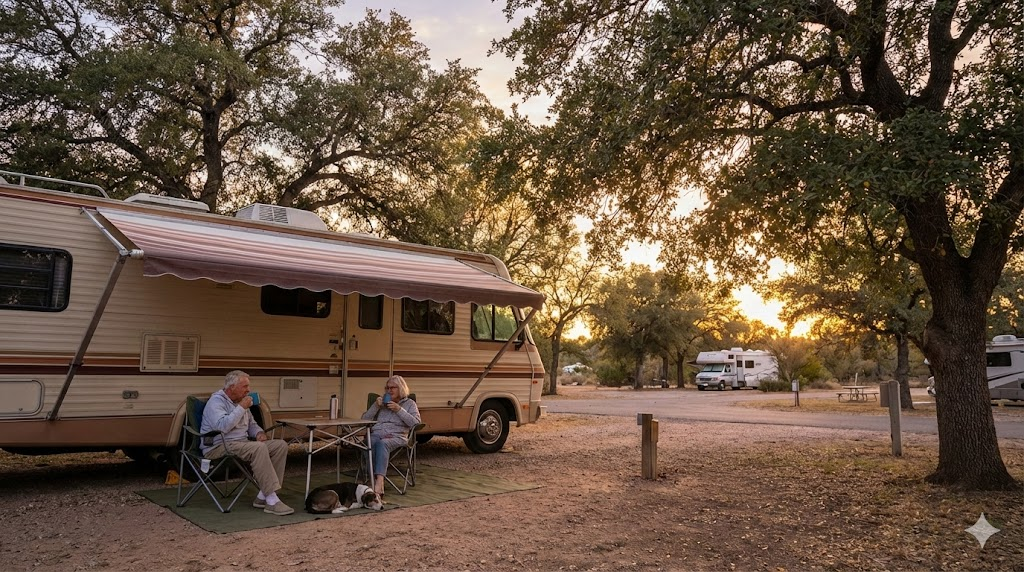
A lot of tipping anxiety comes from transferring “hotel logic” into a campground setting. But RV parks function differently in ways that matter.
RV parks are built around self-service
In a hotel, you’re paying for a room, but you’re also paying for service. Someone cleans your room. Someone restocks supplies. Someone may carry bags or bring items to your door. Service is central to the experience.
At an RV park, you bring your own “room.” You handle your own luggage. You make your own bed. You cook in your own kitchen. You clean your own space. Staff are there to maintain the grounds and keep the park running, not to provide continuous personal service.
That difference changes tipping expectations.
RV parks don’t have standardized tipping roles
Hotels have familiar tipping roles: bellhop, housekeeping, valet, concierge. Cruises have dining room staff and cabin stewards. Those roles often involve direct personal service, and tipping norms have developed around them.
At RV parks, staff roles are broader. One person might check you in, answer the phone, sell firewood, and reset a breaker. Another might mow lawns, fix a water line, and help someone with a stuck sewer cap. It’s not a tidy “service ladder” like other travel industries.
That makes rigid tipping rules hard to apply.
Fees feel more “all-in,” even when they aren’t
RV park pricing often includes layers: nightly rate, resort fee, extra vehicle fee, pet fee, utility charges for long-term stays, and sometimes a deposit. When you’ve already paid a lot, tipping can feel like paying twice.
That doesn’t mean you should never tip. It just means it’s normal to assume that basic staff help is included.
Many parks use volunteer hosts
This is a big one. Some campgrounds and RV parks have hosts who are volunteers, seasonal workers, or people getting discounted stays in exchange for helping. These hosts may not accept tips, and in some cases they’re asked not to. Even when they can accept tips, the “expected” part usually isn’t there.
That alone makes RV park tipping more situational than automatic.
Who Works at RV Parks—and What They Actually Do
Before you can decide whether to tip, it helps to know who’s who. RV parks and campgrounds often have overlapping roles, but these are the most common categories.
Campground hosts
Hosts are the people you might see greeting newcomers, driving a golf cart, checking sites, posting notices, and answering basic questions. In many parks, hosts are travelers themselves. They may be volunteering or working part-time during a season.
What hosts commonly do:
- Greet arrivals and guide them to sites
- Explain rules and quiet hours
- Help you find amenities
- Offer local tips and park info
- Sometimes help with minor issues or questions
Tipping expectation:
- Usually not expected
- Sometimes discouraged if they are volunteers
- A heartfelt thank-you, a positive review, or a small non-cash gesture can be more appropriate than cash
If a host spends significant time helping you with a real problem, you can offer a tip, but don’t be surprised if they decline.
Office or front desk staff
These are the reservation and check-in people. They handle payments, site assignments, keys or gate codes, wristbands, amenity info, and often a lot of customer questions.
What office staff commonly do:
- Check-in and check-out
- Handle reservations and changes
- Give maps, rules, and basic guidance
- Sell items like ice, firewood, or propane
- Answer phones and solve booking issues
Tipping expectation:
- Not expected
- Comparable to tipping a rental office or front desk at a small motel for normal duties
You can still show appreciation with a friendly comment and patience. That matters more than you might think during busy travel seasons.
Maintenance and grounds crew
These are the people who keep the park running. They fix things, keep facilities clean, manage trash, maintain hookups, repair roads, and handle the unglamorous work that makes a campground comfortable.
What maintenance staff commonly do:
- Repair or reset electrical and water hookups
- Maintain bathhouses and laundry rooms
- Handle trash and recycling
- Repair fences, signage, and park infrastructure
- Assist with emergencies like leaks or power issues
Tipping expectation:
- Not expected for routine work
- Optional if the help becomes very personal, time-consuming, or urgent
If a maintenance person goes out of their way to help you directly, that’s one of the clearest “maybe tip” moments.
Park managers, owners, and supervisors
These are the people in charge. They might be visible or behind the scenes. They handle operations, staff scheduling, rules enforcement, and often customer disputes.
Tipping expectation:
- Do not tip managers or owners
- If you love the park, the best “thank you” is a kind review and respectful behavior
Situations Where Tipping May Be Appropriate
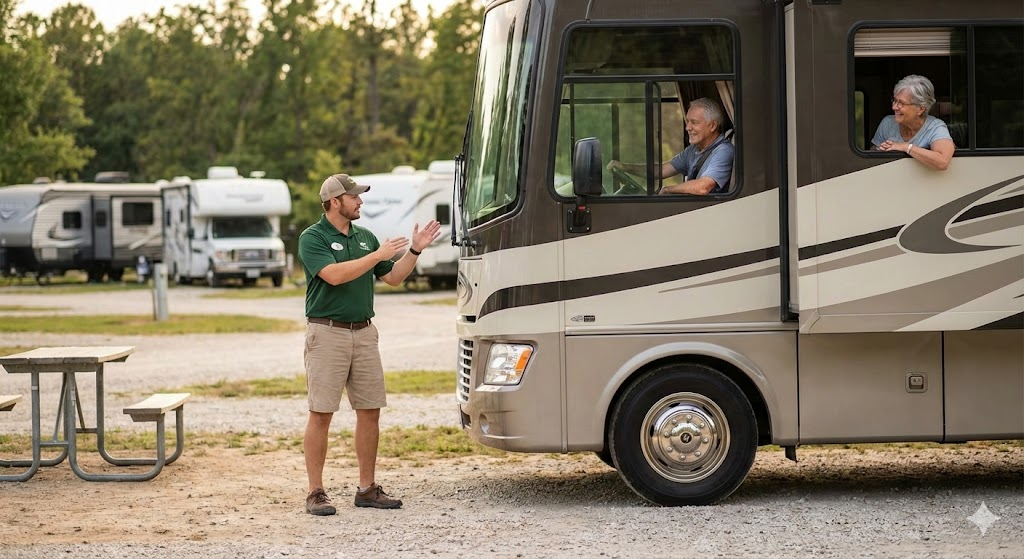
This is where things get practical. If you’re trying to decide whether to tip, look at what happened, not just who did it. Here are the most common situations where a tip may feel appropriate.
When someone helps you park or back in
Backing into a tight site is stressful for a lot of travelers, especially in unfamiliar parks or after a long drive. If someone actively guides you, stays with you, helps prevent damage, and makes the process smoother, a small tip can be a nice gesture.
What “help” looks like:
- They stand outside and give clear hand signals
- They help you avoid obstacles like trees, posts, or uneven pads
- They stay with you until you’re safely parked
- They help reposition multiple times
- They remain calm and patient when you’re stressed
What’s normal:
- In many parks, staff guide you in as part of their job
- A wave-in that lasts 30 seconds usually doesn’t need a tip
When a tip makes sense:
- The help is hands-on and takes time
- You feel they prevented a mishap or made a hard situation easy
Suggested amount:
- Often $5–$10 is plenty
If you don’t have cash or you’re unsure, a sincere “Thank you, that really helped” can be enough.
When someone fixes a real problem with your hookups
Sometimes your power doesn’t work. The water pressure is odd. The sewer connection is awkward. Your breaker keeps tripping. If staff help you troubleshoot, reset, or fix something quickly, that can save your evening and your patience.
Examples:
- They diagnose a power pedestal issue and get it working
- They replace a faulty adapter or show you the correct setup
- They help you safely deal with a leaking connection
- They handle a sudden utility issue during bad weather
When tipping makes sense:
- The staff member spends real time helping you
- The fix prevents major inconvenience or damage
- It happens after-hours or during a busy period
Suggested amount:
- $5–$20 depending on how involved it was
If it’s clearly part of a routine repair on the park’s side, you still don’t have to tip. But if the person clearly made it personal and urgent for you, many travelers choose to.
When you get emergency or after-hours assistance
A lot of RV travelers can handle normal problems. But emergencies feel different. Maybe you arrive late and can’t find your site. Maybe you lock yourself out. Maybe something is leaking badly. Maybe you have a medical issue and need help contacting local services.
If staff respond quickly, kindly, and effectively outside normal hours, a tip can be a meaningful thank-you.
Suggested amount:
- Often $10–$20, depending on the level of assistance
If you’re a senior traveler and someone truly reduces your stress in a tough moment, it’s reasonable to want to express gratitude. A tip can do that, but it doesn’t have to be the only way.
When you use a campground shuttle or transport service
Some larger parks and RV resorts offer shuttles to nearby attractions, airports, or local stops. This is one of the few areas where tipping looks more like mainstream travel.
If a shuttle driver:
- Helps with bags or mobility aids
- Provides a safe, friendly ride
- Drives a route that replaces taxi or rideshare
Suggested amount:
- $2–$5 per person per ride is common
- More if they handle heavy items or special help
If the shuttle is clearly a paid amenity with posted rules, follow those. If there’s a tip jar, tipping is more likely to be expected than in most other RV park interactions.
During long-term stays or seasonal stays
Long-term RV stays can build relationships. You might see the same maintenance person weekly. The office staff might know your name. Someone might help you with small favors over time.
In those cases, some travelers choose to tip at the end of the season or around holidays. Others prefer small gifts.
Good options:
- A small tip at the end of the stay
- A gift card
- Baked goods or snacks (if you know it’s welcome)
- A thank-you note
What matters most:
- It feels voluntary and personal, not forced
If you’re staying on a fixed income, you can still be generous in non-cash ways. Staff often remember kindness and respect more than money.
When You Should Not Tip at RV Parks
Just as important as “when to tip” is knowing when not to. Not tipping in these situations is normal and polite.
Routine check-in and normal customer service
If someone checks you in, gives you a map, explains rules, and sends you to your site, tipping is not expected. This is basic service covered by your fees.
Basic directions and questions
Asking where the dump station is, what time quiet hours begin, or where the closest grocery store is does not require tipping.
Normal maintenance work that isn’t personal help
If a worker is fixing park infrastructure, mowing grass, cleaning bathrooms, or doing routine repairs, tipping is not expected. That work is part of their job, and it is usually not set up as a tip-based role.
Rules enforcement
If staff remind you of speed limits, pet rules, or quiet hours, they are doing their job. Tipping is not relevant here.
When hosts are volunteers who shouldn’t accept tips
Many volunteer hosts do it for discounted stays or because they enjoy the community. Some parks have policies against tipping them. If you’re unsure, a warm thank-you and a positive note to management is a safer choice.
Tipping at KOA and Large RV Resort Chains

People often ask specifically about KOA because it’s one of the most recognizable brands. The same general rule applies: tipping is usually not expected.
What makes KOA and similar chains feel different
Chains can feel more “hotel-like” because they often offer:
- Organized activities
- On-site stores
- Amenities like pools, dog parks, mini golf, or snack bars
- Clearly marked staff roles
- Shuttle services in some locations
That vibe can make travelers assume tipping is part of the package. Usually, it isn’t.
What’s typical at KOA
Normal KOA interactions where you don’t need to tip:
- Check-in and reservation handling
- Basic answers and directions
- Standard rule enforcement
- Routine maintenance in shared areas
Situations where tipping may be appropriate:
- Hands-on parking help that takes time
- Special help with hookups or a difficult problem
- Shuttle or transport services
- Exceptional personal assistance
Luxury RV resorts and destination parks
At higher-end RV resorts, tipping may appear more often, especially if there are services that resemble hotels:
- Concierge-style activity help
- Golf cart escorts that function like bell service
- On-site dining, spas, or guided experiences
Even then, you’re not automatically required to tip for being a guest. Tip when the service truly becomes personal and direct, similar to tipping in other parts of travel.
Tipping Etiquette for Seniors and Retirees Traveling by RV
Senior-friendly travel often means a few things: comfort matters, safety matters, and stress reduction matters. It also often means budgets are real.
If you’re a senior traveler, you might also feel more social pressure to tip because tipping was more common in certain travel settings over the years. You might worry about seeming rude. You might want to show gratitude because you value kindness and community.
Here’s the reality: most RV park staff will not judge you for not tipping.
What they do notice:
- Whether you speak respectfully
- Whether you follow park rules
- Whether you treat facilities well
- Whether you are patient during busy times
That said, seniors sometimes receive more hands-on help, especially when staff see someone managing a heavy hose, struggling with a connection, or dealing with mobility issues. If someone offers real physical assistance and does it kindly, a small tip can be a warm thank-you. It can also feel good to give, as long as it doesn’t create financial strain.
Non-cash ways to say thanks that are meaningful
If tipping feels awkward or expensive, these options can be just as powerful:
- A direct thank-you using their name, if you know it
- A short note handed to the office praising a specific staff member
- A positive review that mentions staff kindness
- A small gift card if you know it will be used
- Small treats during holidays for long-term stays
A lot of staff appreciate being recognized. A kind comment to a manager can matter for raises, scheduling, and morale.
How Much Should You Tip—If You Choose To?
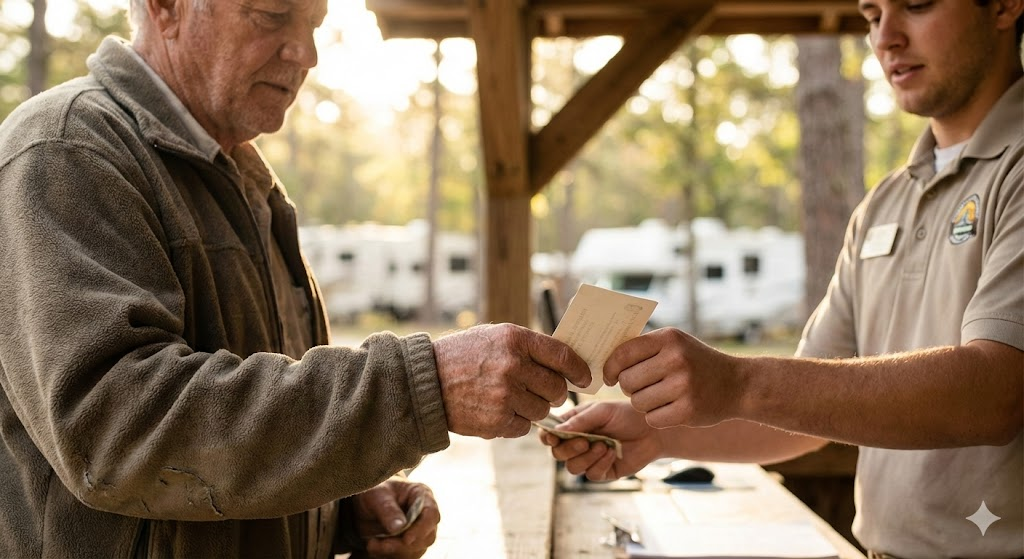
If you decide tipping feels right, you don’t need to overthink it. RV park tipping is usually modest.
Here are practical ranges that feel appropriate in most places:
Parking / backing-in help:
- $5–$10 for hands-on guidance
- More only if the help is unusually long or complex
Hookup troubleshooting or personal repairs:
- $5–$20 depending on time and urgency
After-hours or emergency help:
- $10–$20 as a thank-you
Shuttle driver:
- $2–$5 per person per ride
- More if bags, heavy items, or special assistance are involved
Long-term stay appreciation:
- Optional end-of-stay tip or small gift
- Keep it comfortable and affordable
A good mindset is: tip like you’re saying “thank you,” not like you’re trying to meet an invisible rule.
Common RV Park Tipping Myths (Debunked)
Let’s clear out the biggest misunderstandings that cause stress.
Myth: “Everyone tips at RV parks.”
They don’t. Many RV travelers never tip at parks, even when they travel often. It’s not viewed the same way as tipping waitstaff or drivers.
Myth: “If you don’t tip, staff will treat you worse.”
In most parks, staff are professionals who follow policies and provide consistent help. Parks rely on repeat business and good reviews. A lack of tipping is not unusual and usually doesn’t affect service.
Myth: “Staff rely on tips to survive.”
Some staff may accept tips and appreciate them. But most RV park roles are paid wage roles, not primarily tip-based roles. If a park truly expects tipping, you’ll usually see signals like tip jars for specific services, posted guidance, or resort-style operations where tipping is normal.
Myth: “You must tip if someone points you to your site.”
A quick escort or a simple wave-in is typically part of their job. Tipping is optional and not required.
Myth: “Long stays always require tipping.”
Long stays can build relationships, and gratitude is nice. But there is no universal rule that long-term RV guests must tip. Many do not. If you want to show appreciation, you can do it in many ways.
How Tipping Norms Vary by Region in the U.S.
Tipping culture can feel different across the country, and RV parks reflect that.
In tourist-heavy areas, staff may be more used to travelers offering tips for help, especially where parks operate more like resorts. In rural areas, tipping may be less common and sometimes even awkward.
General patterns you might notice:
- Resort destinations often see more tipping behavior
- High-end RV resorts may feel more service-oriented
- Smaller family-run parks may treat everything as “included”
- Parks near major attractions may have more shuttle or concierge-like services where tipping is more normal
Even with regional differences, the core rule stays the same: routine park operations do not require tipping. Tip when the service becomes personal, hands-on, and clearly beyond the basics.
Practical Tipping Checklist for RV Travelers
Use this checklist when you’re unsure. It works whether you’re staying one night or one month.
You usually do not need to tip if:
- You’re checking in and receiving normal info
- You’re asking basic questions
- Staff are doing routine grounds work
- Staff are enforcing rules or handling normal operations
- A host is a volunteer and you’re not sure they can accept tips
Tipping may make sense if:
- Someone spends time actively guiding you into a difficult site
- Someone solves a personal problem with your hookups
- Someone helps you after-hours or during an urgent situation
- You use a shuttle service and the driver provides good service
- You receive hands-on help that saves you time, stress, or money
If you still feel unsure:
- Offer a sincere thank-you first
- If you want to tip, offer it politely and accept “no” gracefully
- If cash feels uncomfortable, use a non-cash thank-you method
FAQ
Do you tip campground hosts?
Usually, no. Many hosts are volunteers or seasonal workers, and tipping isn’t expected. If a host provides exceptional personal help, you can offer a small tip, but don’t be surprised if they decline.
Are campground hosts volunteers?
Often they are, especially in public campgrounds and some private parks. In other parks, hosts may be paid seasonal staff. If you’re unsure, treat tipping as optional and consider a non-cash thank-you.
Do RV park staff expect tips?
In most RV parks, no. Staff may appreciate tips for extra help, but routine park service is not a tip-based system.
Is tipping required at KOA campgrounds?
No. KOA tipping is generally not required. Tip only when a staff member provides hands-on, above-and-beyond help, or when you use a shuttle or service that typically involves tips.
Should seniors tip differently at RV parks?
Seniors don’t need special tipping rules. Tip only when you feel it’s appropriate and affordable. Many seniors choose to show appreciation with thank-you notes, kind feedback to management, or positive reviews.
Do you tip maintenance workers at RV parks?
Not for routine work. If a maintenance worker spends significant time helping you personally with a problem, a small tip can be a thoughtful thank-you.
Is it rude not to tip at campgrounds?
No. Not tipping is normal in most campgrounds and RV parks. Being respectful, following rules, and treating staff kindly matters more.
Should you tip during long-term RV stays?
It’s optional. Some long-term guests give a small tip or gift at the end of the season. Many do nothing beyond being friendly and respectful.
Do shuttle drivers at campgrounds get tips?
If a shuttle driver is providing transportation like a hotel shuttle or local ride service, tipping is more common. $2–$5 per person per ride is a reasonable range.
Are tips included in RV resort fees?
Usually not. Resort fees typically cover amenities and facilities, not gratuities. If a park offers resort-style services, you can tip for personal service, but it’s still usually optional.
Can RV parks refuse tips?
Yes. Some parks or volunteer hosts may have policies against accepting tips. If someone declines, a warm thank-you or positive feedback to the office is a great alternative.
Tip With Confidence, Not Pressure
RV travel is supposed to feel freeing, not stressful. And tipping at RV parks should not become another source of anxiety on the road.
In most cases, you don’t need to tip at RV parks. Your fees cover standard operations, and staff are not relying on tips the way restaurant servers do. When someone gives you hands-on help that truly makes your day easier—especially with parking, hookups, urgent problems, or shuttle services—a small tip can be a kind gesture. But it is never something you should feel forced into.
If you travel often, the best way to be a great guest is simple: be respectful, follow the park’s rules, treat facilities well, and speak kindly to the people who keep the place running. Add a tip when it feels right. Skip it when it doesn’t. Either way, you’ll be traveling with good manners and a clear conscience.