
If you’re a senior traveler, you’re not alone in feeling uneasy about tipping at an all-inclusive resort. You paid upfront. The price tag was not small. The booking page promised “gratuity included” or “tips included.” So when you arrive and see a tip jar by the bar, or someone offers to carry your bag with a hopeful smile, it can feel like you’re being asked to pay twice for the same thing.
That uncomfortable feeling has a name: it’s the sense of double-paying. And it’s especially frustrating when you’re trying to budget carefully, travel with peace of mind, and enjoy a trip without turning every interaction into a math problem.
Here’s the truth: tipping at all-inclusive resorts is often optional, sometimes expected, and frequently unclear on purpose. But that doesn’t mean you have to guess, overpay, or feel guilty.
This guide will help you understand what “gratuity included” really means, when tipping makes sense, when it doesn’t, how much is reasonable, and how to handle pressure gracefully. The goal is simple: you should leave your trip feeling relaxed and confident, not confused.
What “All-Inclusive” Really Means (And What It Doesn’t)
“All-inclusive” is one of the most comforting phrases in travel. It suggests simplicity. It suggests there will be no surprises. But in real life, “all-inclusive” is more like a package deal with boundaries.
Most all-inclusive resorts include the basics you expect:
Meals and snacks at restaurants and buffets
Drinks, including many alcoholic options
Standard room cleaning
Basic entertainment, shows, and activities
Use of pools, loungers, and many resort facilities
If you stay within those lanes, you can often spend very little extra money. That’s part of the appeal, especially if you prefer predictable costs.
But all-inclusive does not always mean everything is included. Some resorts quietly separate “included” from “premium,” and premium is where the surprises live. Common “not included” items can include:
Top-shelf liquor and specialty wines
Spa treatments, massages, and salon services
Private dining experiences and special tasting menus
Certain excursions or off-resort tours
Cabana rentals and upgraded seating areas
Special services like romantic room setups or private butlers
Even when those extras are clearly listed, tipping sits in a gray area. The resort may say gratuity is included, but staff may still appreciate tips, or certain services may quietly carry a different expectation.
This is where many senior travelers get stuck. You’re not trying to be stingy. You’re trying to be fair. And the resort isn’t always helping you figure out what “fair” looks like.
What Does “Gratuity Included” Actually Mean?
“Gratuity included” sounds like the end of the conversation. But it isn’t always. The phrase can cover several different realities, and understanding those realities is the key to feeling confident.
Service charge vs gratuity
Two terms get mixed up constantly:
Service charge
Gratuity
A service charge is often a fee added by the resort. It can be included in your booking price or added at checkout. But a service charge does not automatically mean the money goes directly to the person who served you.
A gratuity is typically money intended for staff. It might go directly to an individual, or into a pooled system shared among staff.
In many destinations, resorts use “gratuity included” to mean a portion of your payment is set aside as a general service amount. That may be distributed among workers. Or it may be treated as part of the resort’s broader labor budget.
It’s not necessarily dishonest. It’s just not transparent.
Where that money often goes
At many resorts, any included gratuity is shared in a pool. A pool might support:
Servers, bartenders, housekeepers
Kitchen staff and dishwashers
Maintenance staff
Front desk staff
Beach attendants
Bell staff
Pooling can be fair in a team-based environment. But it can also feel unsatisfying as a guest because you can’t tell whether the person who helped you most is being rewarded.
Some resorts also distribute service pay differently based on role, seniority, or shift. That means your included gratuity might not land where you assume.
Why resorts keep it vague
Resorts want bookings. “All-inclusive” sells because it sounds simple. If a resort wrote, “All-inclusive, but tipping might still happen depending on staff culture and the destination,” that would make the booking page feel messy.
So instead, resorts often keep the language broad:
“Gratuities included.”
“Service is included.”
“Tipping is at guest discretion.”
Those phrases protect the resort. But they don’t help you feel secure.
The most important thing to remember is this: “Gratuity included” usually means you are not required to tip. It does not always mean tipping never happens.
That’s the difference between obligation and choice.
Should Seniors Tip at All-Inclusive Resorts?
This is the heart of it. Should you tip or not?
For most seniors, the best answer is this: you do not have to tip, but you can tip when it feels right.
If you want a simple rule that protects your budget and your peace of mind, use this approach:
Never tip out of guilt.
Tip as a thank-you for specific effort.
Keep it small, predictable, and within your budget.
That approach keeps tipping from turning into a stressful daily decision.
When tipping makes sense
Tipping tends to make sense when you experience:
Repeated personal service from the same person
Extra effort that goes beyond standard service
Help that saves you time, reduces physical strain, or improves comfort
Careful attention to dietary needs or mobility needs
A staff member who consistently makes your stay easier
If someone goes out of their way for you, a small tip can be a simple, meaningful gesture.
When it’s perfectly fine not to tip
It’s also perfectly fine not to tip when:
The resort clearly states tips are included and not expected
You don’t carry cash and don’t want to start a daily habit
Service is standard, brief, and not personal
You’re on a fixed income and budgeting tightly
You prefer to show appreciation in other ways
If you treat staff kindly, speak respectfully, and acknowledge good service, you’re already doing a lot.
Tipping is not a measure of your character. It’s a cultural practice, and you are allowed to participate only within your comfort level.

Who You Might Tip (And Who You Can Skip)
One reason tipping feels stressful is that people assume they need to tip everyone. You don’t. If you choose to tip at an all-inclusive resort, it helps to focus on the roles where tipping is most common and most appreciated.
Bartenders
Bartenders are one of the most commonly tipped roles at all-inclusive resorts. If you spend time at a pool bar or lobby bar, you may see tip jars. You may also notice that some guests tip early and often.
What’s reasonable?
If you only grab an occasional drink, you can skip tipping entirely.
If you return to the same bar and receive friendly, consistent service, small tips can be a nice thank-you.
If a bartender makes something special, remembers your preference, or helps with a specific request, tipping makes sense.
A simple approach is a small tip occasionally rather than with every drink. This avoids turning your vacation into a constant transaction.
If you prefer not to tip at all, that is acceptable at many resorts, especially where gratuity is included. You can still be warm, patient, and appreciative.
Housekeeping
Housekeeping is often under-tipped, even outside all-inclusive resorts. But it’s also one of the most physically demanding jobs. For seniors, housekeeping can matter a lot because a clean room isn’t just about comfort, it can also feel like health and safety.
If you choose to tip housekeeping, you have two easy options:
A small daily tip, left clearly in the room
A single tip at the end of the stay
Daily tipping can be more effective because the same housekeeper may not clean your room every day. If you only tip at the end, the person who did most of the work might not receive it.
If you want to keep it simple, daily is often best. But if you don’t want to think about it daily, tipping at the end is still better than nothing.
If you have a short stay or you prefer not to tip, you can still communicate gratitude with a kind note or a direct thank-you when you see staff in the hallway.
Dining staff
Dining staff can be tricky because many all-inclusive resorts include service in the cost. Buffets and sit-down restaurants can feel very different.
At a buffet, service is often minimal. Staff clear plates, refill drinks, and keep things clean. Tipping is optional.
At a sit-down restaurant, if you have a server who provides careful attention, helps with menu questions, handles allergies, or creates a warm experience, a small tip can feel appropriate.
If you return to the same restaurant and have the same server multiple times, tipping can also be a way to show appreciation for consistent care.
But here’s the key: you do not need to tip at every meal. If you tip, do it selectively.
Bellhops and porters
Many seniors appreciate help with luggage. Resort properties can be large. Rooms can be far. Elevators can be slow. Carrying bags in heat can be exhausting.
If you accept help with bags, tipping is common. If you decline help, you can skip tipping.
You don’t have to accept help you don’t want. A polite, confident refusal works well:
“No thank you, we’re all set.”
“We’re traveling light, but thank you.”
If someone insists, you can repeat yourself with a smile. Most staff will move on quickly.
Concierge and guest services
Front desk staff and concierge staff are not always tipped. In many resorts, tipping makes sense only if someone solves a specific problem or goes beyond basic duties.
Examples where tipping can make sense:
They arrange a hard-to-get dinner reservation
They handle a complex room change smoothly
They help with a medical need or accessibility request
They fix a travel problem quickly and kindly
For standard check-in and general questions, tipping is not necessary.
Pool and beach attendants
Some resorts have staff who set up chairs, bring towels, move umbrellas, or help with beach access. If someone actively assists you, especially repeatedly, tipping can be appreciated.
If you simply pick up your own towel and choose your own chair, tipping is usually unnecessary.
The common thread is this: tip for personal effort, not for existing.
How Much to Tip (If You Choose To)
Many senior travelers prefer a clear plan. If you decide to tip, it helps to set simple amounts that don’t change every time you walk to the bar.
The goal is to keep tipping:
Small
Predictable
Easy to remember
Easy to budget
A simple senior-friendly method
Instead of percentages, use flat amounts and choose a small daily maximum.
For example:
One or two small tips per day, only when service stands out
A modest daily housekeeping tip, if you choose to do it
Occasional tipping at the bar if you’re there often
That way, you are never scrambling mentally.
A sample daily tipping budget
If you want a simple budget that keeps you from overpaying:
Low budget: a few dollars per day total, focused on housekeeping or one key interaction
Moderate budget: a little more per day spread across one or two services
Higher budget: tips for regular bar service, housekeeping, and special help
The exact amount matters less than consistency and comfort. A good tip should feel like appreciation, not a financial hit.
Cash vs room charge
Cash is still the easiest, and it’s often the most appreciated. Many staff members prefer cash tips because it is immediate and clear.
Room charges can be confusing because:
You don’t know where the money goes
It may be delayed or pooled
It may not reach the person you intended to thank
If you plan to tip, the best travel habit is carrying small bills. It reduces stress.
A practical tip: prepare an envelope or small pouch with small bills separated by day. That way you’re not digging through your wallet at the pool bar or in the hallway.
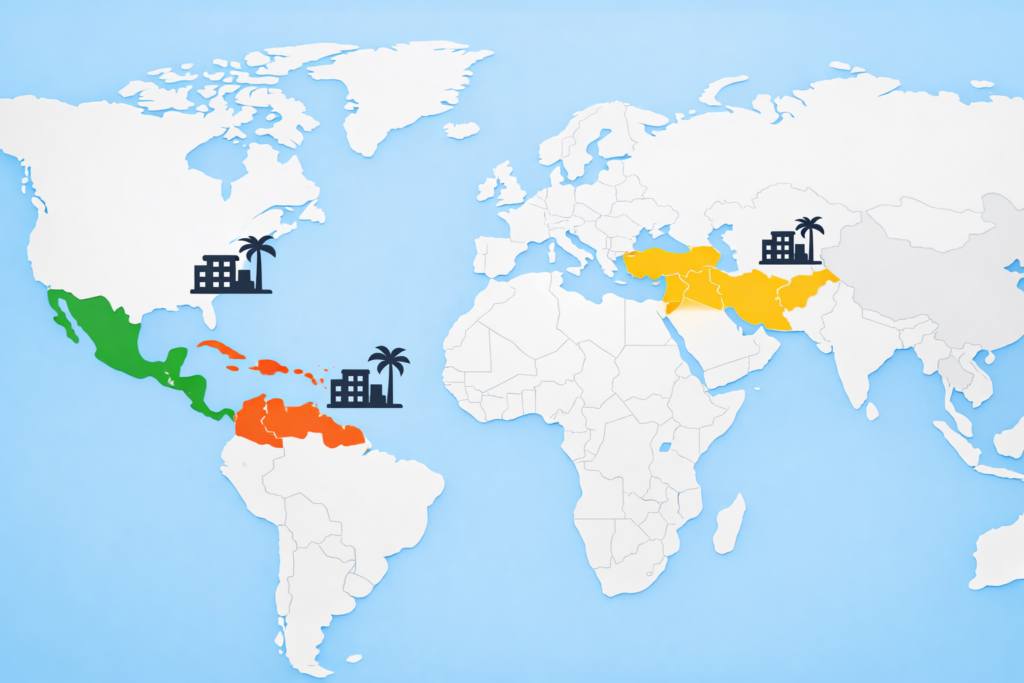
Country-by-Country Expectations
Tipping culture depends heavily on where the resort is located. The same chain can feel different in different countries because local norms shape both staff expectations and guest behavior.
You don’t need to memorize a global tipping map. But knowing the general patterns can help you interpret what you see.
Mexico
In Mexico, tipping is common in many tourist areas, including all-inclusive resorts. Even when gratuity is included, some guests still tip for good service. Staff often work hard and tips can be meaningful.
If you tip anywhere at a resort in Mexico, the most common areas are:
Bartenders
Housekeeping
Porters
But again, it is still usually optional. Many travelers do not tip much at all-inclusive resorts, and they still receive good service.
Caribbean
The Caribbean is not one tipping culture. It varies island by island, and even resort by resort.
Some islands are very tip-oriented due to tourism patterns. Others have stronger service-included norms. Resorts can also differ based on ownership and staffing structure.
If you notice tip jars, staff hinting, or other guests tipping frequently, tipping may be common. But you can still choose a conservative approach.
Dominican Republic
Tipping is often appreciated, especially in tourist areas. Service can be warm and attentive, and many guests tip occasionally for good experiences.
A balanced approach works well:
Tip for standout service
Skip tipping for standard interactions
Keep your amounts small and steady
Europe (Spain, Greece, Turkey)
In many European destinations, tipping is minimal or not expected in the same way as in the United States. Service is often treated as part of the job, and tipping can be a small rounding-up gesture rather than a steady habit.
If your all-inclusive resort is in Europe, you may find tipping pressure lower. You can often feel comfortable skipping tipping entirely unless someone provides special assistance.
The best rule across all destinations
Follow what is normal for the country, but follow your budget first.
You can travel respectfully without adopting every local custom in the most expensive way possible. Being polite, patient, and appreciative counts everywhere.
How to Avoid Feeling Pressured or Guilty
Pressure is one of the biggest reasons tipping becomes emotionally draining. And pressure can show up in subtle ways:
A tip jar placed directly in front of you
A staff member lingering after service
A smile that feels like it’s waiting for something
Other guests tipping loudly or visibly
Even if the pressure is unintentional, it can make you feel uncomfortable.
Here are ways to protect your peace.
Use simple, confident scripts
If someone offers help you don’t need:
“No thank you, we’re all set.”
“Thank you, we’re fine.”
“We’ve got it, but I appreciate it.”
If you receive service and don’t want to tip:
“Thank you very much.”
“I appreciate it.”
“Thanks, you’ve been very helpful.”
You don’t need to explain. Explanations invite debate. A warm thank-you ends the moment.
Remember what you already paid for
If gratuity is included, you already contributed. You are not withholding wages. You are not doing something wrong. You are simply not adding extra.
This mental reset matters, especially if you’re a generous person who feels uncomfortable saying no.
Use kindness as your baseline
Staff notice respectful behavior. They notice the guests who treat them like humans, not like machines. If you smile, speak kindly, and show basic patience, you are already offering something valuable.
For many seniors, this is the best “tip” to focus on.

Signs a Resort Truly Doesn’t Expect Tips
Some resorts genuinely aim to remove tipping from the experience. When that happens, it tends to show in clear ways.
Transparent communication
You might see signs or statements such as:
“Tipping is not expected.”
“Our staff are compensated fairly.”
“Gratuities are included in your rate.”
Some resorts include this information in welcome packets or on in-room materials.
No tip jars
In resorts where tipping is not part of the culture, you’ll rarely see tip jars. Bars and restaurants may feel more like a European service model where tipping is a small extra, not a constant expectation.
Consistent service regardless of tipping
If service quality feels steady, whether or not you tip, that’s often a sign tipping isn’t central.
If you notice staff becoming warmer only after someone tips, that suggests tipping is part of the local or resort-specific system, even if it’s not official.
Neither scenario is “good” or “bad.” But noticing the pattern helps you decide what you want to do.
Common Tipping Myths That Confuse Seniors
Tipping anxiety grows when myths take over. Let’s clear up a few that cause the most stress.
“Everyone else is tipping, so I have to”
You may see a few guests tipping and assume it’s universal. But you can’t see what everyone is doing. Many guests tip quietly or not at all.
You are not obligated to follow the most visible guest in the room.
“If I don’t tip, staff will treat me worse”
At many resorts, staff are trained to deliver consistent service. Your kindness and patience often matter more than a few dollars.
Will tipping sometimes lead to extra attention? Yes, especially if you tip a bartender early and return often. But that doesn’t mean you will be punished if you don’t tip. In most places, you won’t.
“Americans must tip everywhere”
This is a common fear. But tipping culture is not a moral law. It’s a regional custom. Traveling respectfully means being aware of local norms, but it does not mean draining your budget to meet expectations set by other travelers.
“Luxury resorts require tips”
Luxury resorts often claim to offer a seamless experience. Many have gratuity included. Some guests still tip for exceptional service, but luxury does not automatically mean tipping is mandatory.
In fact, some of the most expensive resorts actively discourage tipping to keep the atmosphere relaxed and equal.
A Simple Decision Checklist for Seniors
If you want a quick way to decide without overthinking, use this checklist.
Ask yourself:
Did someone provide personal, specific help?
Did they go beyond normal service?
Will you likely see this person again during your stay?
Does tipping fit your budget comfortably?
Would a small tip bring you peace, or would it create stress?
If you answer yes to most, a small tip can be a good choice.
If you answer no, it’s perfectly fine to skip tipping and simply say thank you.
This checklist protects you from guilt tipping. It also protects you from missing the moments when a tip genuinely feels meaningful.
What to Do If You Want to Tip, But You Don’t Want to Overdo It
Some seniors land in a middle ground: you want to tip a little, but you don’t want to create a new daily expense that snowballs.
Here are practical ways to keep tipping under control.
Tip once per day, not every time
Instead of tipping every drink, tip once after a round of great service. Or tip your favorite bartender once in the afternoon if you spent time at the bar.
Instead of tipping every meal, tip only after a dinner where the service truly stood out.
This keeps tipping from becoming constant.
Tip the people who affect your comfort most
For many senior travelers, the biggest comfort roles are:
Housekeeping
A bartender you see often
A porter who helps with bags
A staff member who supports mobility or special needs
If you tip at all, these are often the roles where a small amount feels most appreciated.
Use a small daily cap
A cap keeps you from having that “how much have I tipped so far?” anxiety at the end of the trip. You can decide your cap before you leave, and once you hit it, you’re done.
A cap also helps if you travel on a fixed income. You can enjoy being generous within a safe boundary.
Handling Special Situations
Tipping becomes trickier when your vacation includes unique needs or more personal service. Here’s how to handle the most common special situations without stress.
If you have mobility needs
If staff help you consistently with access, seating, or getting around the resort, it’s understandable to want to show appreciation.
But you still don’t need to tip constantly.
You can choose one of these approaches:
A small tip for a specific helpful moment
A tip at the end of the stay to someone who helped repeatedly
A written thank-you to management mentioning the staff member by name
That last option can be powerful. Staff recognition can matter a lot.
If you have medical or dietary needs
If a chef, server, or manager takes extra care to handle allergies, gluten-free needs, diabetes-friendly meals, or medication storage, tipping can be a thoughtful gesture. These situations require extra attention and responsibility.
If you don’t want to tip, you can still show appreciation by:
Thanking them directly
Asking for their name and telling management they helped you
Writing a short note
If you receive a free upgrade or special favor
Sometimes a resort offers an upgrade, extra service, or a small courtesy. This can create pressure to tip, even if gratuity is included.
In these cases, tipping can be appropriate if the staff member clearly made it happen for you. But you can also thank them warmly without tipping.
The most important thing is not to feel trapped. A favor is not a contract.
If you’re traveling as a couple or group
When multiple people are involved, tipping expectations can become messy. Some people tip generously. Some don’t. Some feel embarrassed either way.
A simple strategy is to agree on a shared approach:
We will tip housekeeping daily.
We will tip for special help only.
We will carry small bills and use the checklist.
Once you agree, you avoid awkward moments at the table or the bar.
The Most Senior-Friendly Strategy: Choose Your “Tipping Style”
One reason this topic is exhausting is because people try to decide in the moment, dozens of times a day.
A better approach is choosing a “tipping style” before you travel. Here are three styles many senior travelers find comfortable.
The “No-Tip, No-Stress” style
You tip nothing or almost nothing. You rely on included gratuity. You show kindness, gratitude, and patience. You don’t engage with tip jars.
Best for:
Fixed income travelers
People who dislike feeling pressured
Resorts that clearly say tips are included
The “Selective Thank-You” style
You tip occasionally for standout service. You do not tip by default. You carry small bills and use them when it feels right.
Best for:
Travelers who want flexibility
People who enjoy showing appreciation but want boundaries
Resorts where tipping culture is visible but not required
The “Comfort & Care” style
You tip the roles that most affect your comfort, often housekeeping and occasional bar service. You keep amounts small and predictable.
Best for:
Long stays
Travelers who value extra ease
People who want to prevent small issues from becoming hassles
There’s no perfect style. There’s only the one that gives you peace.
What If You Feel Like You’re Being Treated Differently?
This is a sensitive topic, and it’s worth addressing honestly. Sometimes travelers worry that not tipping will lead to worse service. Most of the time, that fear is bigger than the reality. But sometimes, you might notice subtle differences, especially at busy bars or in highly tip-driven destinations.
If you feel service is noticeably affected, you have options that don’t require you to overpay.
Option one: tip once early to set a tone
If you plan to return to the same bar every day, a small early tip can sometimes smooth things out. It’s not “buying” service. It’s signaling appreciation.
You don’t have to keep tipping constantly after that. Often, one small gesture changes the dynamic.
Option two: switch locations
Most resorts have multiple bars, restaurants, and staff teams. If one area feels uncomfortable, move. You’re on vacation. You don’t need to endure awkwardness.
Option three: speak to guest services
If service truly feels disrespectful or unfair, especially in a way that affects your comfort, you can calmly speak with guest services. You don’t need to mention tipping. You can focus on service expectations.
A simple statement works:
“We’ve noticed service in this area has been inconsistent. Could you help us understand the best place for reliable service?”
That keeps things calm and practical.
A Note About Ethics: Is It Wrong Not to Tip?
Many seniors are generous by nature. You’ve lived long enough to understand hard work. You may feel a tug of responsibility toward staff, especially in countries where wages are low.
It’s kind to care. But it’s also important not to carry guilt that belongs to the resort’s business model.
You did not create the wage system.
You are not responsible for replacing fair pay with personal spending.
You are allowed to travel within your means.
If you choose to tip because you want to, that’s wonderful.
If you choose not to tip because you already paid, that’s also reasonable.
The ethical middle ground is treating staff with dignity and being honest about your budget. That’s a solid foundation anywhere in the world.
Practical Tips to Make Tipping Easier (If You Decide to Do It)
If you choose to tip, a little preparation can make it feel simple instead of stressful.
Bring small bills
This is the biggest factor. Small bills prevent awkward moments where you only have large bills and feel stuck.
Before you travel:
Break money into small denominations
Store them in a separate pouch
Set aside a daily amount if that helps you
Use envelopes
For housekeeping, envelopes are easy. You can label them by day or simply keep a small stack ready.
If you don’t have envelopes, even a folded note works. The main point is to make the intention clear.
Don’t hide the tip
This sounds obvious, but it matters. If you tip housekeeping, leave it in a visible place with a short note. Otherwise staff may not feel comfortable taking it.
A simple note can be:
“Thank you”
“Housekeeping”
“Gracias”
Short is fine.
Keep it private
If you feel uncomfortable tipping in public, keep it discreet. You don’t need to perform generosity. Your choices are your own.
Common Questions Seniors Ask at the Resort
Sometimes you want clarity directly from the resort, but you don’t want to feel awkward asking. Here are simple questions that can help you get the truth without sounding confrontational.
At check-in, you can ask:
“Is gratuity already included in our rate?”
“Is tipping expected here, or completely optional?”
If you want details:
“Do tips go directly to staff or into a pool?”
You might not get a perfect answer. But the response tone can tell you a lot. If staff say “completely optional” confidently, you can relax.
If they say, “It’s optional, but staff appreciate it,” you’ve learned the culture is tip-friendly.
Both are useful.

A Simple Wrap-Up: You’re Not Cheap, You’re Informed
Tipping at an all-inclusive resort should never feel like a test. You paid for a vacation. You deserve clarity.
Here’s the most important takeaway:
If gratuity is included, tipping is usually not required.
If you want to tip, keep it small, selective, and within your comfort zone.
Kindness and respect matter everywhere, with or without cash.
When you stop treating tipping as a moral obligation and start treating it as a personal choice, the stress drops fast.
You can travel confidently without overpaying. You can be generous without being pressured. You can enjoy your trip without turning every interaction into a decision.
Save this guide before your next trip. Share it with a travel partner. And most of all, give yourself permission to relax.
FAQ: All-Inclusive Resort Tipping
Do you tip at all-inclusive resorts if gratuity is included?
Usually, no. You are typically not required to tip. Many guests still tip occasionally for standout service, but it is optional.
Is it rude not to tip at an all-inclusive resort?
In most cases, no. If gratuity is included, not tipping is normal. Being polite and appreciative matters most.
Should seniors tip differently than younger travelers?
Seniors often prefer predictable budgets. A selective, small-tip approach is usually more comfortable and just as respectful.
Do staff expect tips from Americans?
Sometimes, especially in tip-heavy tourist areas. But it does not mean you must tip. Many resorts train staff to provide consistent service.
How much should I tip housekeeping at an all-inclusive resort?
If you tip, small daily tips are often preferred over one end-of-stay tip, because staff schedules rotate.
Should I tip bartenders every drink?
No. If you tip, tipping occasionally or once per day for good service is often enough.
Can tipping improve service at all-inclusive resorts?
Sometimes it can, especially at bars. But good resorts aim for consistent service whether you tip or not.
Is tipping required at luxury all-inclusive resorts?
Not usually. Some luxury resorts discourage tipping to keep the experience equal and relaxed.
What if I’m on a fixed income?
Set a small cap or choose not to tip. You already paid, and you can still show appreciation without spending extra.
How do I politely decline tipping pressure?
A warm “Thank you” is enough. You do not need to explain or apologize.