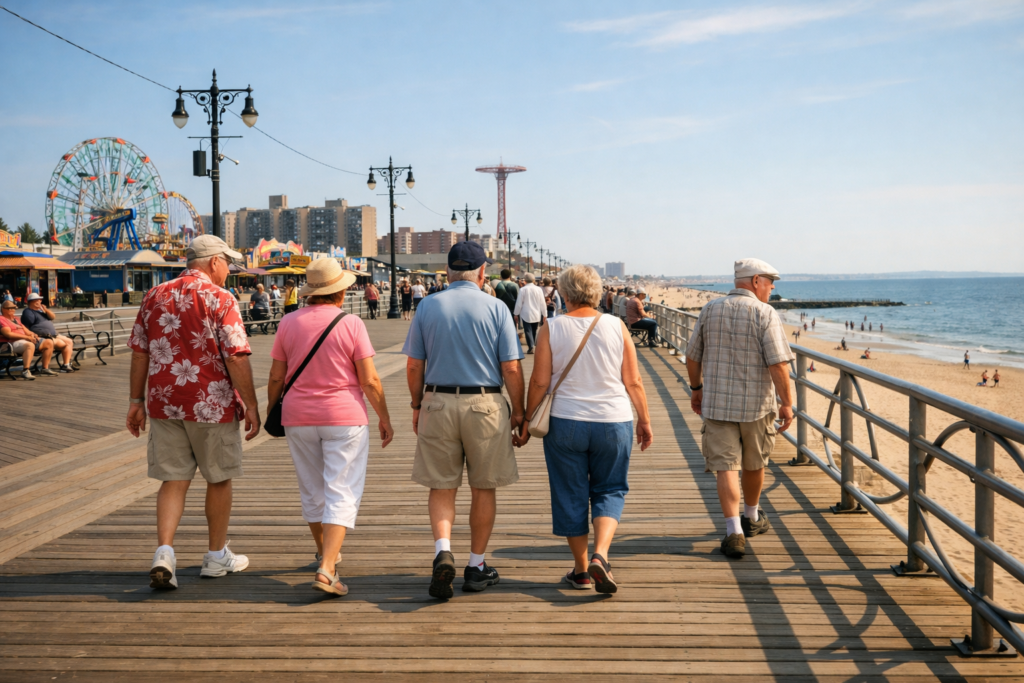
Coney Island tipping can feel confusing, even if you’ve been tipping your whole life. You order a hot dog, you tap your card, and suddenly a screen asks if you want to tip 20%, 25%, or 30%—for someone handing you a tray. If you’re visiting Coney Island, Brighton Beach, and the Brooklyn Boardwalk on a simple day trip, this guide will help you tip with confidence, stay within your budget, and avoid awkward moments.
This article is written for seniors and day visitors who want clear rules, real-life examples, and a practical plan for what to do when the tip question pops up.
The simple rule you can trust
Here’s the most important idea to keep in your pocket all day:
If you order at a counter and pick up your own food, tipping is usually optional.
If you sit down and someone serves you at a table, tipping is expected.
Everything else is just details—and we’ll make those details easy.
Why tipping at Coney Island feels so confusing
Coney Island is not one single “type” of place. In a few blocks, you’ll see:
- Old-school walk-up windows
- Counter-service snack stands
- Sit-down restaurants
- Cafes with self-seating
- Seasonal booths and pop-up vendors
- Tablet checkout screens everywhere
That mix is why the rules feel fuzzy.
The old rules still exist… but the screens got louder
For decades, many people tipped based on the level of service:
- A server takes your order, checks on you, refills drinks → you tip.
- You order at a window, get your own food, toss your own trash → tipping is optional.
That didn’t change.
What changed is the payment screen. Many systems are set up to ask for a tip every time, even when the service is minimal. The screen is not a law. It’s a question. And you are allowed to answer it calmly.
Tourist areas turn tipping into a pressure moment
Coney Island is fun, crowded, and full of visitors. Some tourists tip high just to be safe. Some feel embarrassed and tip because people are behind them in line. Businesses notice this and keep the tip prompt front and center.
If you’re a senior day-tripper, you don’t need to play that game. You need a clear standard that protects your budget and feels fair.
Many seniors feel “behind” — but you’re not
A lot of seniors think:
- “Maybe the rules changed and I missed it.”
- “Maybe people tip everywhere now.”
- “Maybe I’m being rude if I choose no tip.”
You’re not behind. You’re just dealing with modern payment screens that treat tipping like a default.
This guide will show you what’s normal and what’s optional, using real examples you’ll actually face along the boardwalk.
A senior-friendly tipping mindset for the day
Before we get into exact amounts, here’s a helpful mindset that keeps the day pleasant:
- Tip for service, not for being asked.
- Tip more when someone truly takes care of you.
- Tip less (or not at all) when it’s just a transaction.
- Don’t let a screen rush you.
If you do those four things, you’ll tip like a local who knows the difference.
Do you tip at food stands in Coney Island?
Most visitors ask this first, and the answer is reassuring:
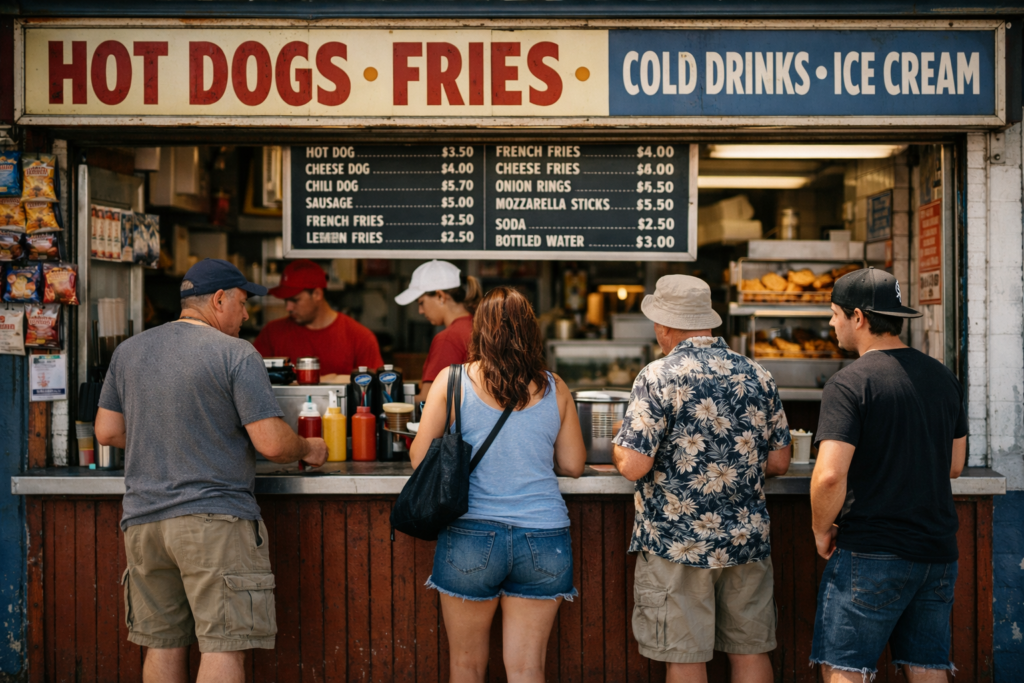
At most food stands and walk-up windows in Coney Island, tipping is optional.
This includes many common boardwalk purchases, like:
- Hot dogs and fries at a window
- Ice cream cones from a counter
- Pizza slices to-go
- Lemonade stands
- Quick snack booths
What locals often do at a stand
Plenty of people tip nothing at a food stand. If they do tip, it’s usually small:
- Rounding up the total
- Dropping a dollar in a jar
- Adding a small amount on a card
This is especially common when:
- The order is simple
- There’s no special request
- You’re not getting table service
- You’re picking up your own food
Practical examples that feel right
Here are realistic “what would I do?” examples that many seniors find helpful:
- You buy a single hot dog for around a few dollars → no tip is fine
- You buy lunch for two (hot dogs, fries, drinks) → a small tip is kind but not required
- You order a complicated order with substitutions and the staff is patient → a small tip is a nice thank-you
- You get one ice cream cone → no tip is fine
- You ask for extra help (carrying a tray, special packaging, careful handling) → a small tip is thoughtful
If you want a simple rule for these stands:
- No tip is acceptable
- A small tip is appreciated
- Big percentage tips are not required
The keyword question: “tip at food stand Brooklyn”
If you’re specifically wondering about “tip at food stand Brooklyn,” the senior-friendly answer is:
- If it’s a fast counter transaction: optional
- If they did something extra: small tip
- If it’s truly a sit-down meal: standard tip
That’s the clean line.
Counter service vs table service: the most important difference on the boardwalk
If you learn one skill for the day, learn this: identify the service type.
Counter service: what it looks like
Counter service usually means:
- You order standing up
- You pay right away
- You receive a number, receipt, or tray
- You pick up food yourself or it’s handed to you
- You find your own seat (if seating exists)
- You bus your own table or throw away trash
In counter service, the “tip counter service Brooklyn” rule is typically:
- Tipping is optional
- If you tip, it’s usually modest
A fair range many people use is:
- No tip
- Small fixed tip
- A low percentage when the order is large or complicated
Table service: what it looks like
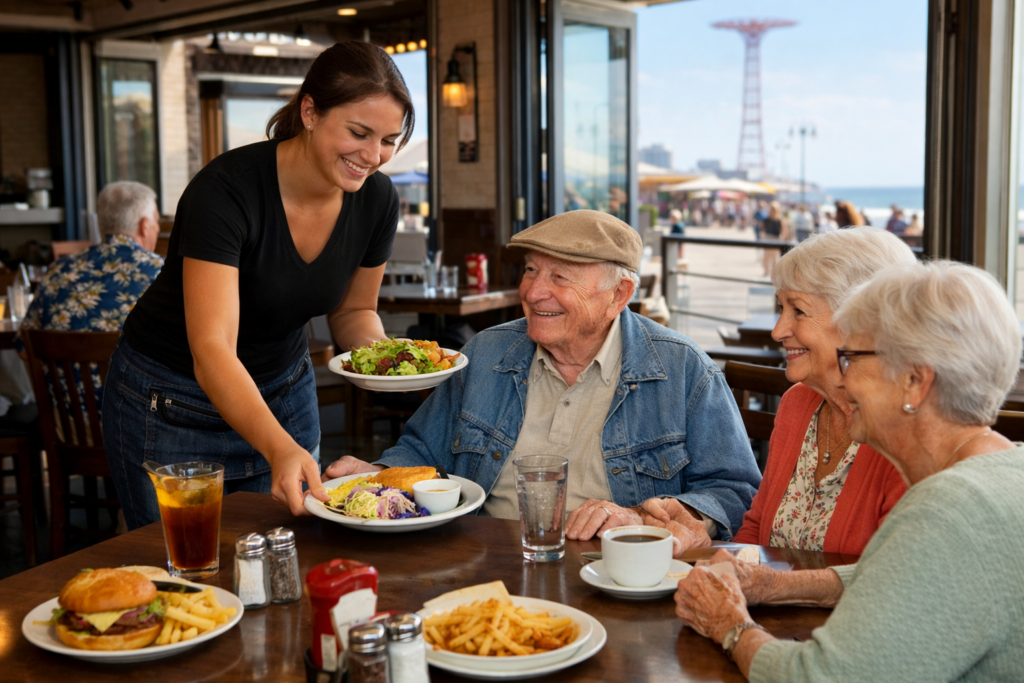
Table service usually means:
- You sit down first
- A server takes your order
- They bring food and drinks
- They check on you
- They clear plates
- They bring the check at the end
In table service, tipping is expected. Many people use a standard range (often around the high teens to low twenties), adjusting for service quality.
For seniors, a simple approach works well:
- Good service: tip in the standard range
- Excellent service: tip a bit more
- Poor service: tip less, but don’t feel forced into a high amount
A quick way to decide in 10 seconds
Ask yourself:
- “Did someone serve me at my table and take care of me?”
- If yes → tipping expected
- If no → tipping optional
This will save you time all day long.
Tip screens that start at 20%: what they mean and how to handle them
This is the moment that throws people off the most.
You pay for a simple counter order and the screen asks:
- 20%
- 25%
- 30%
- Custom
- No tip
And the employee is watching and there’s a line behind you.
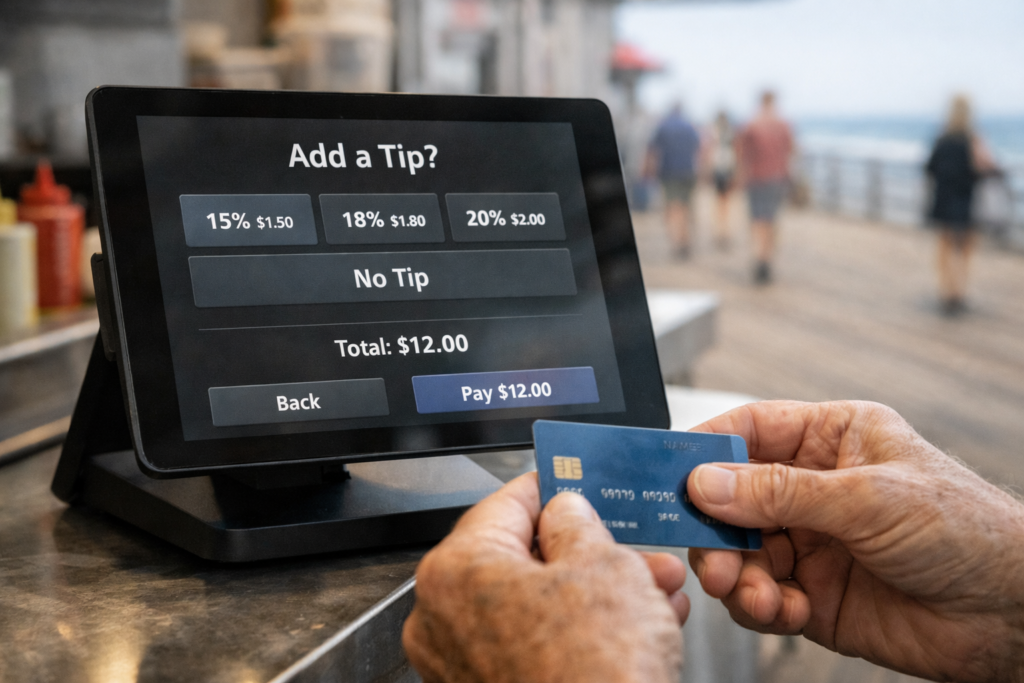
Here’s the truth:
Those buttons are not a rule. They are a suggestion.
Many systems are set up with high defaults because it increases tips. That doesn’t mean counter service suddenly requires 25%.
A calm senior strategy that works every time
Use one of these approaches:
- If it was simple counter service: choose “No tip” or a small custom tip.
- If they were especially helpful: choose a small tip you feel good about.
- If you feel rushed: choose custom and enter a small amount, or “No tip” without apology.
What if I worry they’ll be offended?
In busy tourist areas, staff see every option all day long. Many people choose no tip at counter service. Most employees will not react.
And remember: you’re not declining kindness—you’re declining a percentage tip that doesn’t match the service.
A quick script to say to yourself
Some seniors like a simple mental script:
- “This was counter service. Optional tip.”
- “I’m paying the price. I’m not paying a bonus.”
- “If I want to tip, I’ll tip my amount.”
That removes the pressure.
The “small tip” choices that feel fair at food stands
If you want to tip at food stands sometimes, but you don’t want to overthink it, here are options that work well for seniors:
The “round up” method
- If your total is close to the next dollar, round up.
- This is easy, quick, and doesn’t feel excessive.
The “one or two dollars” method
- For a larger snack order or extra help, a small fixed tip is simple.
- This avoids the weird feeling of tipping 25% on a basic transaction.
The “custom low percent” method for bigger counter orders
If you’re buying for a group (grandkids, friends, a few meals at once), a low custom percent can be reasonable. The key is: you choose it, not the screen.
Seniors often prefer fixed tips because it’s predictable. That’s a smart choice.
Brighton Beach: more local energy, slightly different tipping feel
Brighton Beach often feels more like a neighborhood than a theme destination. You’ll still see tourists, but you also see regulars.

That affects tipping in a subtle way:
- There’s often less “tip screen pressure”
- Counter-service places may feel more traditional
- Sit-down dining still follows normal tipping expectations
What seniors often buy in Brighton Beach
- Coffee and pastries
- Bakery items
- Quick lunches
- Sit-down meals that are calmer than boardwalk spots
How to tip there without stress
Use the same service-type rule:
- Counter order → optional tip
- Sit-down service → standard tip
Brighton Beach can be a nice place to take a slower meal. If you do that, tipping will feel more familiar—like it does in most restaurants.
What about takeout from a sit-down restaurant?
Sometimes seniors prefer takeout:
- Easier on energy
- Less waiting
- More control over seating
- Less noise
Takeout tipping is one of the most confusing areas, because opinions vary. Here’s a practical way to handle it:
If it’s truly just picking up a bag
If you place an order and pick it up with minimal interaction, tipping is usually optional.
If someone does real extra work
If staff carefully pack a large order, handle special requests, or help you with accessibility needs, a small tip can be a kind gesture.
Seniors often like this simple approach:
- Small tip if you feel helped
- No guilt if you don’t
Service charges, automatic gratuity, and “living wage” fees
This is important because seniors can accidentally tip twice.
You may see lines on a receipt that say things like:
- Service charge
- Gratuity included
- Staff wellness fee
- Hospitality fee
These are not always the same thing, but they all affect what you should do next.
The safe approach for seniors
Before tipping, look for any line that suggests an added service amount. If you see one:
- If it clearly says gratuity included → you may not need to tip extra
- If it says service charge but doesn’t say it goes to staff → you may choose a smaller tip
- If you’re unsure → ask politely, “Is gratuity already included?”
You don’t need a long conversation. One simple question can save you money.
What about tipping for rides, games, and attractions?
Coney Island includes amusements, games, and attractions, and seniors often go with family.
In many amusement settings, tipping is not typical for:
- Ticket sales
- Ride operators
- Game booth workers
However, you might see tip jars in some areas. If you do, treat them as optional, like counter-service tips.
A practical senior rule
- If it’s a paid attraction with a set price → tipping is usually not expected
- If someone provides personal help (special assistance, carrying items, extra patience) → a small thank-you tip can be appropriate if you want
Cash vs card: what works best for seniors on this day trip
Many seniors prefer cash for tipping because it feels clear and controlled.
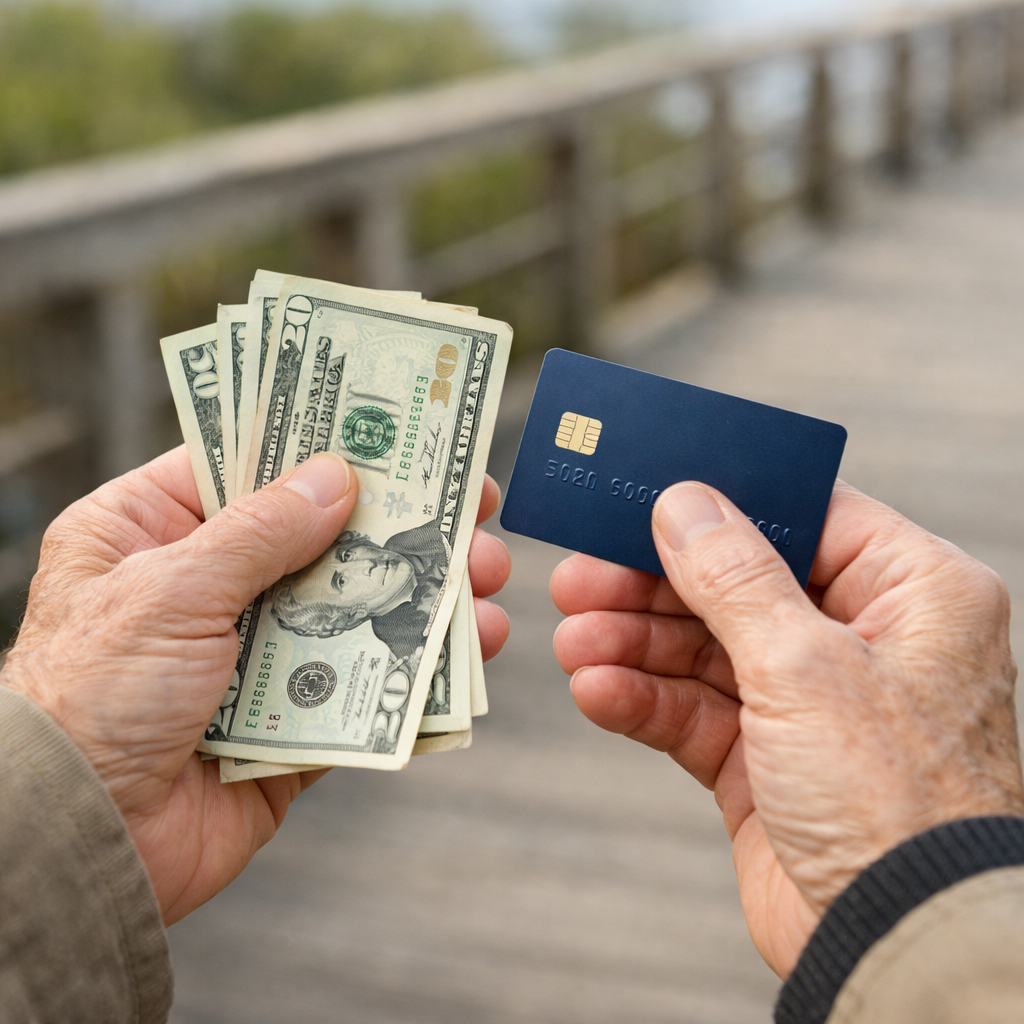
Why cash can be easier on the boardwalk
- You can avoid tip screens
- You can give a small tip without percentages
- You can keep your budget steady
- You can tip only when it feels right
A simple cash plan
If you’re comfortable carrying a little cash, many seniors do well with:
- A few small bills for optional tips
- Some cash for places that are cash-friendly
- A card for larger purchases or sit-down meals
What if you only want to use a card?
That’s fine. Just remember you can hit “No tip” or “Custom” without apology.
A senior-friendly tipping cheat sheet for Coney Island and the boardwalk
Use this as your quick reference:
Walk-up food stands and windows
- Tip: optional
- If you tip: small amount or round up
Counter service (you order standing, pick up food)
- Tip: optional
- If you tip: modest, especially if they helped
Sit-down restaurants (server comes to table)
- Tip: expected
- Tip more for great service, less for poor service
Coffee counters and bakeries
- Tip: optional
- Small tip if you linger or get extra help
Takeout pickup
- Tip: optional
- Small tip if they handled a large or complicated order
If you see a service charge or gratuity included
- Pause
- Read the receipt line
- Decide if you still want to tip extra
That’s enough to handle almost everything.
Common tipping mistakes seniors can avoid easily
This section is not meant to scold—just to save you money and stress.
Mistake: tipping a big percentage at a basic food stand
A 25% tip on a simple counter order can become expensive fast, especially if you buy snacks multiple times. Small tips are plenty.
Mistake: letting the screen set your budget
Those big buttons are designed to pull you upward. You choose the amount, not the device.
Mistake: forgetting to check for included gratuity
This is how people accidentally double-tip. A quick glance at the receipt line prevents it.
Mistake: thinking “no tip” equals “rude”
At counter service, “no tip” is normal. You’re not being impolite. You’re being accurate.
A realistic senior day-trip walkthrough: what to tip from morning to evening
Let’s walk through a full day the way many seniors actually experience it.
Morning: arriving and grabbing something small
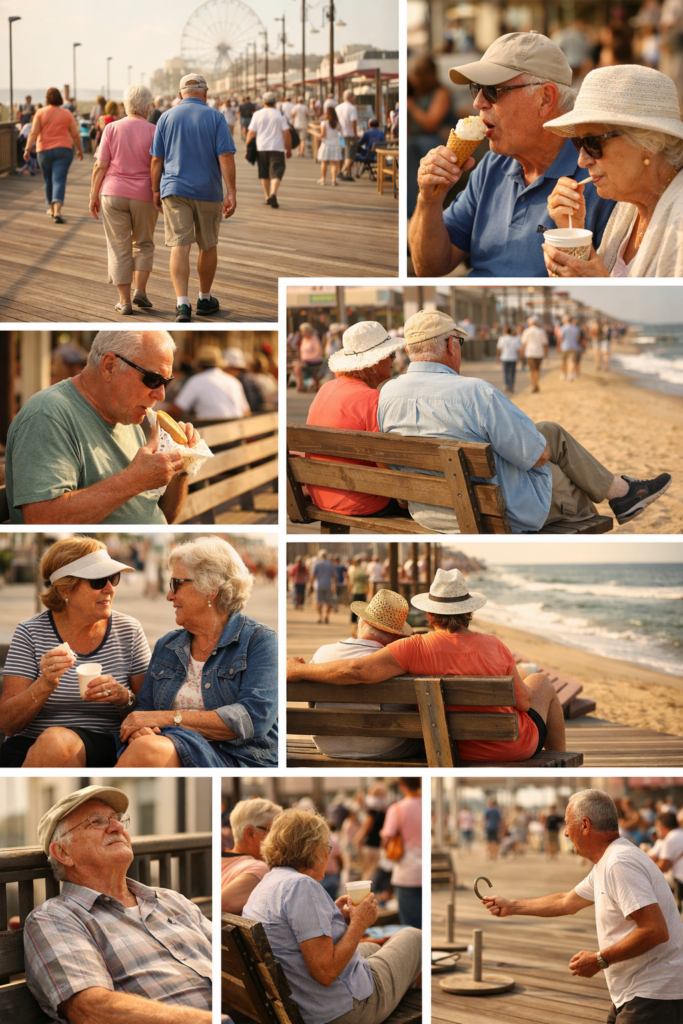
You might start with:
- Coffee
- A pastry
- A bagel
- A quick breakfast item
If it’s counter service and you grab your own items, tipping is optional. If you’re a regular tipper, a small tip is fine. If not, no tip is fine.
Senior tip: If you want to keep the day simple, decide early:
- “I tip at sit-down meals.”
- “I tip only when someone helps me.”
That keeps the rest of the day calm.
Late morning: boardwalk walking and a snack stop
You might buy:
- A cold drink
- Popcorn
- A small snack
At a stand, tipping is optional. Many seniors skip tipping here unless the staff does something extra.
Lunch: the classic Coney Island meal
Many day-trippers aim for a classic lunch experience—something iconic, casual, and fast.
This is where the tip screen often appears.
If it’s a window pickup situation, a big percentage tip is not required. If you want to tip, a small fixed tip is a comfortable choice.
Senior-friendly approach:
- Keep it simple
- Tip small if you feel good about it
- Don’t let the screen pressure you
Afternoon: ice cream, dessert, or a sweet treat
This is one of the easiest moments to over-tip because dessert prices are small and the screen tries to push a high percentage.
For a simple ice cream counter order, tipping is optional. If you tip, small is fine.
Late afternoon: resting, people-watching, and maybe Brighton Beach
Brighton Beach can be a calmer shift, especially if you want a quieter walk and a more neighborhood feel.
If you stop at a bakery or café counter, tipping is optional. If you sit down for a real meal, tipping works like any restaurant.
Dinner: the sit-down meal (if you do one)
If you end the day with a sit-down restaurant meal, tipping becomes more traditional and expected.
What seniors often value in sit-down service:
- patience
- respectful help
- clear communication
- comfortable pacing
- attention to dietary requests
If the staff provides that, tipping in the normal restaurant range is appropriate.
If service is weak, you can tip less. You don’t have to tip “perfectly.” You just need to tip fairly.
How this compares to other senior day trips within 50 miles
One reason this topic is so linkable is that tipping changes by setting. Seniors notice that quickly.
Here’s how Coney Island typically compares:
Compared to Manhattan tourist zones
- Manhattan has more “high-pressure” screens and pricier meals
- Coney Island is more casual, more snack-based, and easier to keep cheap
Compared to quieter beach towns
- Some beach towns feel more relaxed, with fewer tip prompts
- Coney Island is busier and more screen-driven, but still mostly optional at stands
Compared to suburban counter-service spots
- Suburban counters may not prompt for tips as aggressively
- Brooklyn counter service is more likely to ask, but still optional
The key point: the screen is louder here, but the rules are not stricter.
Senior comfort tips that also affect tipping decisions
This is a small but important section: comfort affects how you buy food, and that affects tipping.
Seating matters
If you choose places where you can sit comfortably, you may end up in more sit-down service situations, where tipping is expected. That’s not a problem—just plan for it.
Mobility and assistance
If a staff member helps you in a real way (carrying a tray, finding a seat, accommodating a mobility device, packing food carefully), a small extra tip can feel appropriate and human. You’re tipping for help, not for the screen.
Noise and pacing
Seniors often prefer calmer places. Brighton Beach can offer that. If you choose a sit-down dinner there, tipping will feel more “normal” than the boardwalk rush.
What to do if you’re with family (and everyone tips differently)
This happens all the time on senior day trips:
- One person wants to tip high to be safe
- Another person wants to tip only at sit-down meals
- Someone feels awkward at the screen
A simple family agreement can help:
- Counter service: optional small tip
- Sit-down meals: standard tip
- Special help: small thank-you tip
That avoids tension and keeps the day fun.
FAQ: Coney Island tipping questions seniors ask most
Do seniors have to tip at Coney Island food stands?
No. At most food stands and walk-up windows, tipping is optional.
Is tipping expected at counter service in Brooklyn?
Generally, no. Counter service often prompts for a tip, but it’s optional. A small tip is kind if they help you.
What if I press “No Tip” on the screen?
That’s a normal choice for counter service. You’re not breaking etiquette.
Are tips expected at ice cream stands?
Usually not. If you tip, keep it small.
Should I tip for takeout?
Takeout tipping is optional. Tip small if staff handled special requests or helped you in a meaningful way.
What’s the polite tip for a sit-down restaurant?
For table service, tipping is expected. Adjust based on service quality and your comfort.
What if the receipt shows a service charge?
Pause and read it. If it’s clearly a gratuity, you may not need to tip extra. If it’s unclear, you can ask.
Do locals tip differently than tourists in Coney Island?
Often yes. Locals are more likely to skip tipping at basic counter transactions and tip normally at sit-down meals.
Is it rude to tip a small amount instead of a big percentage?
Not at all. Small, reasonable tips are common at stands and counters.
Should I tip ride operators or game booth workers?
Usually no. Tipping isn’t typical for standard ride and game transactions, though tip jars may appear and are optional.
Has tipping changed recently in NYC?
The biggest change is tip screens appearing everywhere. The basic etiquette still depends on the level of service.

A calm, confident conclusion for your day trip
A Coney Island, Brighton Beach, and Brooklyn Boardwalk day is supposed to feel light, fun, and local—not like a math test at every checkout screen. The simplest truth is this: tip for real service, not for being asked.
If you only remember one thing, remember the service rule:
- Counter service and food stands: tipping is usually optional
- Sit-down restaurants: tipping is expected
That’s it. With that in mind, you can enjoy the boardwalk, eat what you want, and keep your budget under control—without feeling rushed, guilty, or confused.