
You’re checking out of a hotel. The lobby is busy. Your family is ready to go. You reach for your wallet and pause on a simple question that suddenly feels complicated: should you tip in cash, or add it to the card?
If you’re a senior traveler—or you’re traveling with older parents or grandkids—this question matters more than it used to. A lot has changed. Hotels run leaner. More payments happen on screens. Tip prompts appear everywhere. And travel scams have evolved in ways that make “just do what you’ve always done” feel less comfortable.
At the same time, most people asking this question have the same goal: tip fairly, avoid awkward moments, and stay safe.
This guide is built for exactly that. No judgment. No guilt. Just clear advice that helps you decide when cash is best, when card is fine (or better), and how to protect yourself while traveling—especially in hotels, cruises, tours, and family trips.
Why the “Cash Tip vs Card Tip” Question Matters More Today
Tipping used to be simple in many travel situations. You left a few bills on the table. You handed a porter a tip. You tucked something under a notepad for housekeeping. You moved on.
Today, travel tipping has more moving parts:
Cash is less common, but still deeply useful. Many travelers carry less cash than they used to. Some carry none at all.
Card systems are everywhere. Restaurants and hotels often default to card payments, and many employees rely on digital tip systems.
Tip handling can be complicated behind the scenes. In some places, tips are pooled. In others, tips pass through payroll. Sometimes they show up later. Sometimes fees apply. Sometimes the wrong department receives them.
Safety concerns are different now. Pickpocketing is still real, but so are card skimmers, fake payment terminals, and digital fraud that can turn a trip into a long clean-up process once you get home.
Seniors often face higher stakes. Not because older travelers can’t handle travel—many are the most experienced travelers out there—but because the cost of disruption can hit harder. A stolen wallet or a locked credit card can derail a trip quickly. And if you’re traveling with family, you may be managing multiple people, multiple bags, and multiple “what do we do now?” moments.
So the question isn’t just “cash or card?” It’s really two questions:
Which method helps the worker the most?
Which method keeps you safer and calmer while traveling?
You don’t have to pick one forever. A smart traveler uses both.
Does a Cash Tip Actually Help Workers More?
Often, yes. But not always. The best answer depends on the job, the workplace, and how tips are distributed.
The reason cash is still widely recommended—especially in hotel advice that targets practical travelers—is that cash has a simple advantage: it usually goes straight to the person you intend, right away.
That “right away” part is more important than it sounds. Many service workers are working hard with tight budgets. Immediate cash can help with daily expenses. And when you hand a tip directly, there’s less ambiguity about whether it will be processed correctly.
But to be fair, cash isn’t magical. Some workplaces pool tips no matter how they’re received. Some employees prefer digital tips because it helps with records and budgeting. And in some environments—especially large organizations—digital systems can be more reliable than the old “hope the tip gets to the right person” method.
To make this practical, it helps to understand how workers are commonly paid in travel settings.
How Service Workers Are Paid (The Part Travelers Don’t See)
In travel and hospitality, workers often fall into a few categories:
People who are tipped directly. Think bellhops, porters, valet attendants, some drivers, some tour guides, sometimes housekeeping (depending on the hotel and country). In these cases, cash is easy and direct.
People who might receive pooled tips. This can include restaurant staff in some places, hotel staff in some resorts, and many team-based services. Your tip may be split among multiple workers.
People who are not always set up to receive tips through the system. Housekeeping is the biggest example. In many hotels, the easiest, most reliable way to tip housekeeping is still cash. Not because housekeeping is “old-fashioned,” but because they may not be included in the same tip flow as front desk or restaurant staff.
Workers paid through payroll systems. When tips are added by card, they often run through payroll. That can be fine, but it can add delays, and it can vary by employer.
This isn’t about distrust. It’s about practicality. The more layers between you and the worker, the more chance the tip becomes slower, less visible, or harder to trace.
Credit Card Tips and Processing Fees
One reason travelers worry about card tips is processing fees. You may have heard that workers “lose money” when you tip by card because of credit card fees.
Here’s the practical reality: it depends on where you are and who you’re tipping.
In many places, the business pays card processing fees and the worker receives the tip amount as recorded. In other situations, card tips may be reduced or handled in ways that feel less favorable to staff. This can vary not only by country or region, but by the employer’s policies.
Even when workers do receive the full tip amount, card tips typically have two drawbacks compared to cash:
They can arrive later (often through payroll).
They may be distributed differently (especially in pooled systems).
So if your main goal is “I want the person who helped me to receive this money,” cash is often the simplest route.
When Cash Is Clearly Better for the Worker
If you want the highest odds that your tip reaches the right person quickly, cash tends to win in these situations:
Hotel housekeeping. Especially if you tip daily.
Bell services, porters, luggage assistance. A direct handoff is clear and immediate.
Room service delivery. A small cash tip makes the “thank you” feel personal and avoids questions about whether a service charge already includes a tip.
Tour guides in many settings. Particularly independent guides or small operators.
Drivers in places where tipping is customary and expected.
That said, there are times when card tips are absolutely fine—and may even be better.
Is Tipping With a Card Ever Better?
Yes. And for many seniors, card tipping can be a smart tool—especially when it reduces stress or increases safety.
Card tipping can be better when:
The service is clearly tracked and distributed fairly.
You want a record for budgeting or reimbursement.
You’re in an environment where cash tips are awkward or unlikely to reach the right person.
You’re traveling internationally and cash handling is complicated.
Accountability and Tip Tracking
Card tips create a paper trail. If you’re watching a budget, traveling on a fixed income, or managing spending across a family trip, a card record is useful.
This matters for seniors who like clarity, not surprises. You can look back and see what you tipped. You can adjust your habits. You can keep things consistent.
It also matters if you’re traveling as part of a group, or if adult children are helping manage payments. A digital record reduces confusion.
When Cash Tips Don’t Reach the Right Person
Cash tips left in a room can sometimes be missed, mistaken, or cleaned away if not clearly marked. That’s not common, but it happens.
Cash also gets complicated in pooled environments where the employer expects tips to be handled through the system.
In certain places—like some resorts or cruises—adding gratuities through official systems is how staff are paid. In those cases, cash can still be appreciated, but it may not replace the structured gratuity system that supports a large team.
Convenience and Accessibility for Seniors
Let’s say you have limited mobility, arthritis, or simply don’t want to keep track of envelopes and small bills. Or you’re on a busy family trip where you’re juggling medications, reservations, and grandkids.
Card tipping can reduce friction. The best tipping method is the one you can do consistently without stress.
If carrying cash makes you anxious, and card tipping helps you stay calm and safe, that matters. You can still tip well. You can still tip thoughtfully. You just do it in a way that fits your travel style.
Safety First: Cash vs Card While Traveling
This is where many seniors are really coming from. It’s not just “What’s polite?” It’s “What keeps me secure while I’m away from home?”
Cash and cards have different risks. Neither is perfect. The goal is to use both in a way that limits your exposure.
Risks of Carrying Cash While Traveling
Cash risks are straightforward:
Pickpocketing. Crowded tourist areas and transit hubs are common hotspots.
Loss. Cash can fall out of a pocket. A wallet can be misplaced.
Theft. Cash stolen is usually gone for good.
Pressure situations. Some travelers feel more vulnerable when they know they’re carrying a lot of cash.
These risks rise when you carry more than you need. The mistake isn’t carrying any cash. The mistake is carrying too much, or carrying it all in one place.
Risks of Using Cards for Tips
Card risks can feel less visible—but they’re real:
Card skimming. Some scams target travelers, especially in tourist-heavy locations.
Fraud alerts and locked cards. A card that works at home may get blocked on the road, and that can disrupt your plans.
Unauthorized charges. Even a small fraudulent charge can become a long hassle once you return.
Over-tipping by mistake. Digital prompts can be confusing, and some travelers accidentally select higher tip options than they intended.
So which is safer? The honest answer is: a blended approach is usually safest.
Cash is safer in small amounts because it limits digital exposure.
Card is safer for large expenses because it limits the amount of cash you carry.
If you’re a senior traveler, the best safety plan is not “cash only” or “card only.” It’s “smart amounts of both.”
What’s Actually Safer for Seniors?
Here’s a practical way to think about it:
Use cash for small, direct tips where you want control and clarity.
Use card for large purchases and structured gratuities where the system is designed to handle it.
And protect both by reducing how much is accessible at any one moment.
A simple safety guideline many experienced travelers follow:
Carry the cash you need for the day’s tipping and small expenses.
Keep extra cash and backup cards separate, secured, and not all in the same wallet.
If you’re traveling with family, consider splitting backup resources between two trusted adults.
This way, one bad moment doesn’t ruin your trip.
Cash Tip vs Card Tip by Travel Situation
This section is the heart of the guide. If you only want the quick practical answer, start here.
Hotels (Especially Housekeeping)

If you’ve ever read hotel tipping advice from major travel outlets, you’ve probably noticed a common theme: cash is often recommended for housekeeping.
That’s because housekeeping is one of the most physically demanding jobs in travel—and also one of the most likely to be left out of digital tipping pathways.
A practical approach that works well for seniors:
Tip housekeeping daily in cash. Daily matters because the person cleaning your room may change day to day. If you tip only at checkout, you may miss the person who cleaned most of your stay.
Use an envelope or a note. This reduces confusion. A simple “Housekeeping—thank you” note makes it clear the cash is a tip.
Place it somewhere visible. A desk, nightstand, or near the notepad. Avoid leaving it mixed with other papers.
How much? Amounts vary by region and hotel type, but what matters most is consistency and sincerity. A small daily tip is often more appreciated than a single large tip at the end.
If you don’t have cash: Ask the front desk if they can break bills. Some hotels can. Some can’t. If they can’t, tipping with card at checkout is better than not tipping, but it may not reach housekeeping directly in some properties. If you choose card tipping, ask politely and simply: “Is there a way to add a tip specifically for housekeeping?”
If you get a clear option: use it. If not: consider leaving a cash tip with a note whenever possible.
Cruises
Cruises are their own world. Many cruise lines use automatic gratuities or prepaid gratuity packages. That money is usually distributed among many staff roles, including people you may not see.

For senior travelers, the safest and simplest cruise approach is often:
Use the cruise’s gratuity system as the foundation. This supports the broader staff team.
Add small cash tips for standout service. For example, a cabin steward who goes above and beyond, or a dining staff member who consistently makes your trip easier.
Why this works: you respect the system and still have the flexibility to reward personal service.
One caution: don’t assume cash replaces automatic gratuities unless you are confident in the cruise line’s policy and your own comfort handling that conversation. Many travelers find it easier to keep the standard gratuity system and add extras when it feels right.
Tour Guides and Drivers
For tours, cash is often the easiest and most appreciated option—especially for independent guides.
A simple method:
Bring small bills for each day you’re touring.
Tip at the end of the tour, directly to the guide.
If there is a driver separate from the guide, consider tipping both if that’s customary where you are.
If you’re using a tour platform that allows tipping in the app, that can be convenient and safer in some places. If you choose app tipping, confirm whether the tip goes fully to the guide and how quickly they receive it. If it’s unclear, cash is still a strong choice.
For seniors, the main goal is to avoid fumbling at the last moment. Put the day’s tip in a dedicated pocket or envelope before you leave your hotel room.
Restaurants While Traveling
Restaurants are where card tipping is most “normal” in many places, especially in the United States.
If you’re traveling in the U.S.:
Card tips are generally fine for sit-down restaurants.
Cash tips are still appreciated, and can be useful if you want the server to receive it immediately.
If you’re concerned about workers losing money to fees, you can ask in a friendly, low-pressure way: “Do you prefer cash or is card fine?” Many servers will tell you quickly.
One important note for seniors: digital tip prompts can be confusing, especially on handheld devices that flip screens quickly. Take your time. Check the percentage. If something feels off, ask. It’s your money, and you’re allowed to be careful.
Airports, Stations, and Porters
These moments are why having some cash is so valuable.
Porters, shuttle helpers, curbside assistance—these are all situations where a small cash tip is simple, fast, and clear.
A practical senior-friendly approach:
Carry a few small bills in an easy-to-reach spot that isn’t your main wallet. That way you can tip without exposing everything.
If you’re traveling with grandkids, this also reduces the “hold on, let me dig through my purse” moment that can distract you and create risk.
Traveling Abroad: Tipping Customs and Payment Safety
International tipping is where many travelers—especially seniors—feel the most uncertainty.
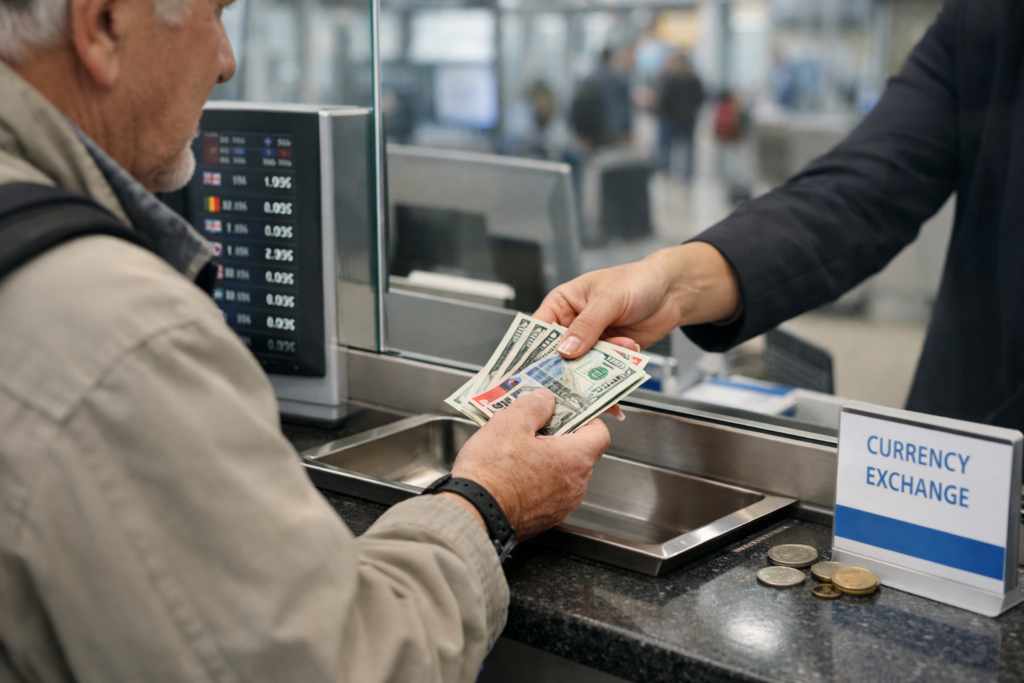
Some countries don’t expect tips at all.
Some expect rounding up.
Some expect service charges to be included.
Some prefer cash even when card payments are common.
The safe and respectful approach is:
Check local customs for your destination before you go.
When in doubt, observe what locals do in similar situations.
Ask politely at the hotel front desk: “What’s customary here for housekeeping or drivers?”
From a safety standpoint:
Avoid carrying large amounts of local currency unless necessary.
Use ATMs in safer locations (like inside bank branches or well-lit areas) rather than isolated machines.
Keep receipts and monitor card transactions more frequently while traveling abroad.
And if you’re traveling internationally as a senior, consider traveling with a backup plan:
A second card kept separately.
A printed contact list for banks and travel providers.
A small emergency cash reserve stored securely.
These aren’t dramatic precautions. They’re simple ways to keep small problems from becoming trip-ending problems.
A Simple Rule-of-Thumb for Seniors and Families
If you want one simple travel tipping strategy that works in most places, it’s this:
Use cash for direct people and small moments.
Use card for structured systems and restaurants.
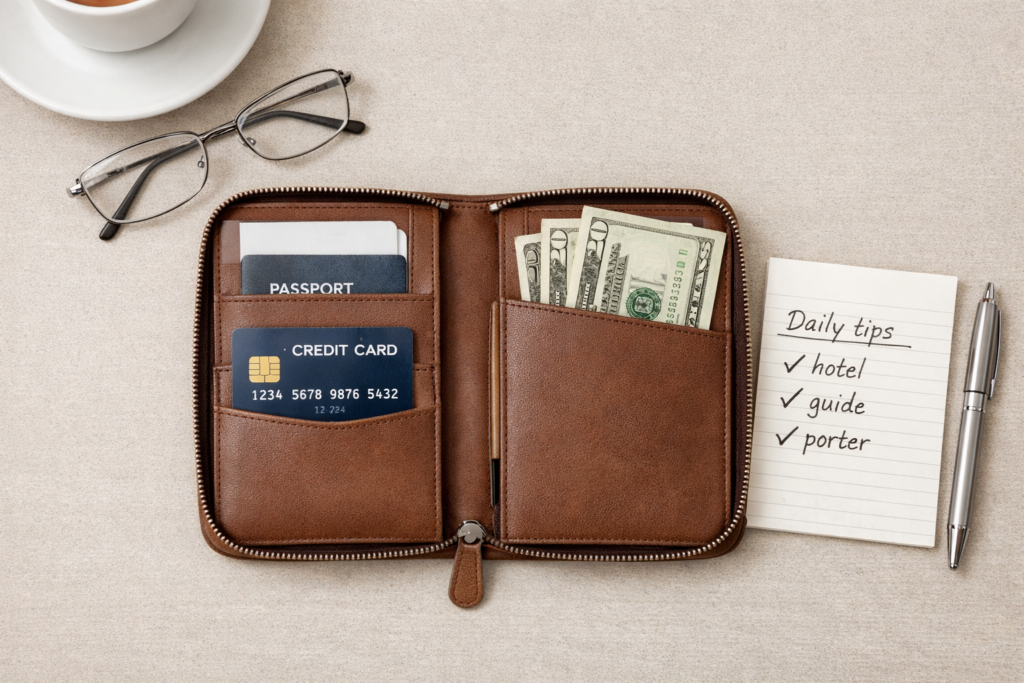
Here’s a practical hybrid approach that keeps things fair and safe:
Use cash for:
Housekeeping (especially daily)
Porters and bell services
Drivers and guides when customary
Small “thank you” moments
Use card for:
Restaurants (especially in the U.S.)
Hotel charges where tipping is built in
Cruise gratuity systems
Large transactions
A quick pre-trip checklist that makes tipping easy:
Before you leave:
Get small bills. Not large ones.
Decide a simple daily tipping budget.
Pack a few envelopes if you like the envelope method.
During the trip:
Carry only the day’s cash.
Keep backup money separate.
Tip housekeeping daily when possible.
At checkout:
If you forgot to tip housekeeping, do what you can—cash is still great, but card is better than nothing if it’s the only option.
Common Mistakes Seniors Make With Tipping (and How to Avoid Them)
Even experienced travelers make these mistakes. The goal is to avoid stress, not to be perfect.
Mistake: Over-tipping because you feel pressured.
Fix: Decide your standard amounts before the trip. When a screen prompts you, you won’t feel pushed.
Mistake: Under-tipping because you’re unsure.
Fix: Use a simple, consistent method. If you’re staying multiple nights, daily tips reduce uncertainty.
Mistake: Carrying too much cash “just in case.”
Fix: Carry what you need for the day and keep a reserve secure. More cash on your person usually equals more risk.
Mistake: Leaving cash without a note in hotels.
Fix: Use a note that clearly says housekeeping or “thank you.” It reduces confusion and helps the tip reach the right person.
Mistake: Assuming card tips always go where you intend.
Fix: When it matters—especially with housekeeping—ask if there’s a direct option. If there isn’t, cash becomes more valuable.
Mistake: Doing tipping at the last second in public.
Fix: Prepare tips in your room before you leave. It’s calmer and safer.
Frequently Asked Questions
Is it rude to tip with a card instead of cash?
Not usually. In many places, especially restaurants, card tips are completely normal. The better question is whether the tip reaches the worker the way you intend. If you’re concerned, ask what they prefer.
Do hotel housekeepers prefer cash tips?
In many hotels, yes—especially when the tip is left daily with a clear note. Cash is direct and immediate, and it’s less likely to get lost in a complicated system.
Can workers lose money when I tip by card?
Sometimes, depending on how the employer handles processing fees and tip distribution. In many cases workers still receive the full tip amount, but it can be delayed or pooled. If you want maximum direct impact, cash is often safer.
How much cash should seniors carry while traveling?
Enough for daily tipping and small expenses, but not so much that losing it would ruin your trip. Many seniors do best carrying a small daily amount and storing a backup reserve securely.
Is tipping safer with a credit card?
For large purchases, yes, because you reduce how much cash you carry. For small tips, cash can be safer because it limits your digital exposure and avoids handing cards to others.
Should I tip daily or at the end of my hotel stay?
Daily is often better for housekeeping because staff can change from day to day. Daily tips also reduce the risk you forget at checkout.
Do cruise staff receive cash tips directly?
If you hand it directly to a specific staff member, yes. But many cruise staff rely on structured gratuity systems, too. A good approach is to keep the automatic gratuities and add cash for standout service.
What’s the safest way to tip while traveling abroad?
Learn the local custom, avoid carrying large amounts of cash, use safe ATMs, and keep backup payment methods separate. When tipping is expected, small cash tips are often easiest.
Are cash tips taxable for workers?
In many places, tips are considered income, whether cash or card. How it is reported and tracked varies. From a traveler perspective, the key is tipping fairly and letting workers handle their reporting requirements.
What if I forget to bring cash?
You still have options. Ask the hotel to break bills. Use an ATM in a safe location. Or tip by card where available, especially in restaurants and structured systems. The “best” tip is the one you can actually give.
Tip Fairly, Travel Confidently
Cash vs card tipping doesn’t have to be a stressful choice. The simplest way to handle it—especially as a senior traveler or on a family trip—is to stop thinking of it as an either-or decision.
Use cash for the moments where you want the tip to land directly and immediately, like housekeeping and luggage help. Use card for the places where the system is designed to handle tips smoothly, like restaurants and many cruise gratuity setups. Then focus on what actually makes travel better: staying organized, feeling safe, and treating people well without feeling pressured.
If you take nothing else from this guide, take this: a smart traveler tips with intention. You can support workers and protect yourself at the same time.
If you’re planning a trip soon, keep a small stash of tip bills ready before you leave, and make a simple plan for the travel situations you’re most likely to run into. Your future self—tired at checkout, juggling bags, ready to go home—will thank you.