Tipping shouldn’t feel like a test.
Yet for many people, that moment when the receipt comes feels oddly stressful. You hesitate. You overthink. You glance around. You wonder what’s “right.” You wonder what others do. You wonder if someone is judging you.
And all of this happens over a few dollars.
The truth is simple:
People don’t struggle with tipping because they’re stingy.
They struggle because tipping forces them to do mental math under social pressure.
This article removes that pressure entirely.
No percentages.
No calculators.
No phone screens.
No awkward pauses.
Just seven tiny rules you can remember instantly — rules that work in real life, in real situations, even when you’re tired, rushed, distracted, or anxious.
These rules are not about perfection.
They’re about confidence, fairness, and ease.
If you remember nothing else, remember this:
A good tip is one you can give calmly and consistently.
Let’s start.
Why Tipping Feels So Hard (Even for Smart People)
Before the rules, it helps to understand why tipping feels uncomfortable for so many people.
First, tipping is rarely taught.
Most of us learned it through observation, vague advice, or embarrassment.
Second, tipping happens at the worst possible moment:
- You’re ready to leave
- You’re being watched
- You want the interaction to end
- You’re tired or full
- You don’t want to look cheap
- You don’t want to look clueless
Third, modern tipping has become noisy.
Digital screens suggest 22%, 25%, 30%.
Receipts show multiple totals.
Apps add fees, service charges, and vague explanations.
All of that creates friction.
Humans are bad at math under pressure.
But humans are excellent at rules.
That’s why these tiny rules work.
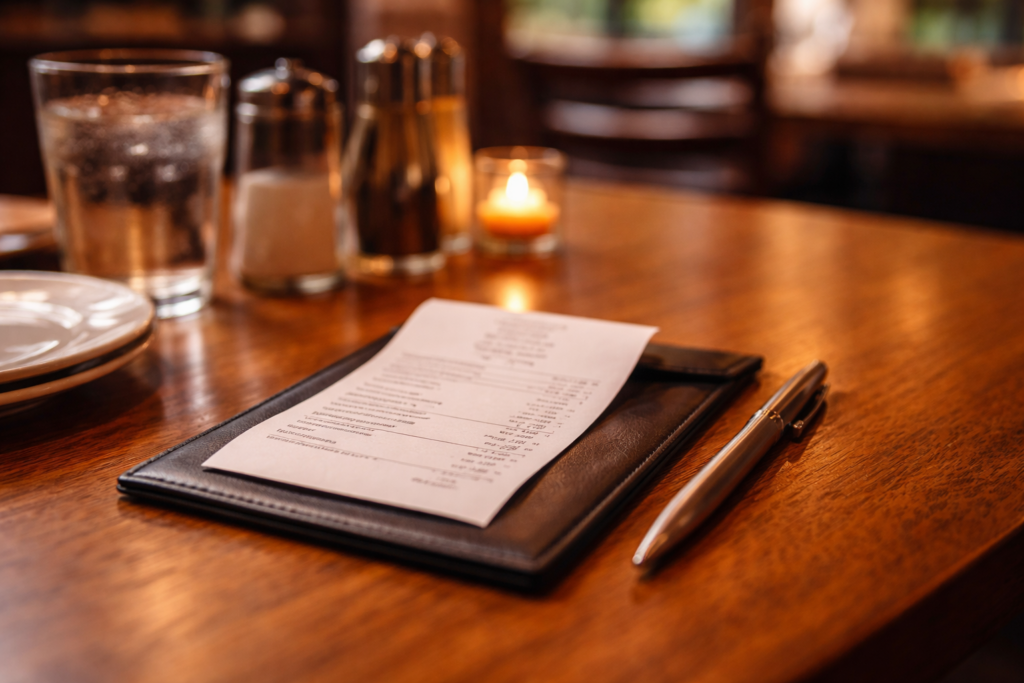
Rule #1: Sit-Down Restaurants — “Double the Tax”
This is one of the simplest and most reliable tipping rules you’ll ever learn.
The rule:
Look at the tax on the receipt. Double it. That’s your tip.
That’s it.
No percentages.
No moving decimals.
No calculators.
Just tax × 2.
Why does this work?
In many places, sales tax falls roughly between 8% and 10%.
Doubling that lands you around 16–20%, which is where most people aim anyway.
But the real magic isn’t the math.
It’s the anchor.
Your eyes already go to the tax line.
Your brain recognizes it instantly.
You don’t need to search for the subtotal or second-guess yourself.
Examples That Feel Real
- Tax is $3.40 → Tip about $7
- Tax is $6.80 → Tip about $14
- Tax is $9.10 → Tip about $18
You don’t need to be exact.
You’re allowed to round.
Round up if service was warm.
Round down if it was rushed.
Adjust naturally.
When This Rule Works Best
- Casual sit-down restaurants
- Diners, bistros, cafés
- Business lunches
- Family dinners
When to Add a Little More
- Long stays at the table
- Special requests handled well
- Friendly, attentive service
- Busy nights where effort is obvious
A good tip is not about precision.
It’s about acknowledgment.
Rule #2: Delivery — “Never Below $5, Then Add $1 Per Mile”
Delivery tipping confuses people because it feels like it should work like restaurant tipping.
It doesn’t.
Delivery is not about food price.
It’s about distance, time, and effort.
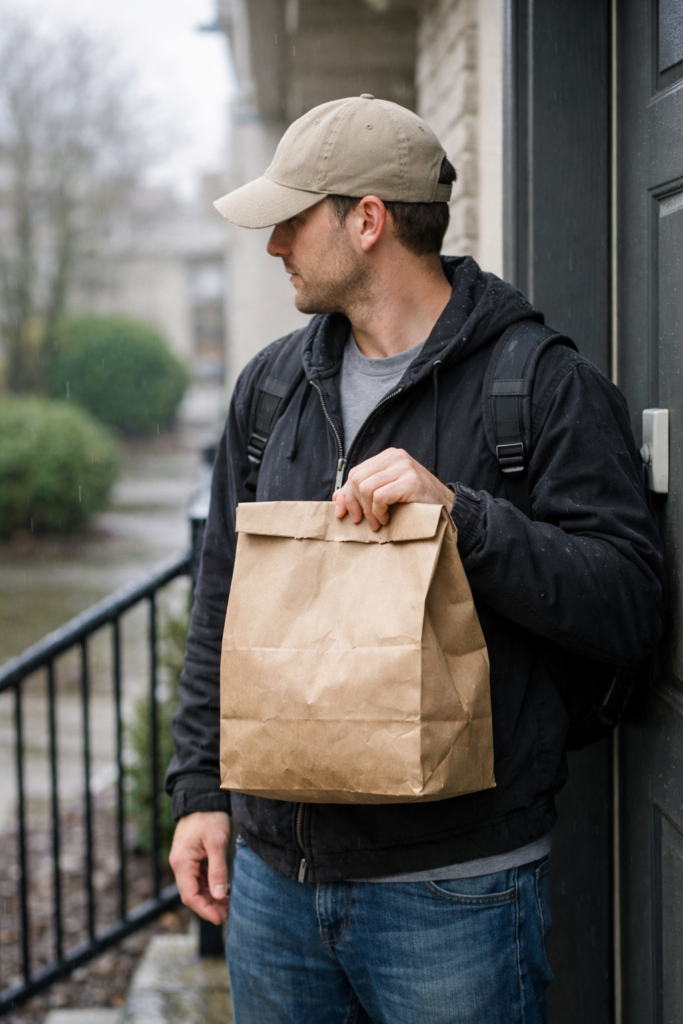
The rule:
Start at $5.
Add $1 for every mile.
Bad weather? Add more.
This instantly reframes the decision.
You’re not tipping a plate of food.
You’re tipping a human who:
- Used their own vehicle
- Paid for fuel
- Navigated traffic
- Waited at pickup
- Found your address
- Carried your order
Why $5 Is the Floor
Anything below $5 often feels dismissive to drivers, especially with rising fuel and maintenance costs.
Even a short trip takes time.
Even a small order requires effort.
$5 says: “I respect your time.”
Distance Changes Everything
- 1 mile → $5–6
- 3 miles → $7–8
- 6 miles → $11–12
When to Add Extra
- Rain, snow, heat, wind
- Late-night orders
- Apartment complexes
- Difficult parking
- Large or heavy orders
Delivery tipping becomes easy once you stop thinking in percentages.
Think in miles and conditions.
Rule #3: Bars — “$1 Per Drink, $2 for Cocktails”
Bars are one of the few places where tipping has stayed refreshingly simple.
That’s because bartenders think in drinks, not totals.
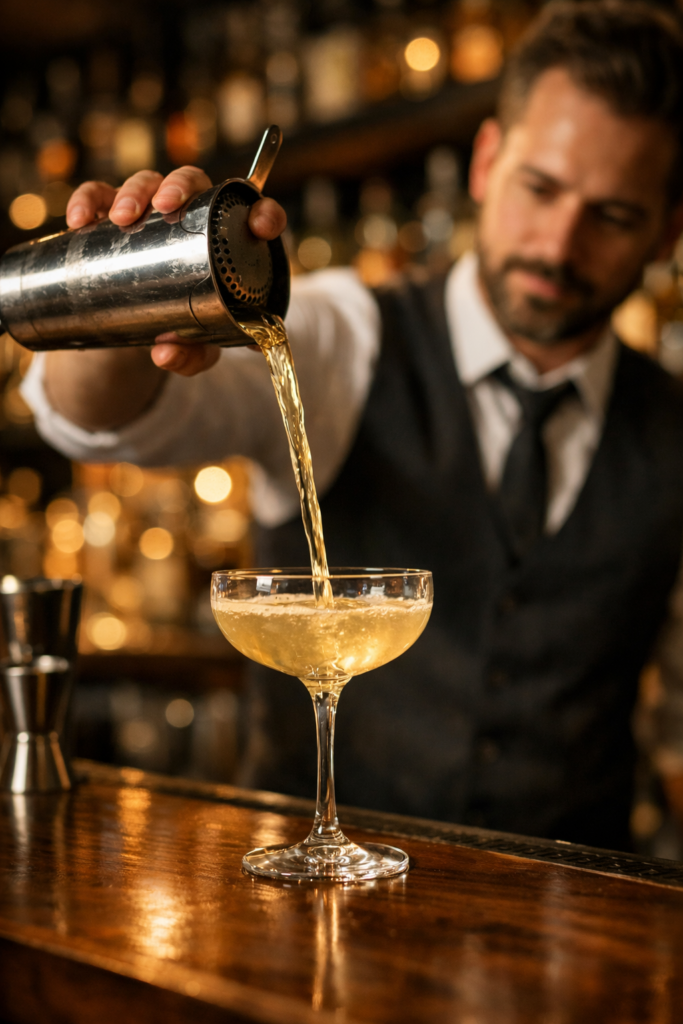
The rule:
Beer or wine: $1 per drink
Cocktails: $2 per drink
That’s it.
No tabs.
No math.
No awkward end-of-night calculations.
Why This Rule Works
- It rewards speed and skill
- It keeps tipping proportional to effort
- It’s easy to remember mid-conversation
A bartender pouring a beer does less work than crafting a cocktail.
The rule reflects that naturally.
Examples
- 3 beers → $3
- 2 cocktails → $4
- 1 custom cocktail → $3
When to Tip More
- Complex or off-menu drinks
- Free pours
- Remembered orders
- Busy nights with fast service
Bartenders remember good tippers — not because of the amount, but because of consistency.
Rule #4: Coffee Shops — “Round Up, or Add $1–2”
Coffee tipping creates more guilt than it should.
Why?
Because coffee is frequent.
A single tip may feel small, but repetition matters.
The rule:
Round up.
Or add $1–2 if you’re a regular.
That’s it.
Why This Works
Baristas don’t expect large tips.
They value recognition and regular kindness.
- $4.25 → round to $5
- $6.70 → round to $8
- Daily coffee → add $1 consistently
Small tips add up over time.
Ignore the Screen Pressure
Modern tip screens often push high percentages.
You’re allowed to ignore them.
Tipping is optional.
Kindness is voluntary.
Consistency matters more than generosity spikes.
This rule keeps you sane and fair.
Rule #5: Haircuts & Salons — “$5 Per 30 Minutes”
Personal services are about time and attention, not product cost.
That’s why this rule works so well.
The rule:
Tip $5 for every 30 minutes of service.
Examples
- 30-minute trim → $5
- 1-hour haircut → $10
- 90-minute session → $15
- 2-hour color → $20
This rule scales naturally.
It feels fair to both sides.
It’s easy to remember while sitting in the chair.
When to Add More
- Last-minute appointments
- Extra care or advice
- Complex styling
- Holiday seasons
Stylists remember appreciation more than precision.
Rule #6: Hotels — “$5 a Night, $1–2 Per Bag”
Hotel tipping feels mysterious because it’s spread across multiple people.
This rule simplifies it.
The rule:
Housekeeping: $5 per night
Bellhop: $1–2 per bag
Why Nightly Matters
Different staff may clean your room each day.
Leaving a small daily tip ensures it reaches the right person.
Practical Tips
- Leave cash in an obvious spot
- Add a short thank-you note if possible
- Tip per night, not per stay
Hotel tipping isn’t about luxury.
It’s about courtesy.

Rule #7: Ride-Shares & Taxis — “$2 Minimum, Round Up Short Trips”
Ride-share tipping confuses people because fares vary wildly.
This rule removes the guesswork.
The rule:
Never tip under $2.
Short trip? Round up generously.
Examples
- $7 ride → tip $2–3
- $12 ride → tip $3
- $28 ride → tip $4–5
Why this works:
- Short rides pay drivers less
- Pick-ups still take time
- Minimums matter
A small, thoughtful tip goes a long way.
Why These Rules Beat Percentages Every Time
Percentages sound logical.
But logic collapses under pressure.
Rules work because:
- They reduce decision fatigue
- They remove embarrassment
- They encourage consistency
- They feel human
A calm tip is better than a perfect one.
Save These Rules (Seriously)
If you remember nothing else:
- Restaurants → Double the tax
- Delivery → $5 + $1 per mile
- Bars → $1 per drink
- Coffee → Round up
- Haircuts → $5 per 30 minutes
- Hotels → $5 a night
- Rides → $2 minimum
That’s it.
No stress.
No shame.
No math.
Final Thought
Tipping isn’t about numbers.
It’s about acknowledging effort without friction.
These tiny rules exist so you can be generous without thinking — and confident without calculating.
Use them.
Adapt them.
Forget the math.
You’ll tip better — and feel better — every time.